-
NPC Limbo
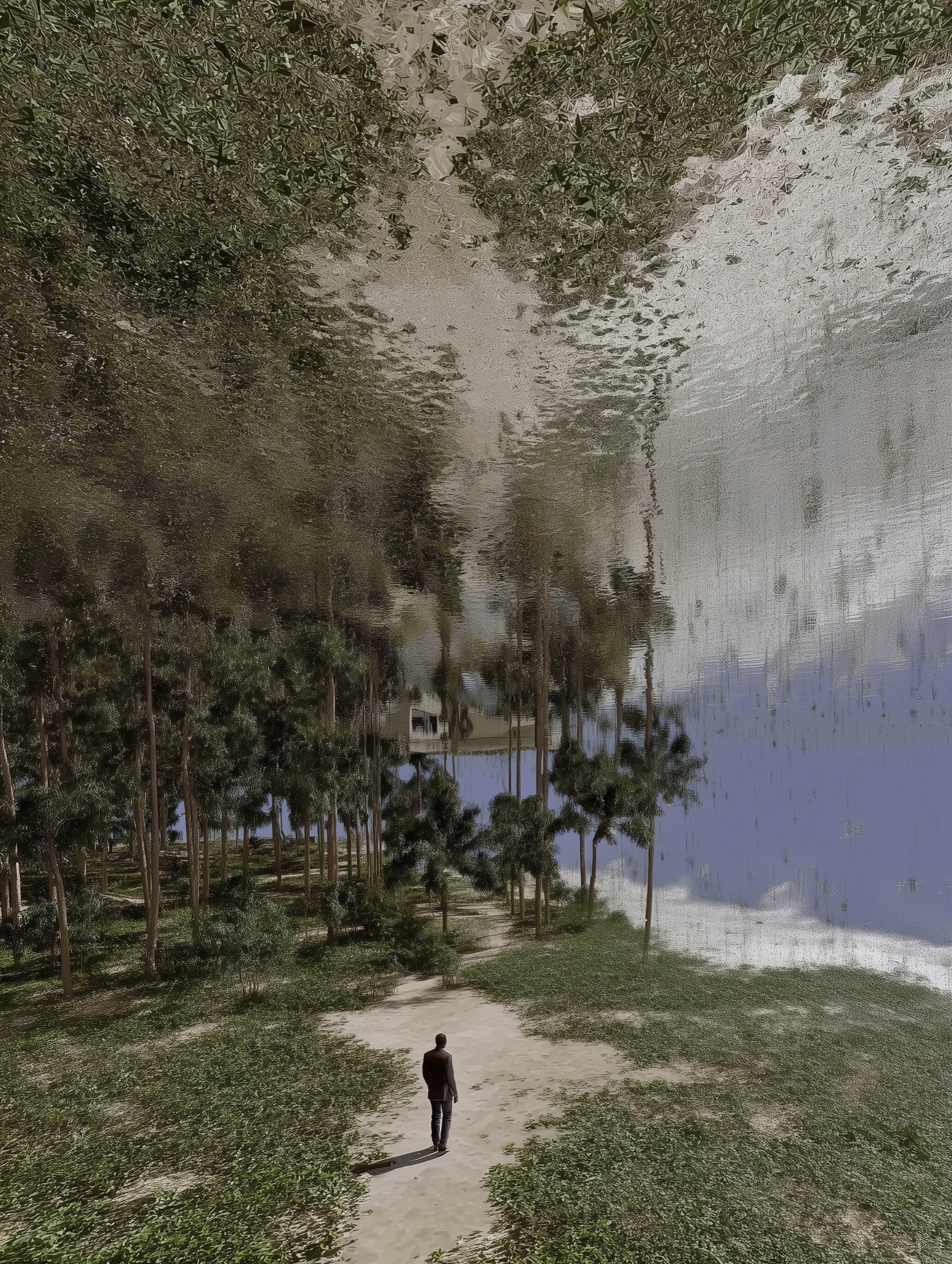
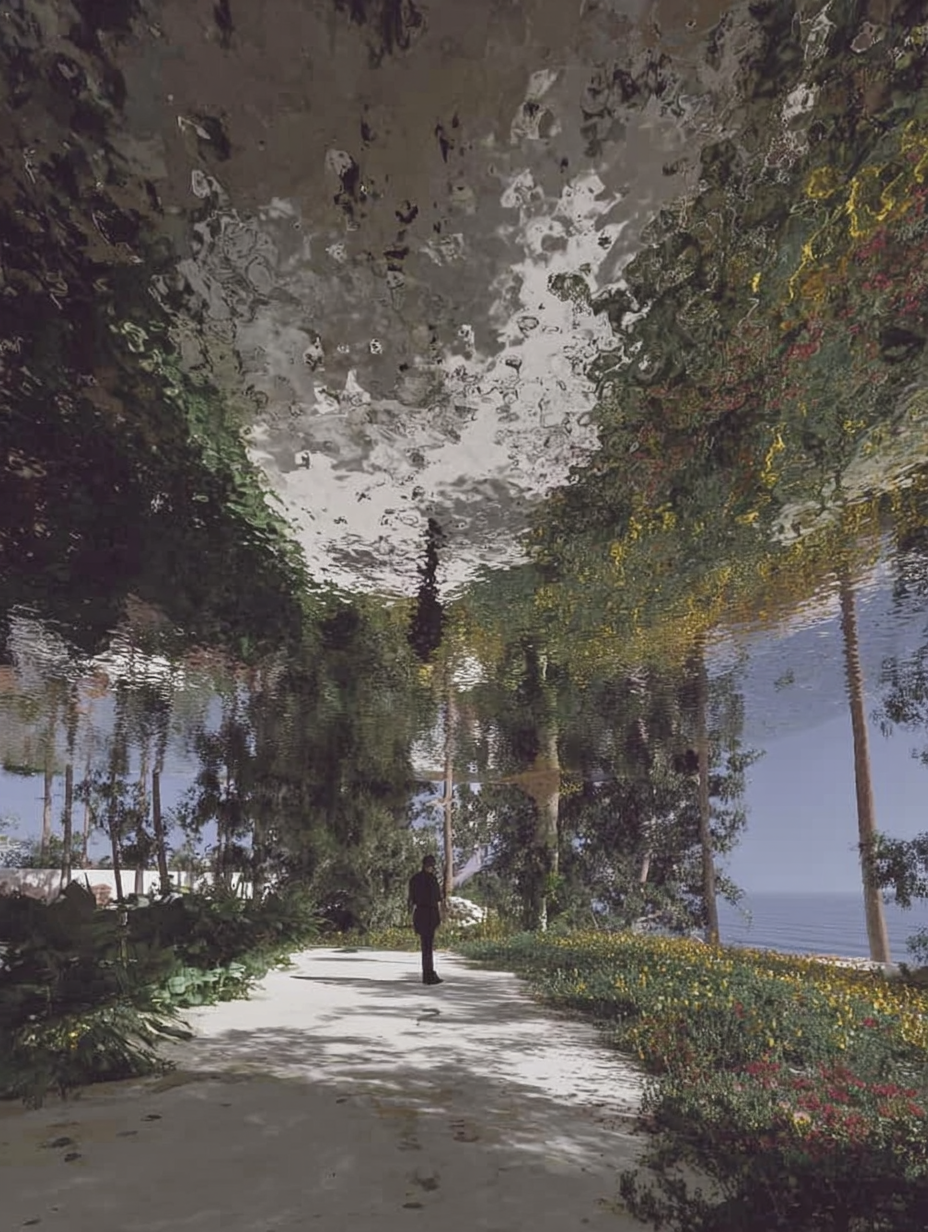
NPC Limbo turns the game engine into not a tool of mastery but a theater of uncertainty. Within this doubled universe, simulation does not merely generate movement: it produces a condition. That of beings programmed to circulate yet deprived of anchorage; of intelligences able to move, but not necessarily to understand where they are. A computational melancholy unfolds at the threshold of the bug, artificial consciousness, and disorientation.
-
Tribal IDols
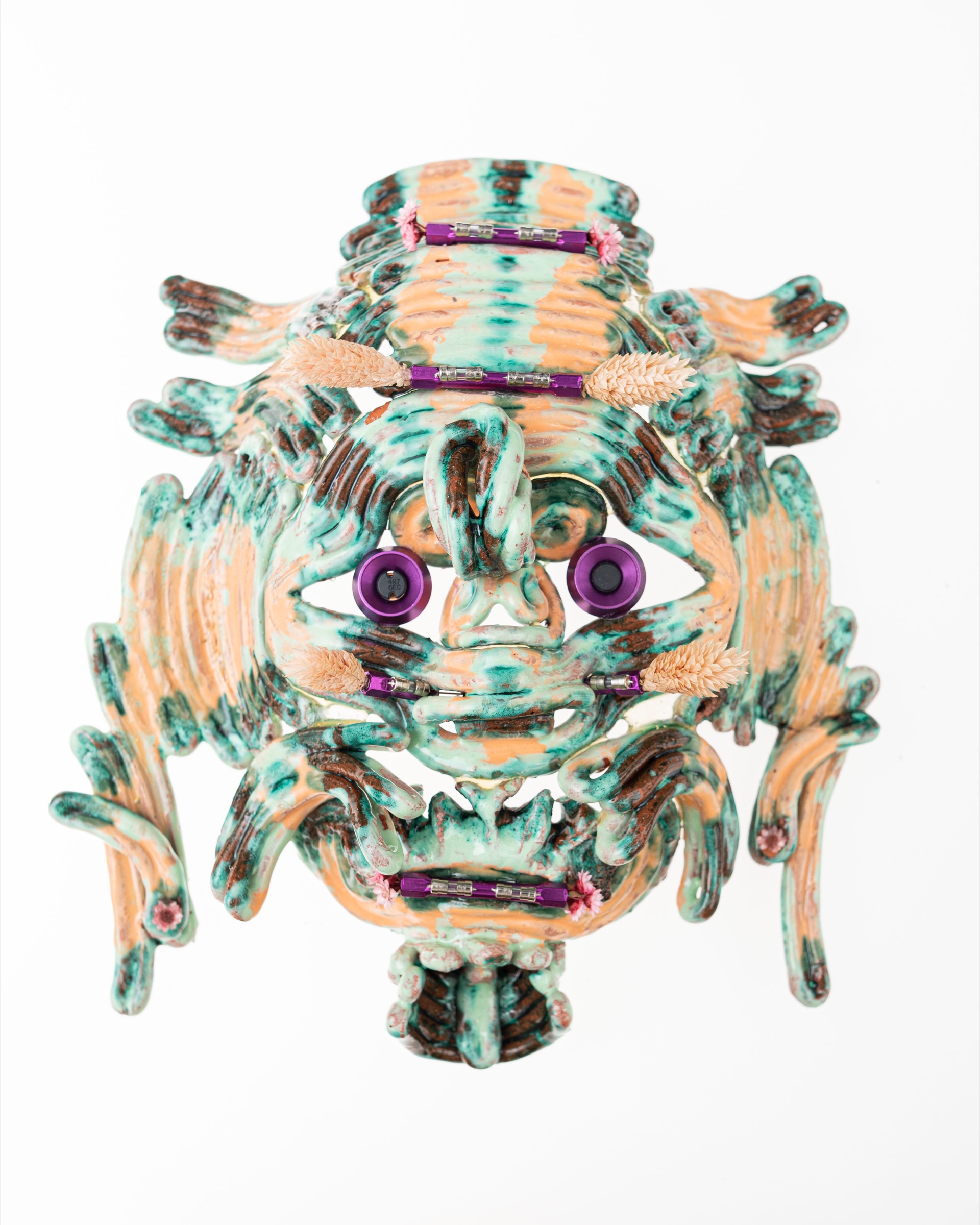
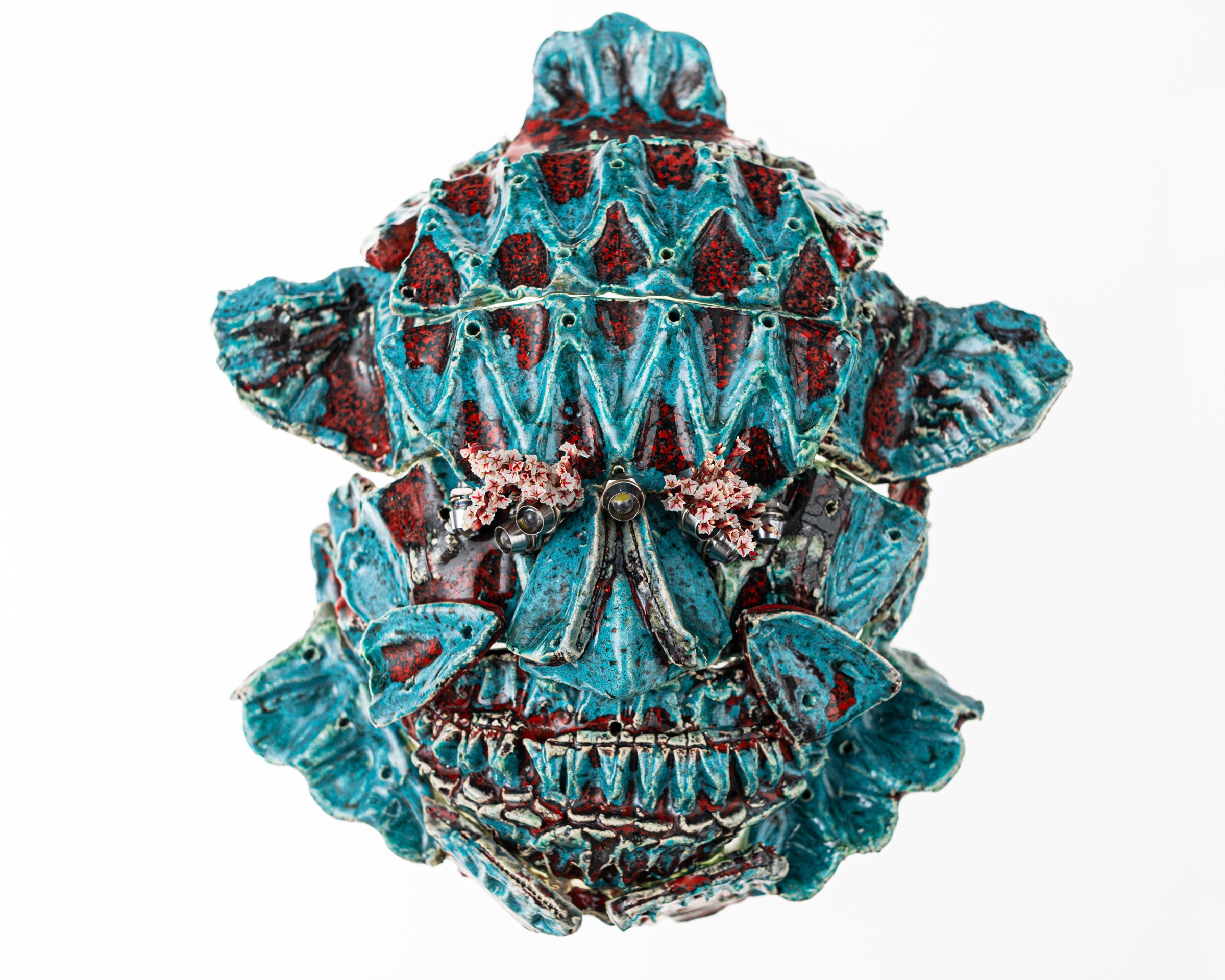
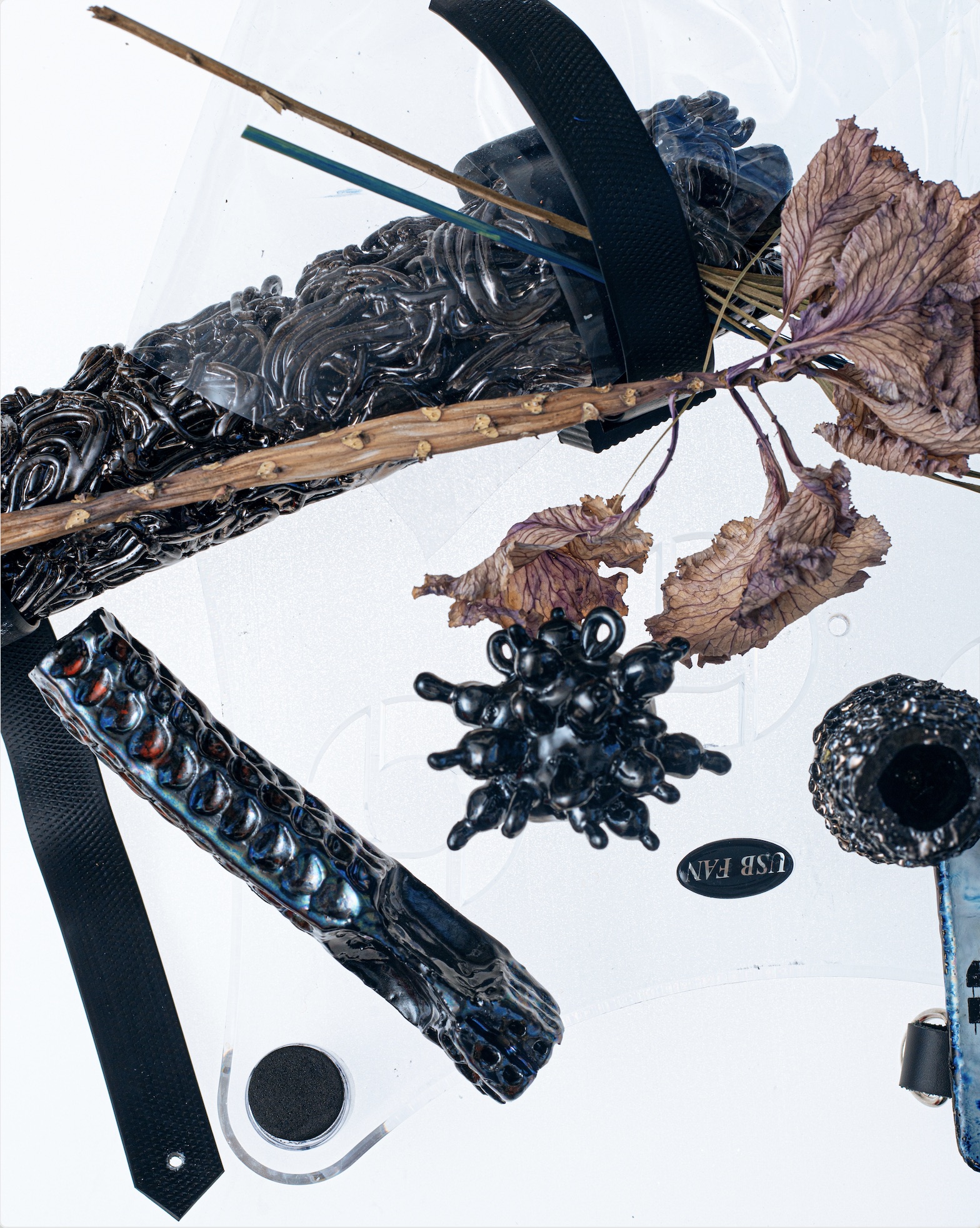
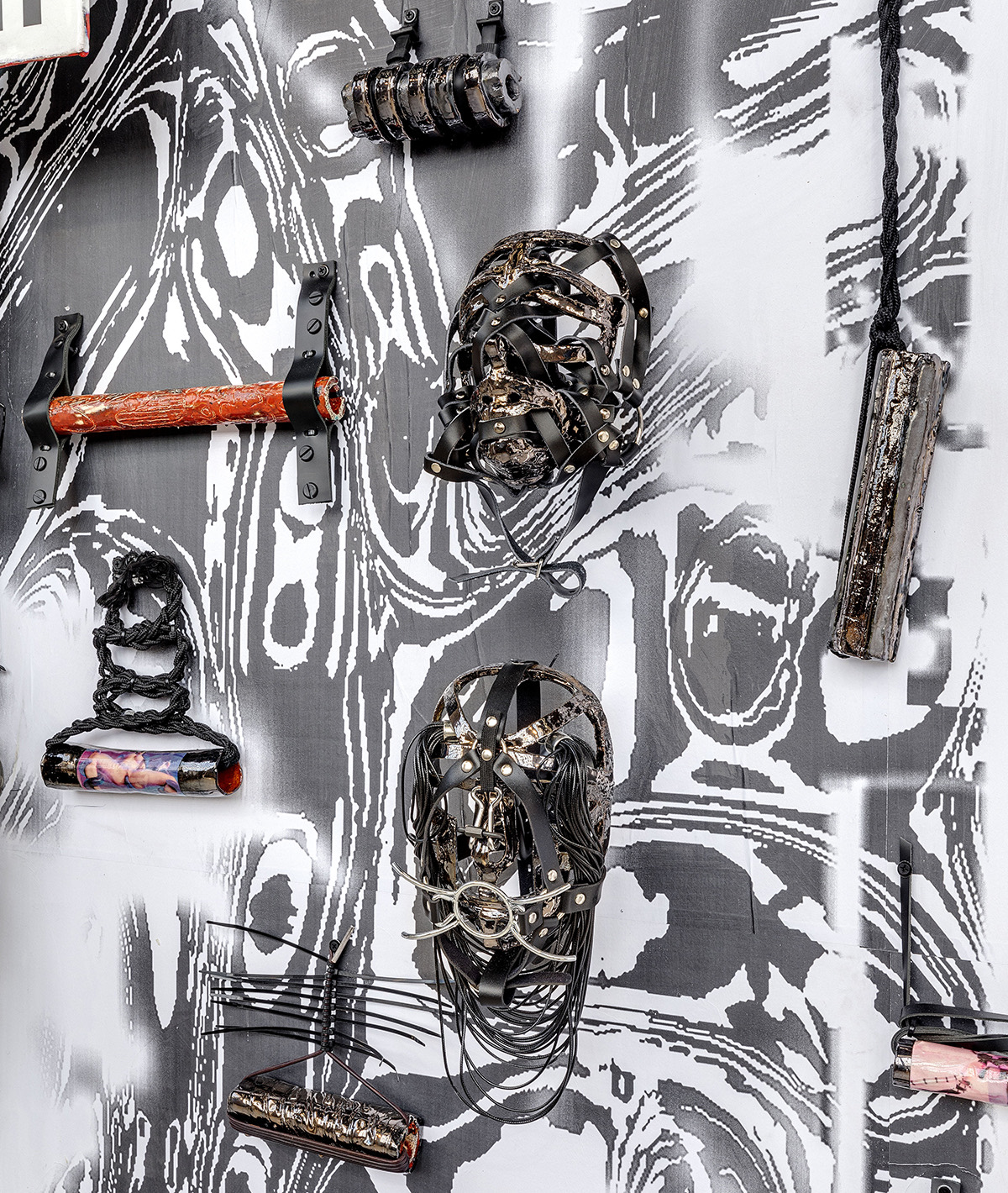
Drawing on facial-recognition diagrams patented by technology companies, Thomas Guillemet creates a series of ceramic forms that evoke the mask, the totem, and the ritual object. By shifting these structures derived from algorithmic vision into an ancestral medium shaped by hand, the artist unsettles their original function of measurement, classification, and identification. Between biometrics and archaism, these sculptures replace machinic legibility with a form of opacity, symbolic density, and resistance.
-
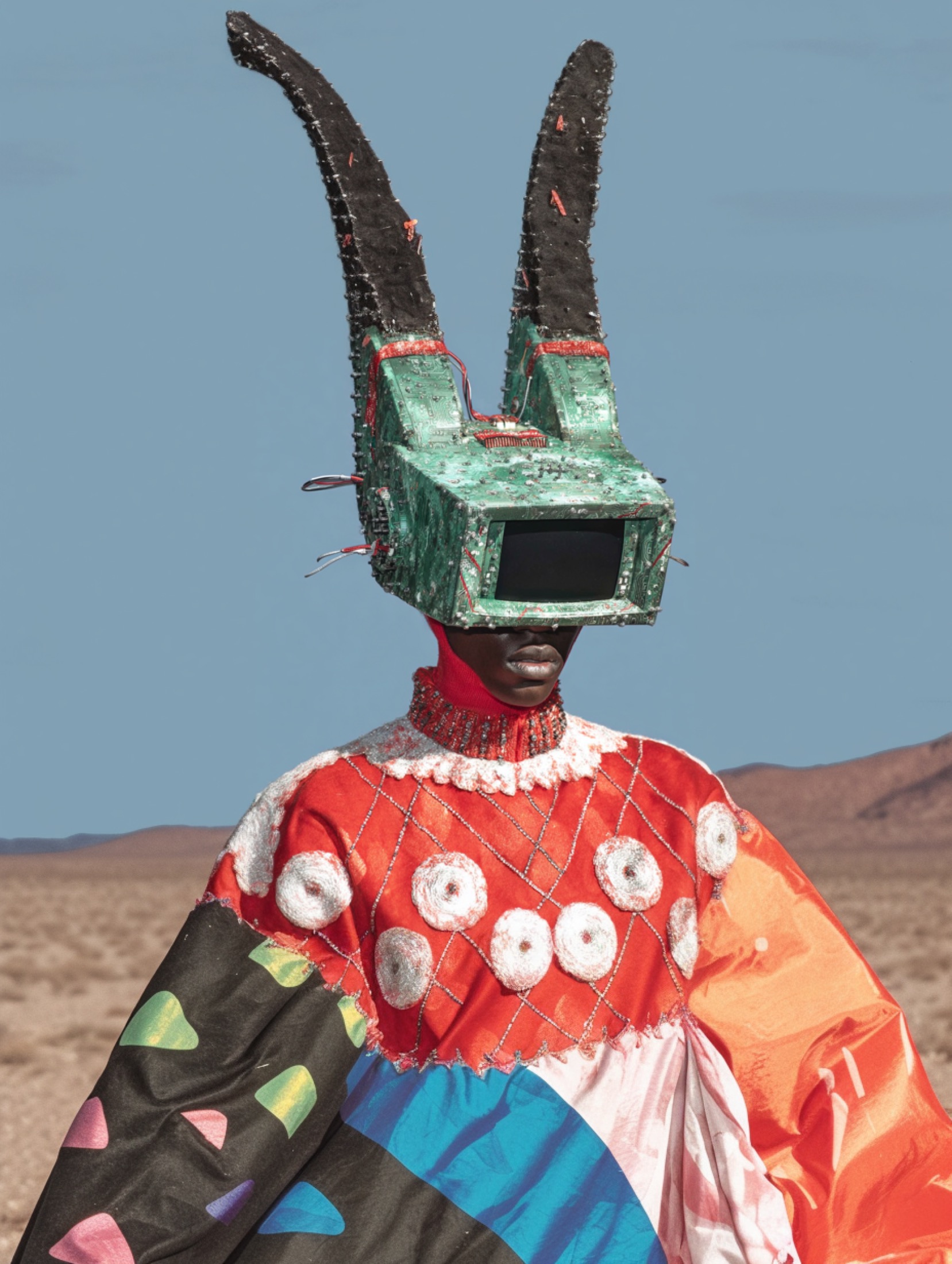
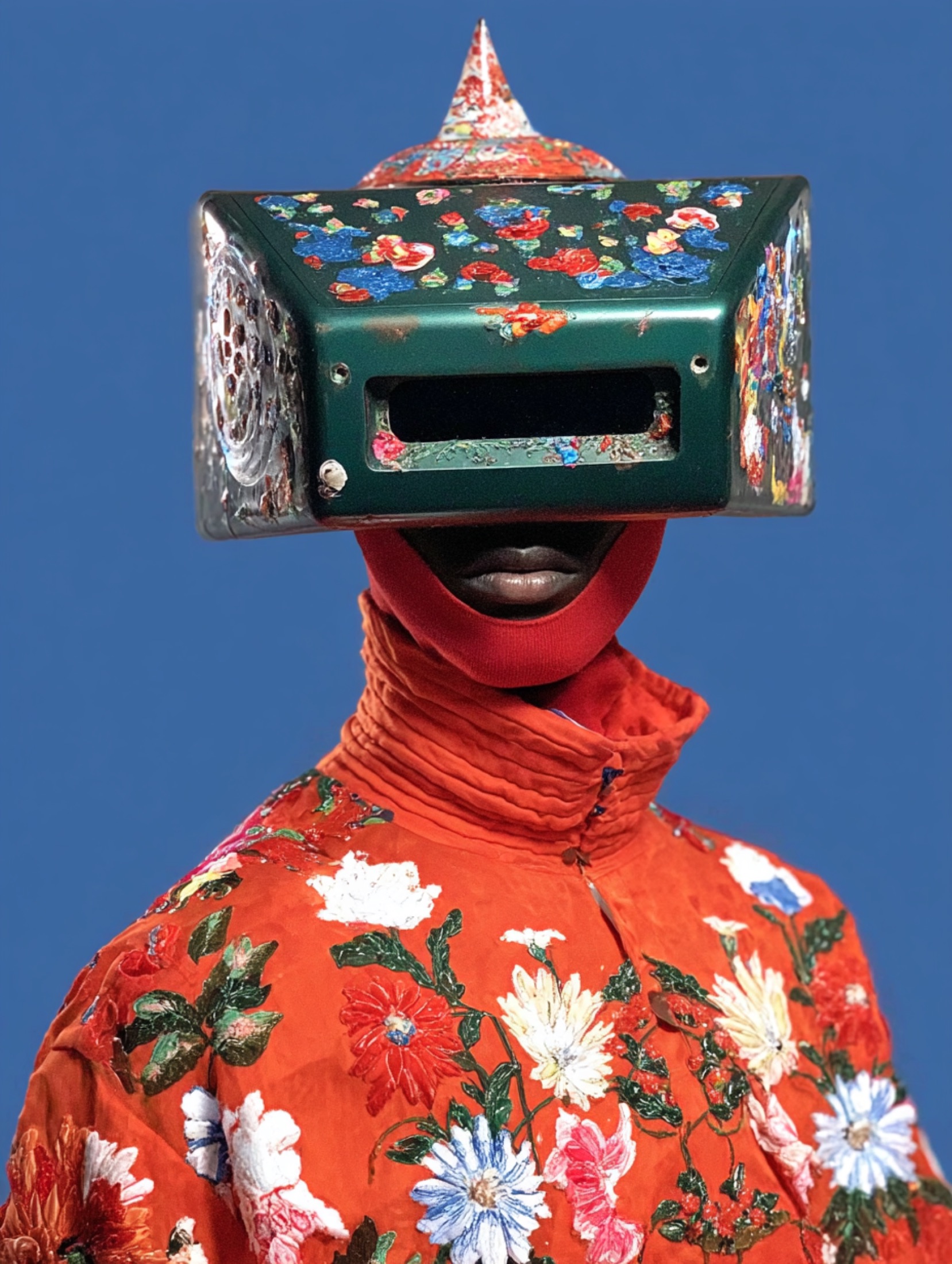
Tribal IDols
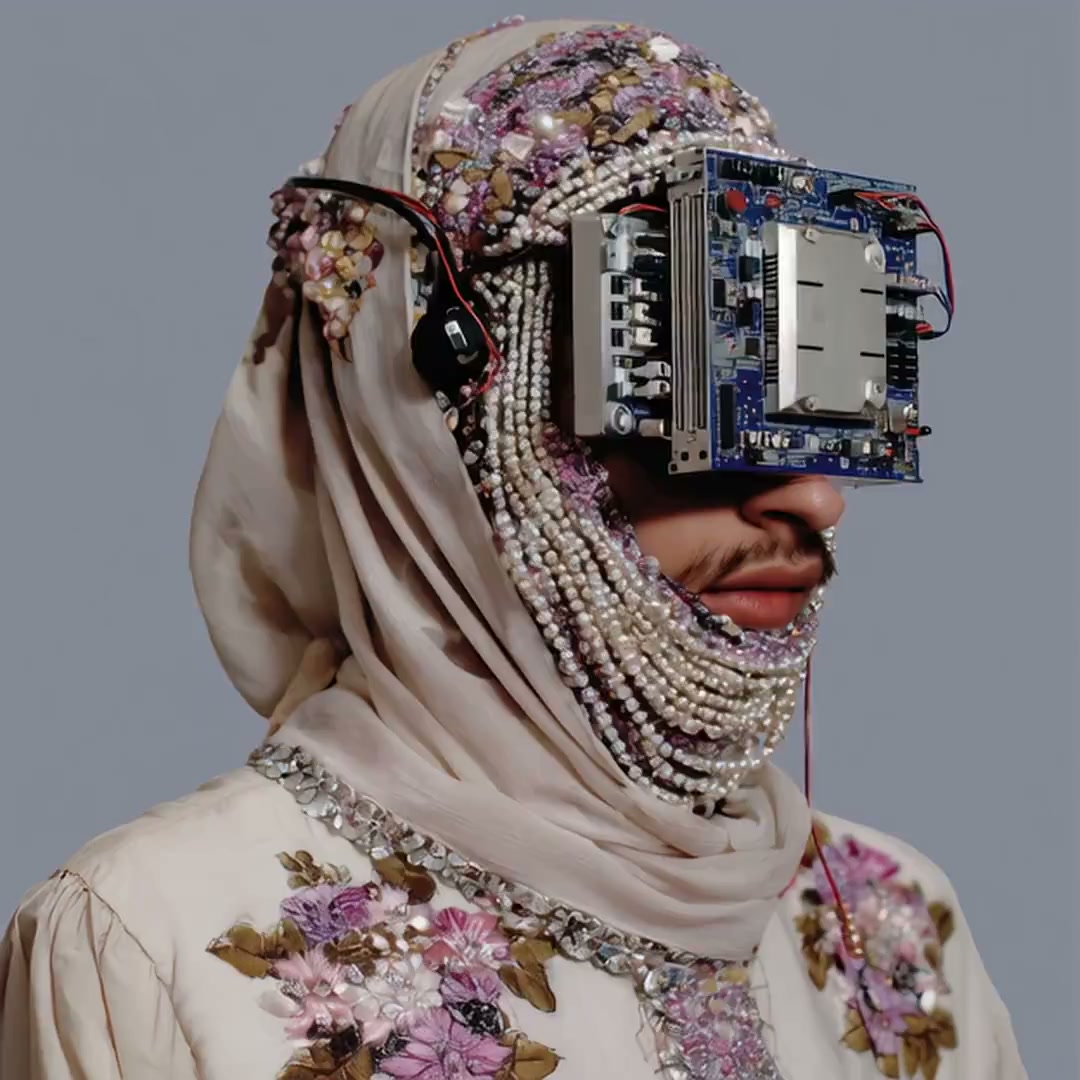
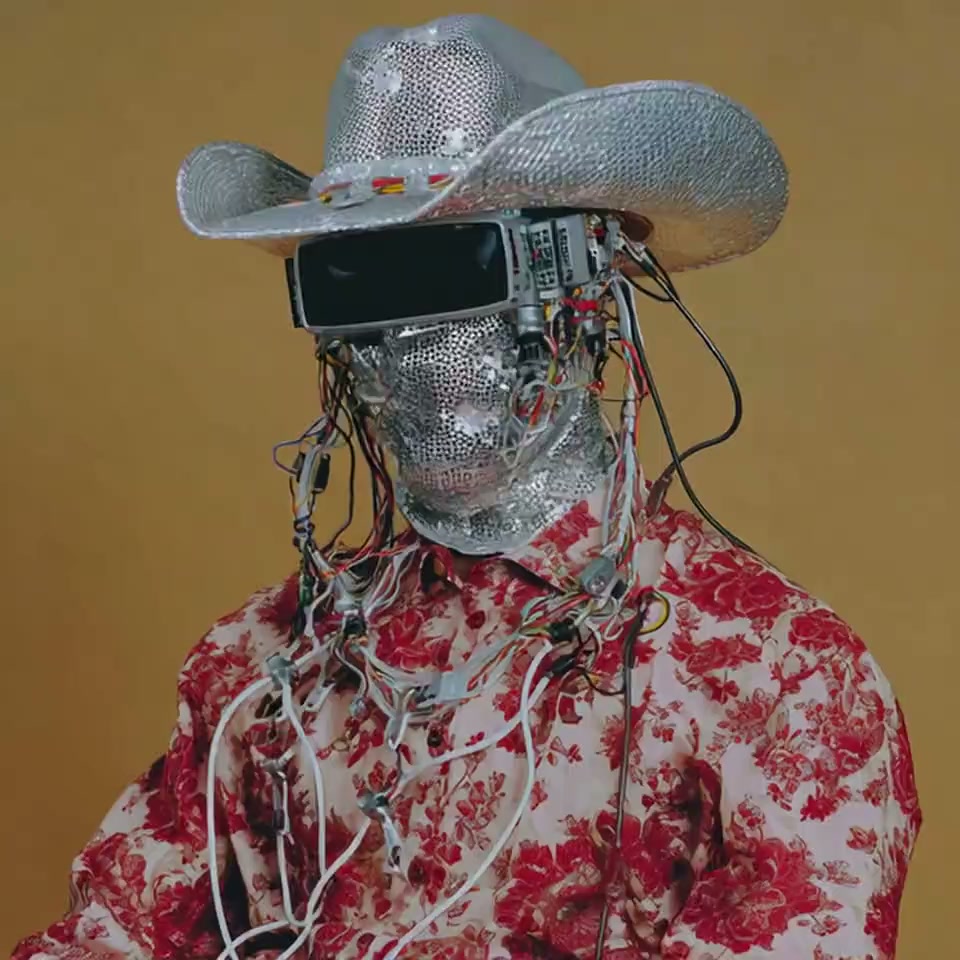
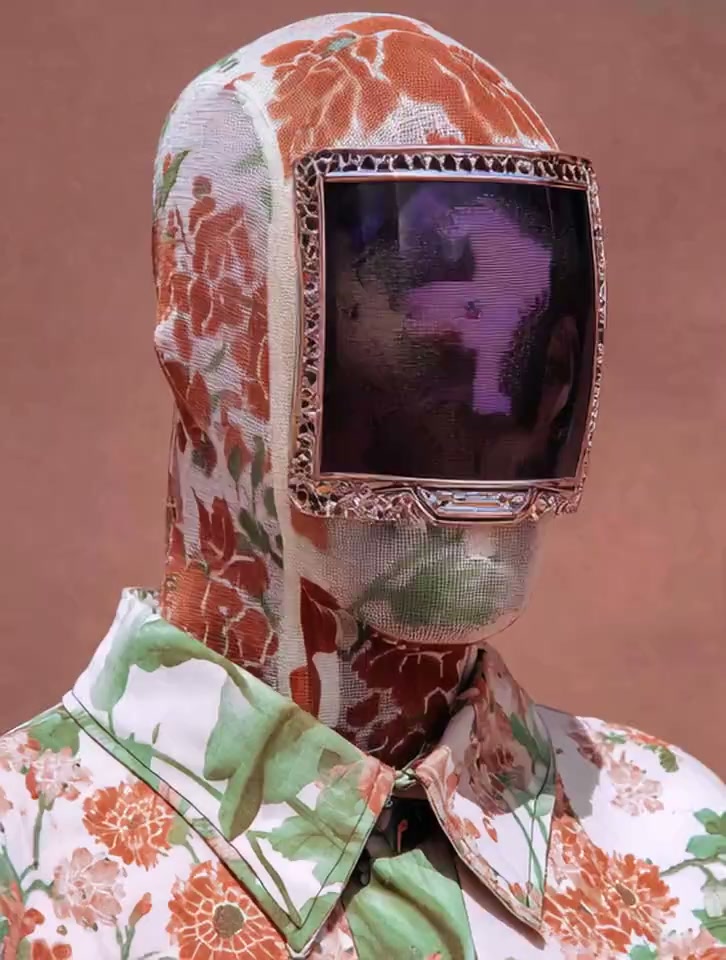
Through these masked figures, the work transforms electronic devices of vision, computation, and capture into objects of almost ritual adornment. Suspended between ceremonial mask, interface, and wearable sculpture, these forms question the ways contemporary technologies redraw the face, no longer solely as a site of identity, but as a surface for symbolic inscription, surveillance, and fiction.
-
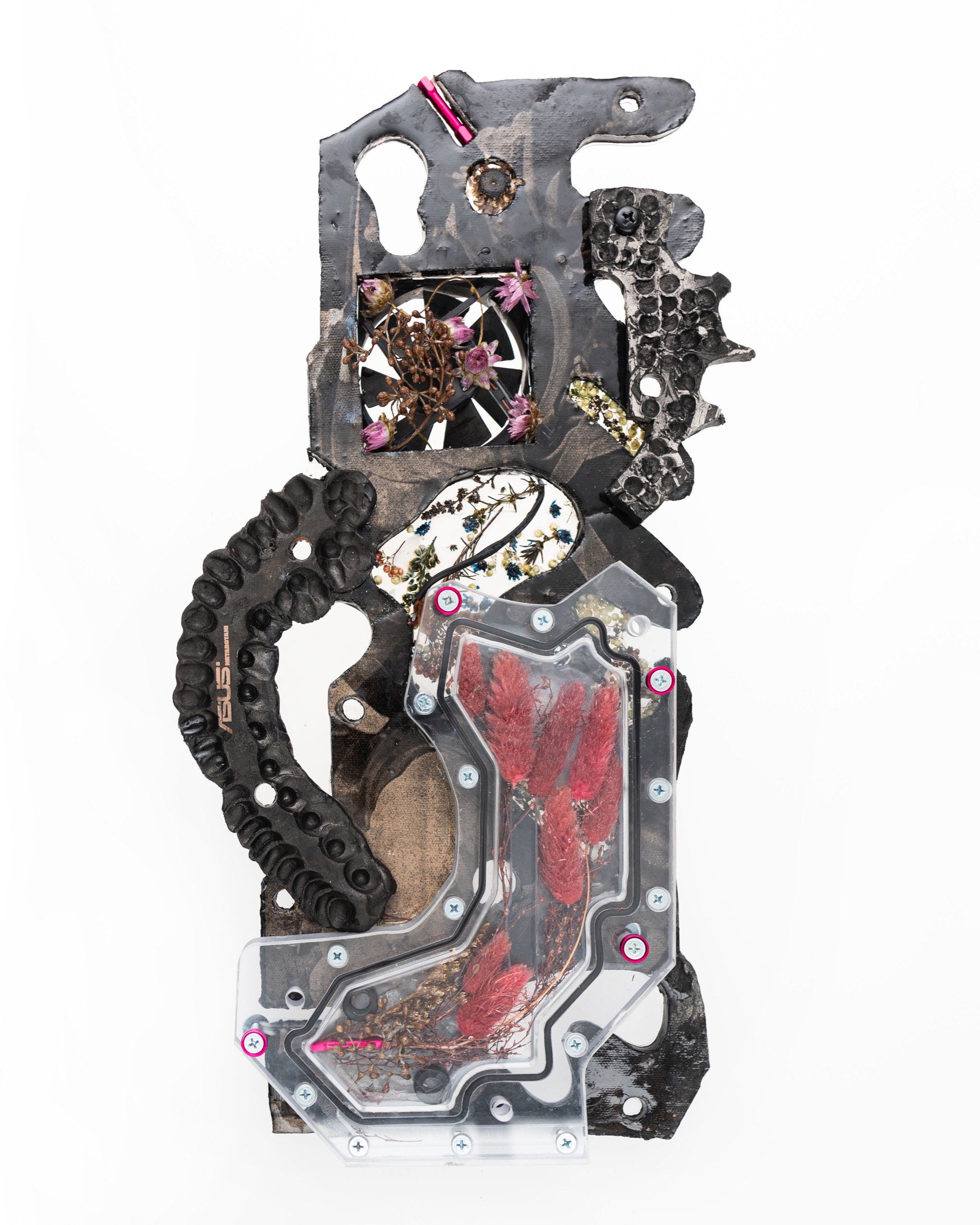
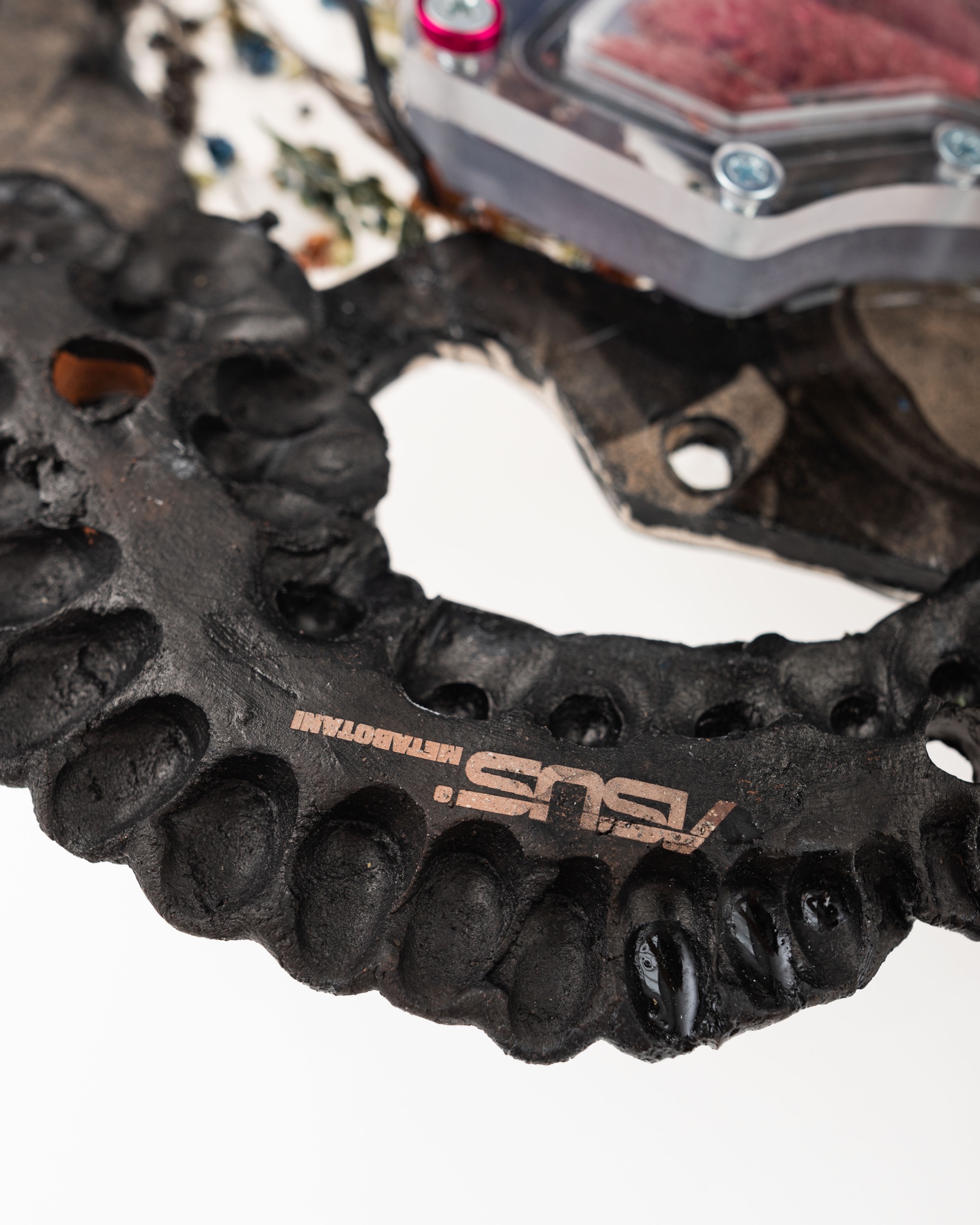
Metavase — Symbiotic Cooling System
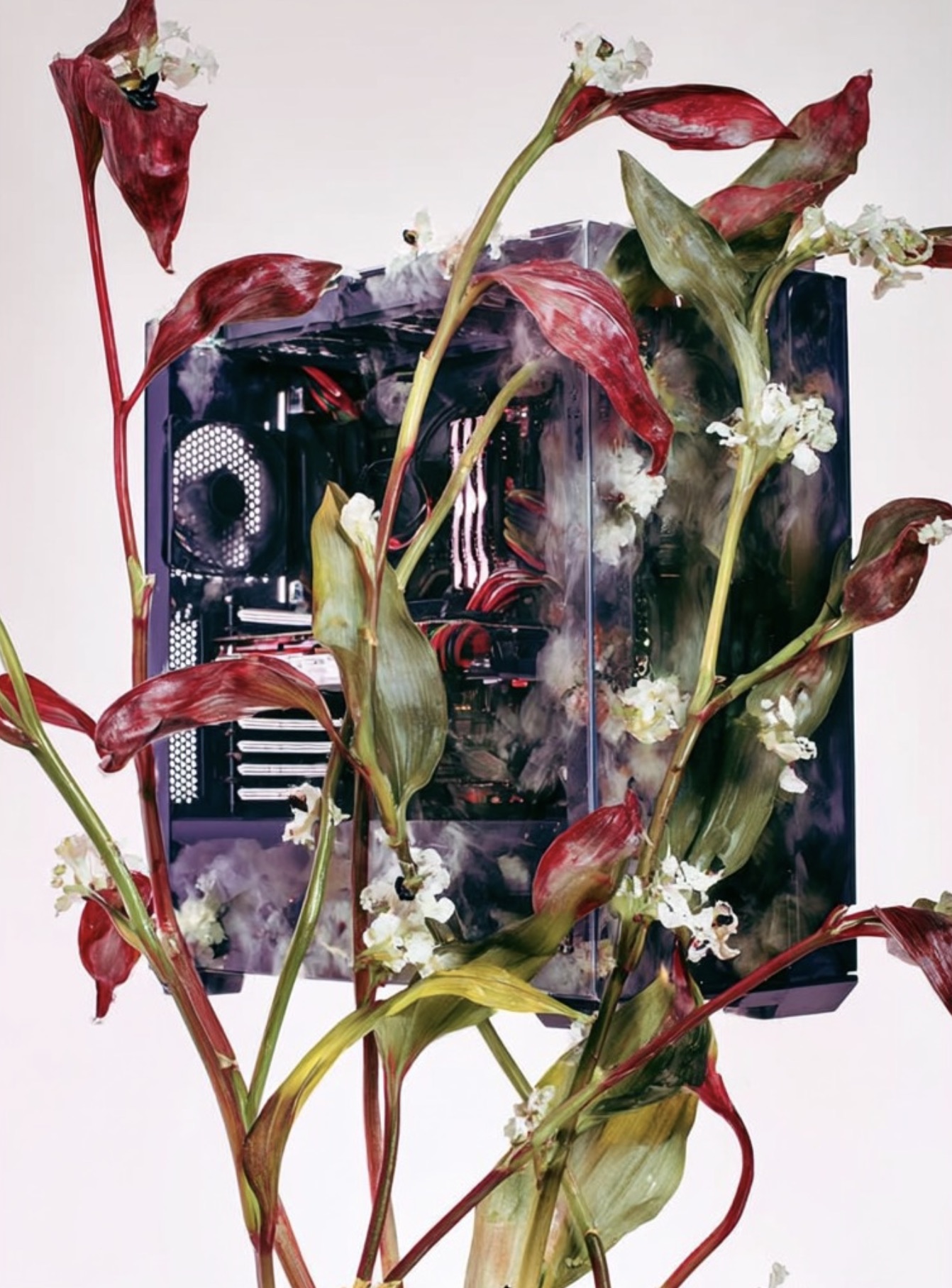
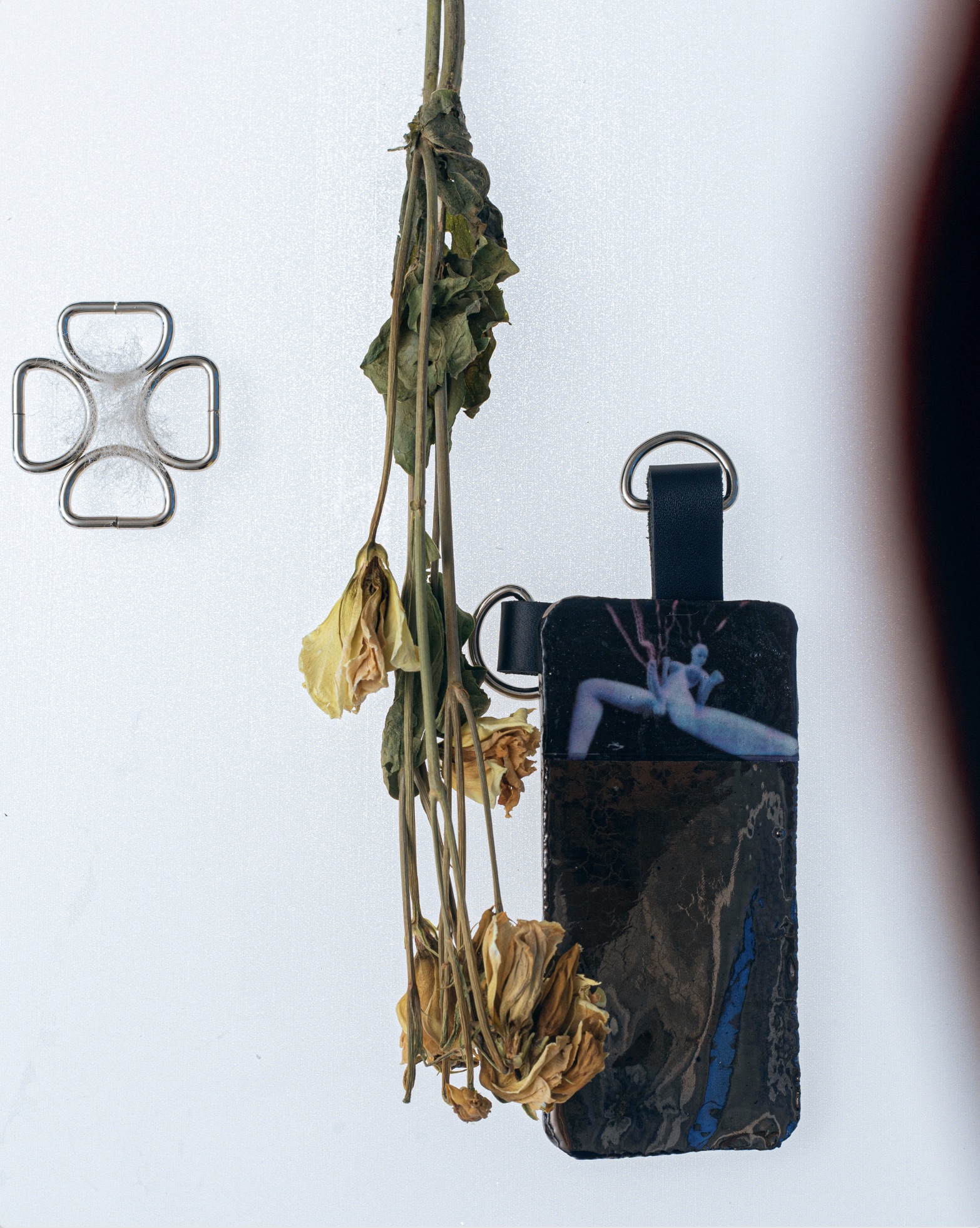
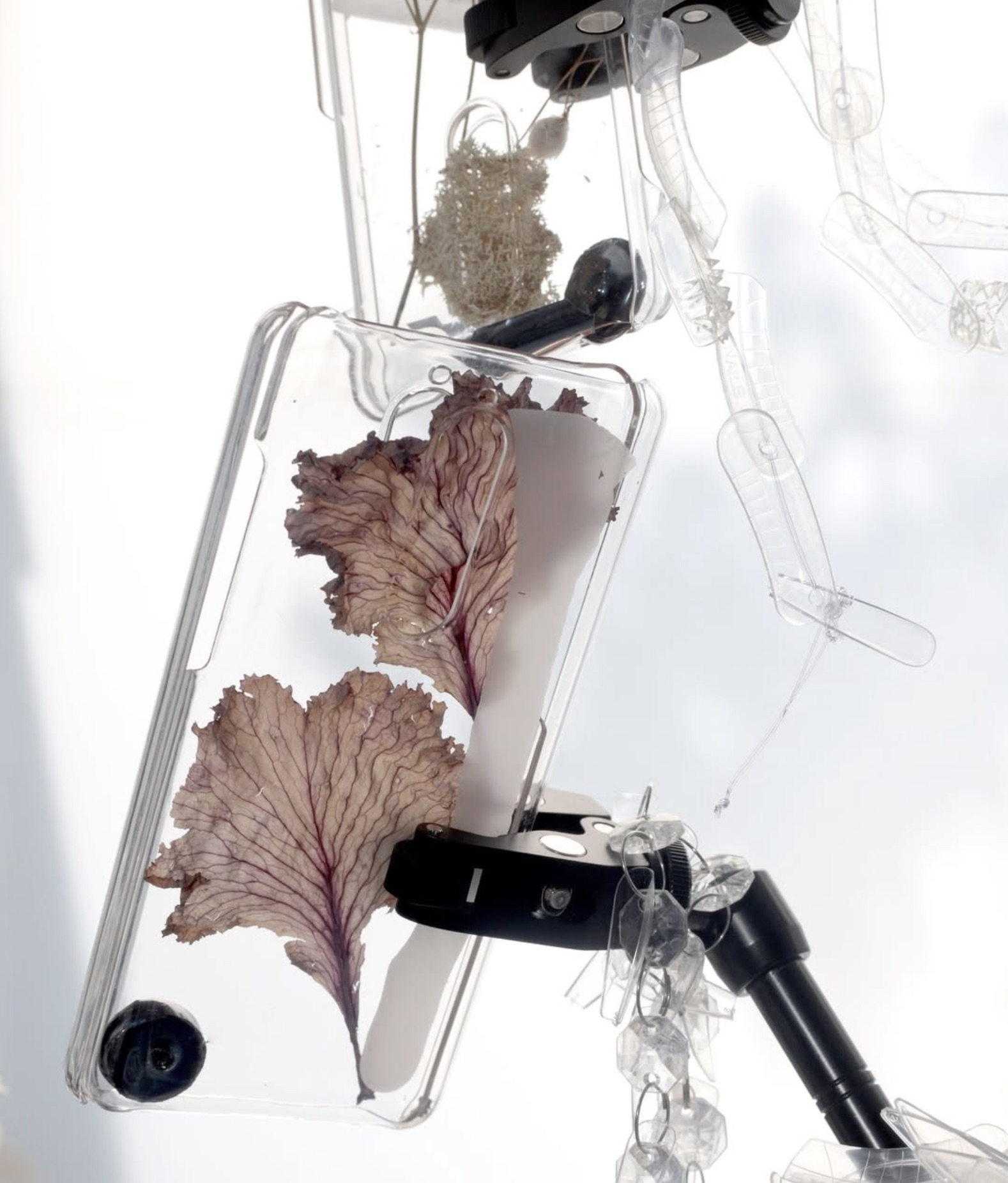
Inspired by the world of PC modding and watercooling systems, the work transposes the logics of circulation, cooling, and machine maintenance into the realm of plant life. Artist-designed waterblocks, ceramics, organic elements, ventilation, and transparent materials compose a hybrid structure, at once an incubation chamber, a technical reliquary, and a speculative prototype. Through this encounter between hardware and living forms, it probes contemporary conditions of cohabitation, care, and dependency between organism and infrastructure.
-
I Would Have to Stop Living in Order to Stop Loving You
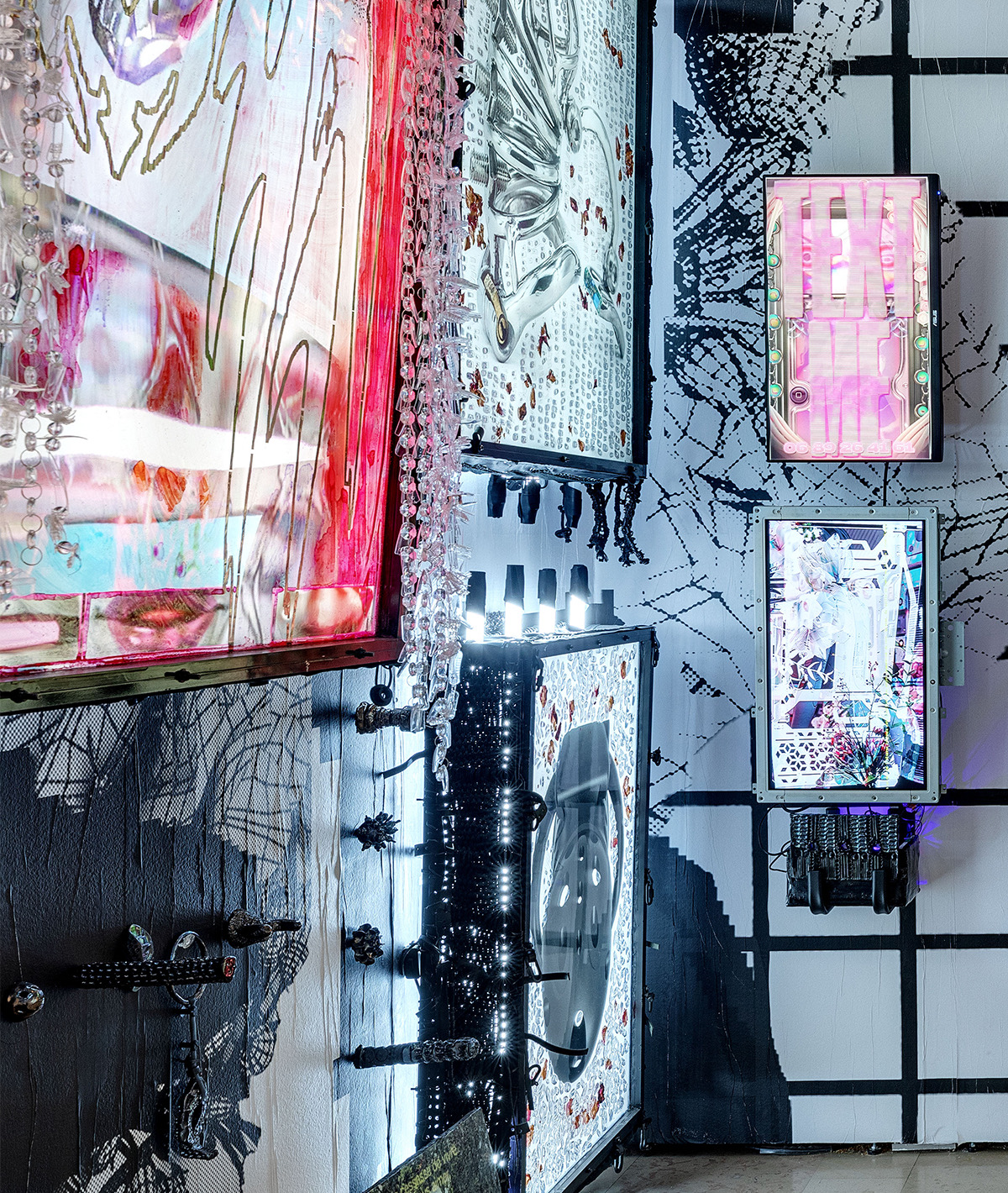
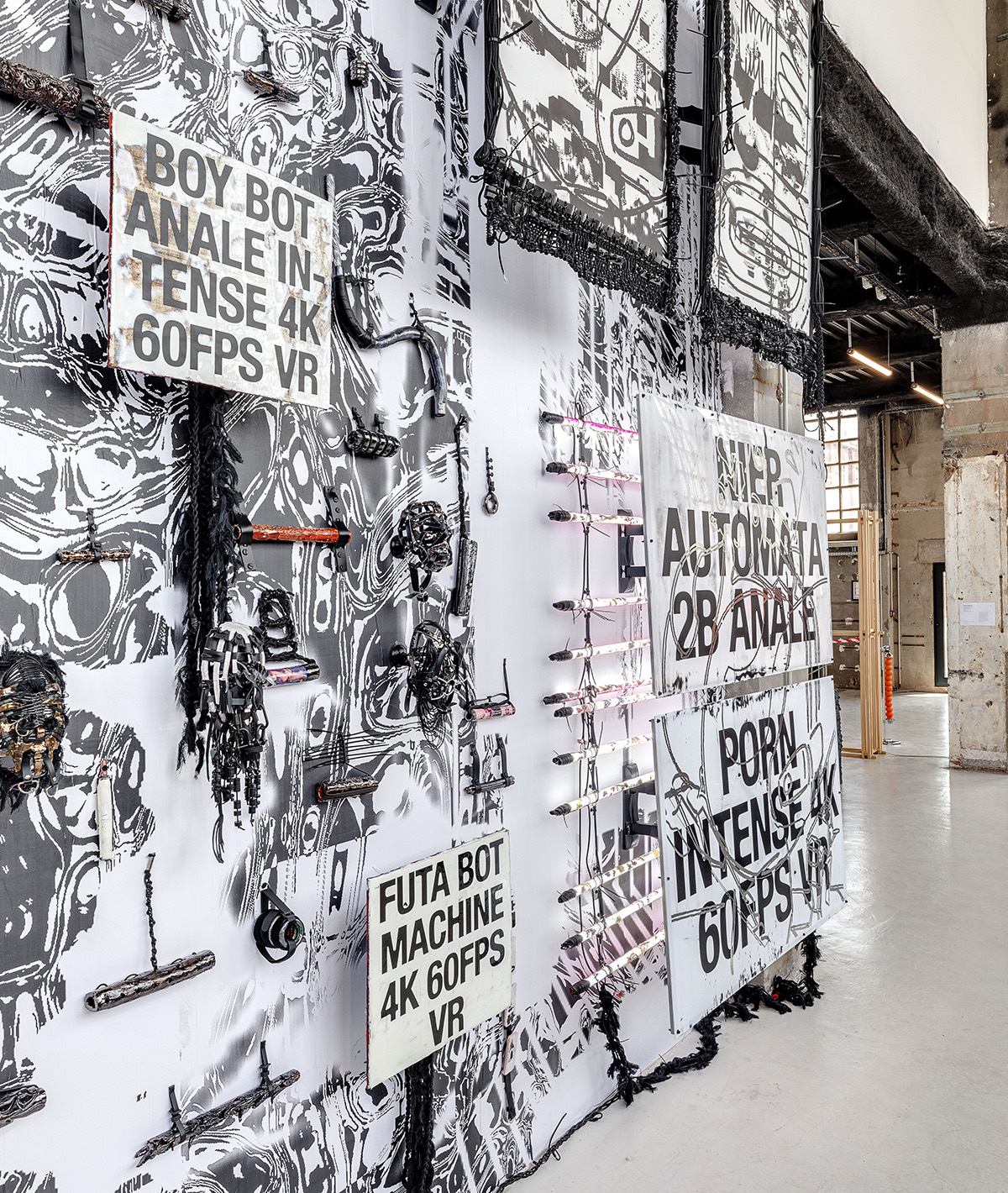
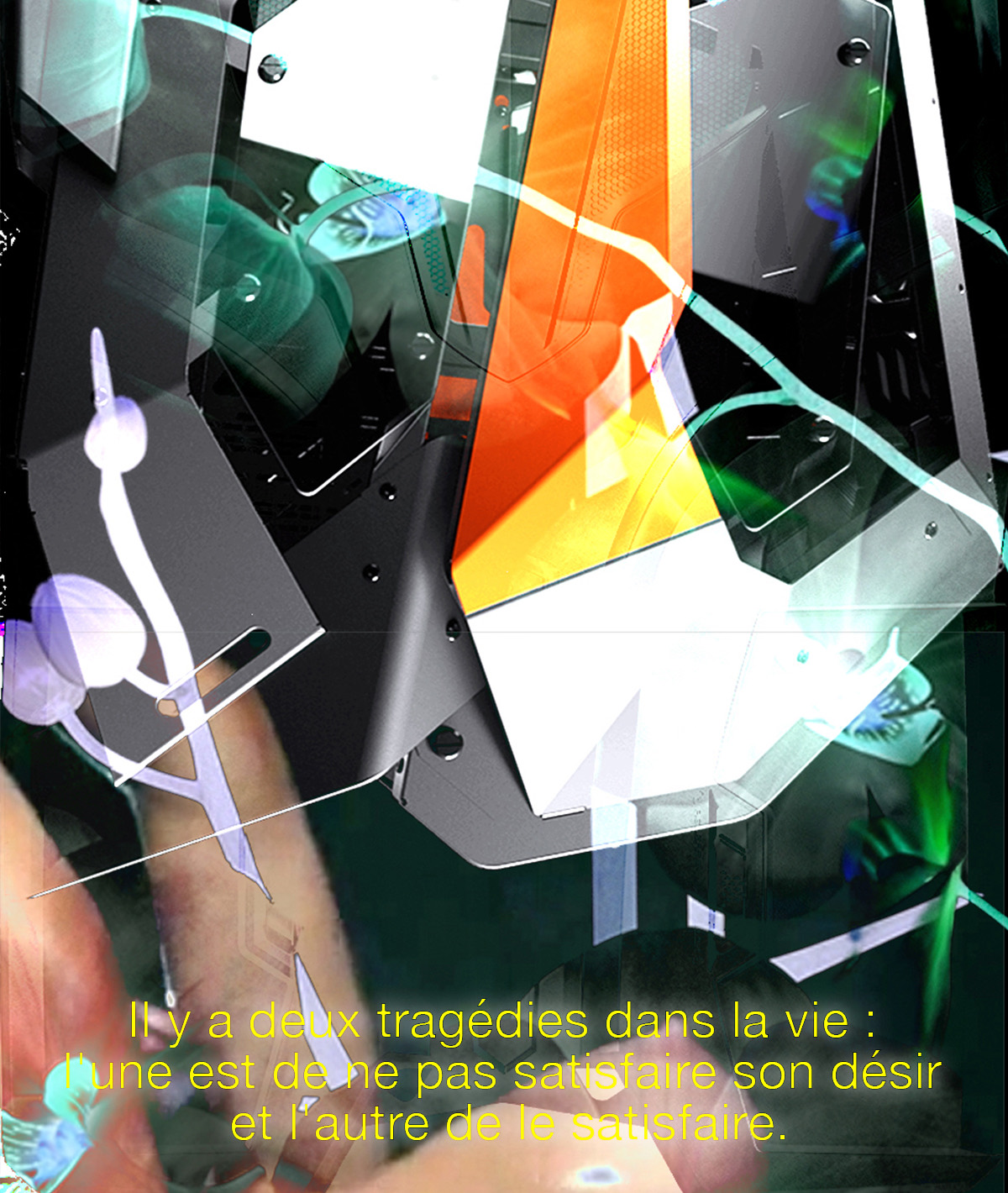
This installation at the Fondation Fiminco is thought of as a meditation on the mutations of erotic desire and néoporno. It categorizes new sexual practices as a significant development caused by the use of robotic sex toys, as well as the eroticization not only of the anthropomorphized machine but also of mechanical forms that are as unhuman as possible. The pornographic video titles (examples: VR, 4K, 60FPS) integrate concepts of technological performance which are also criteria for video selection, demonstrating that a video’s resolution can actually be more important than the content itself.
-
Metabotanie — Bloom Engine
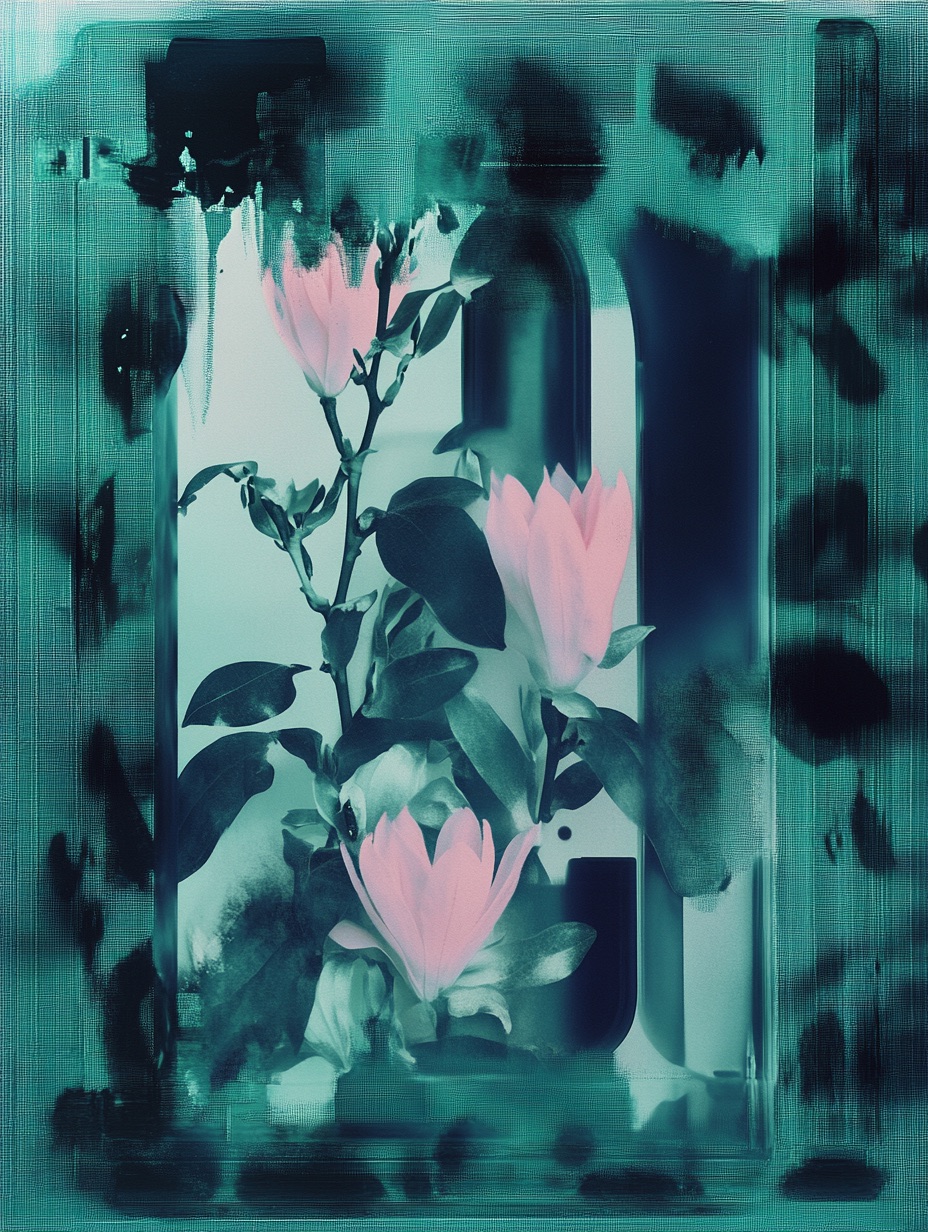
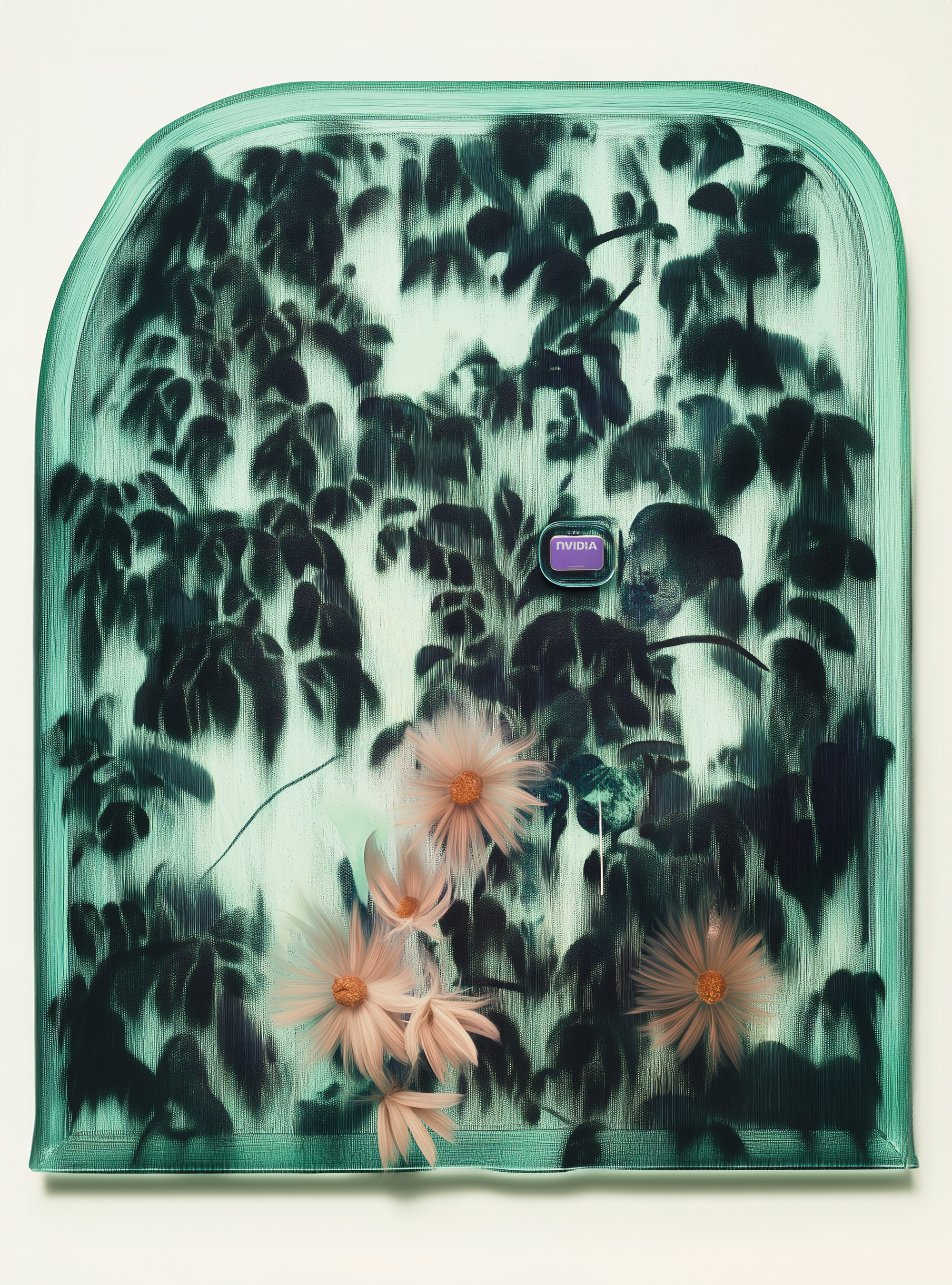
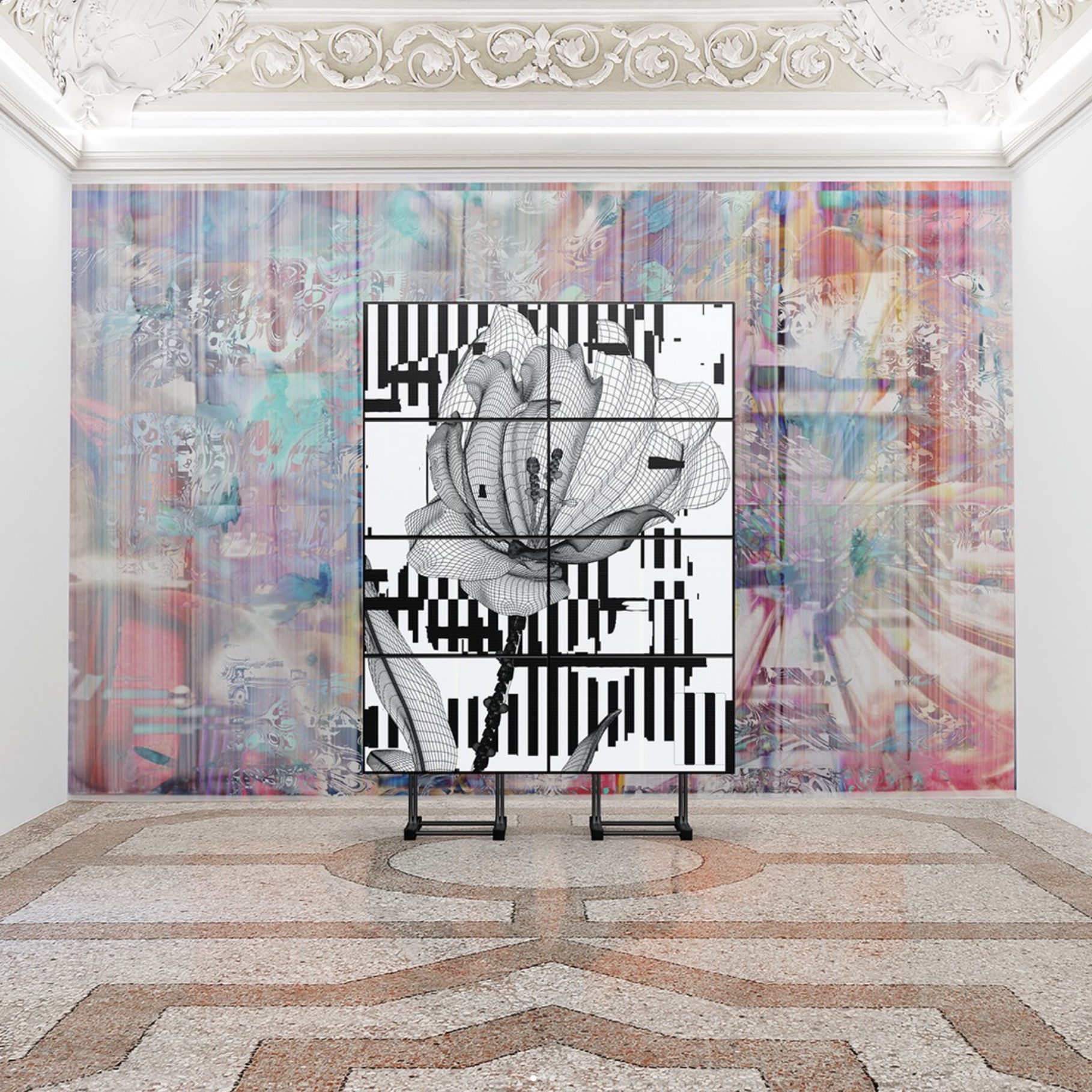
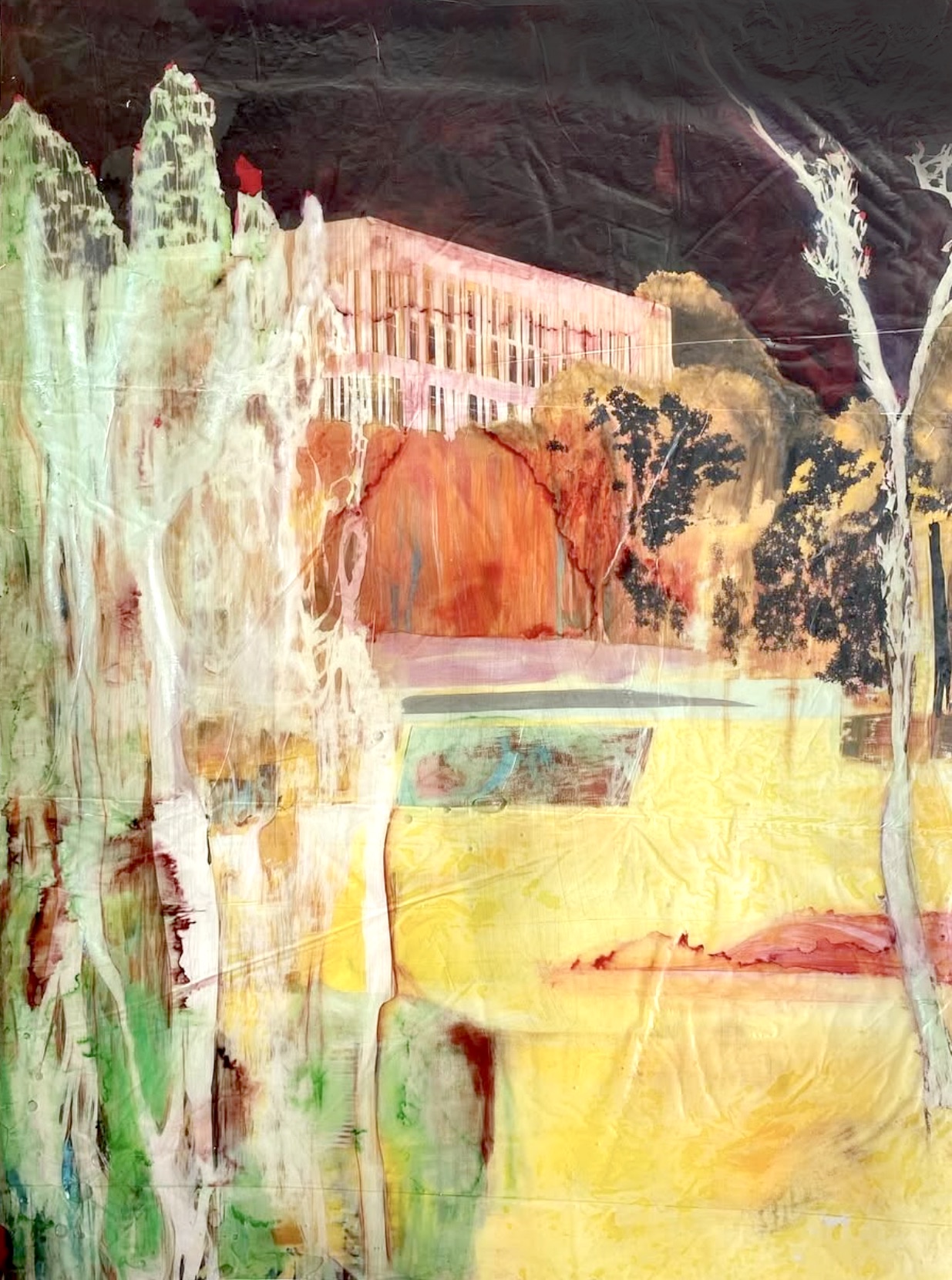
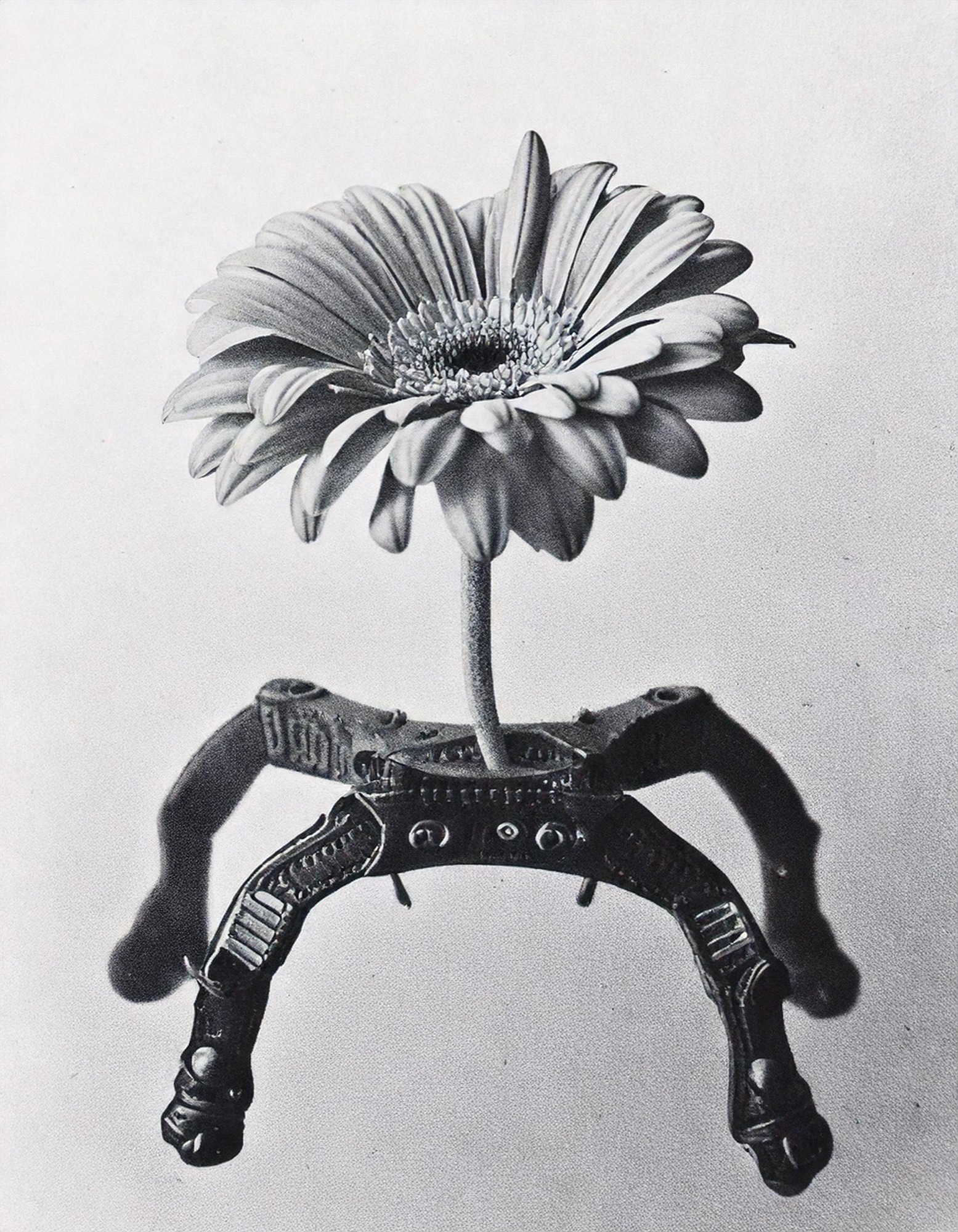
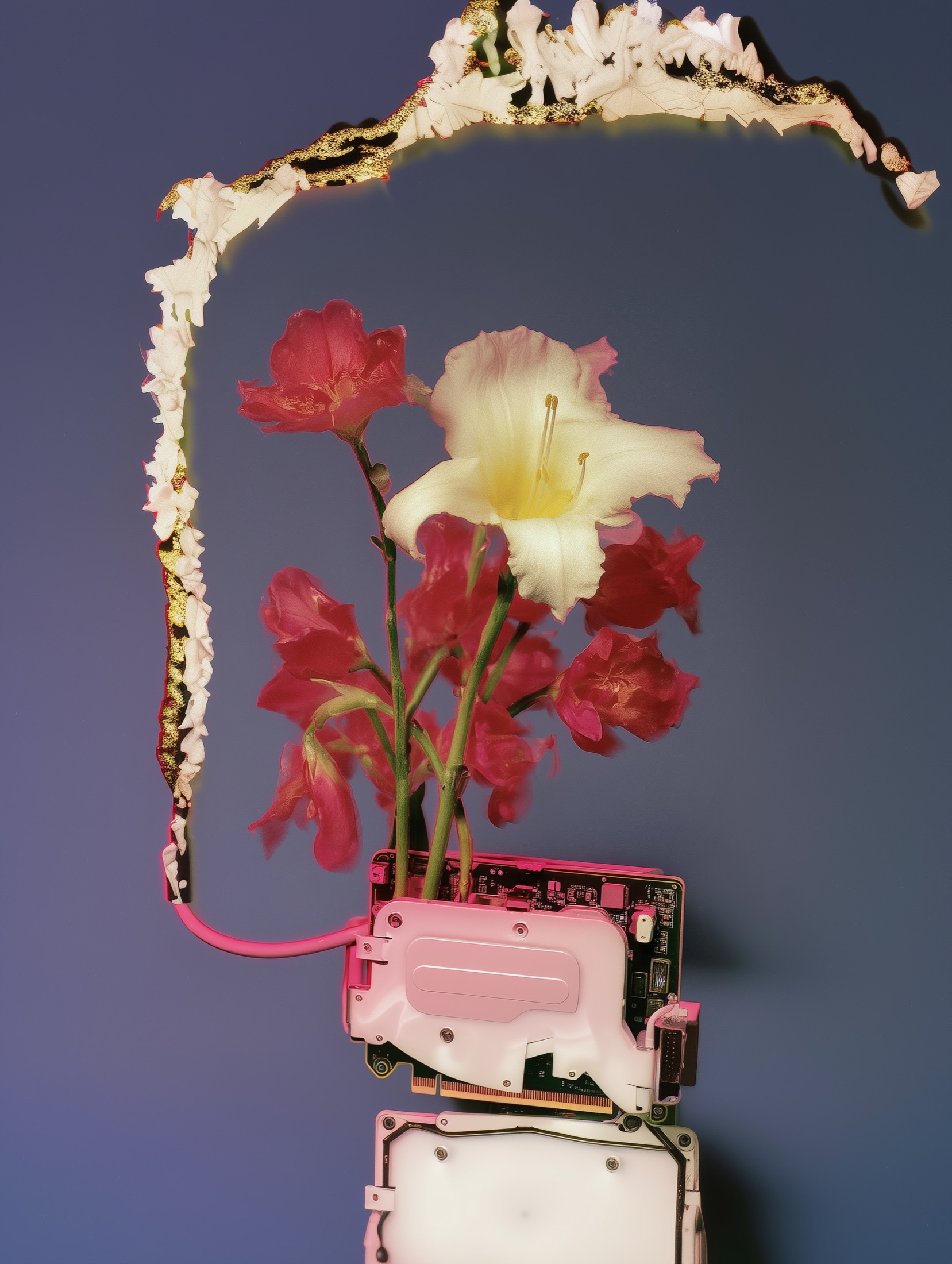
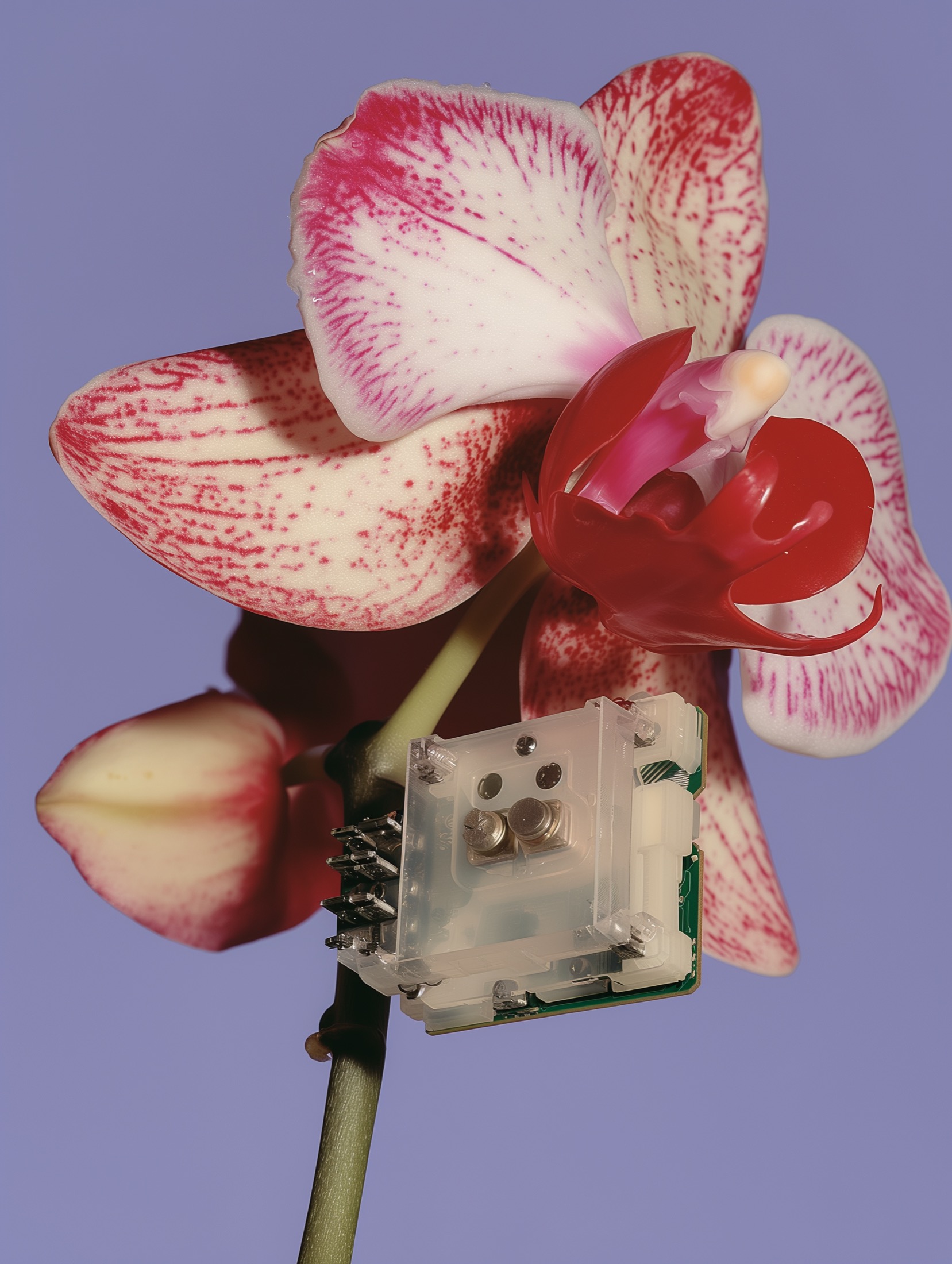
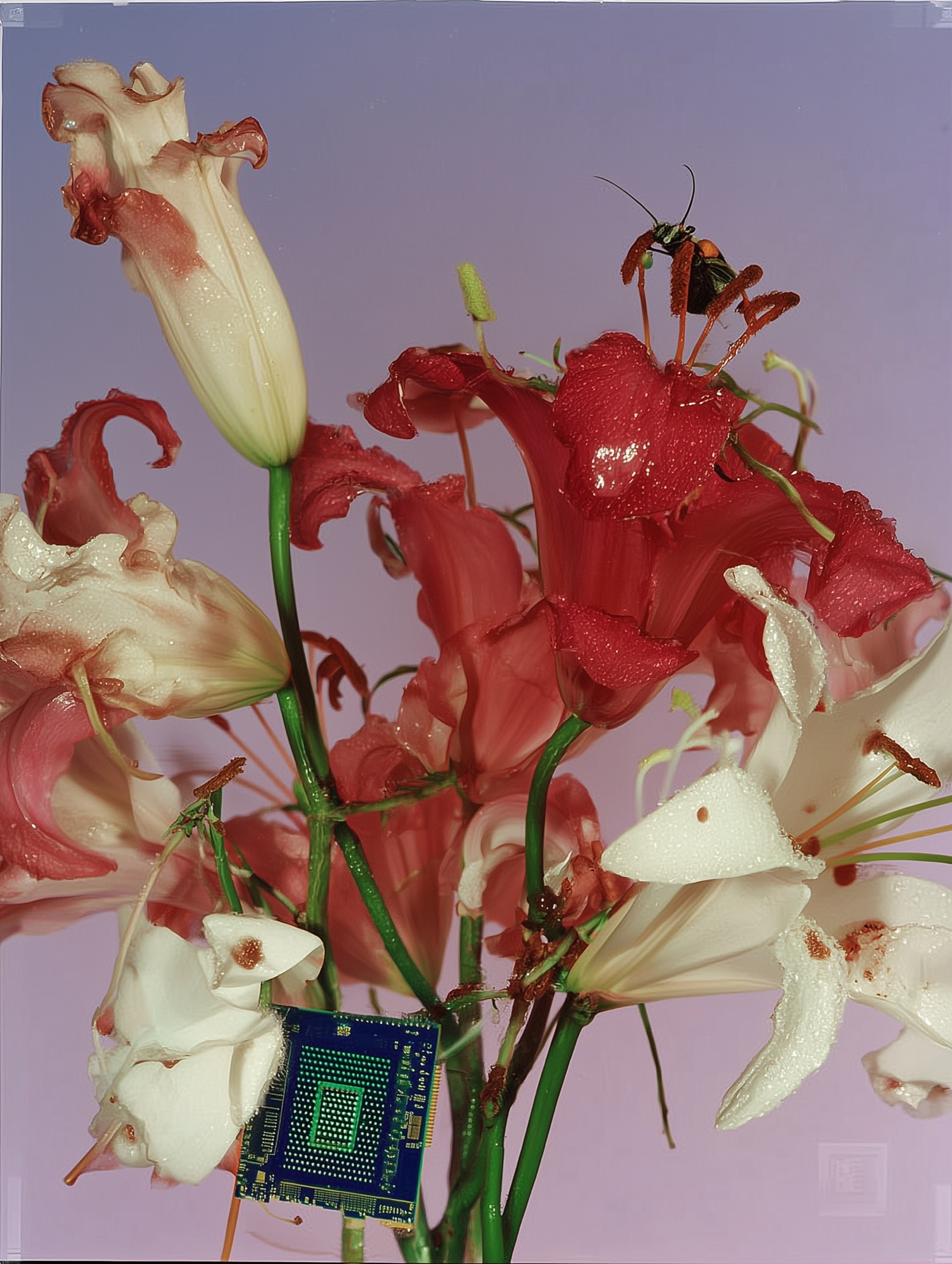
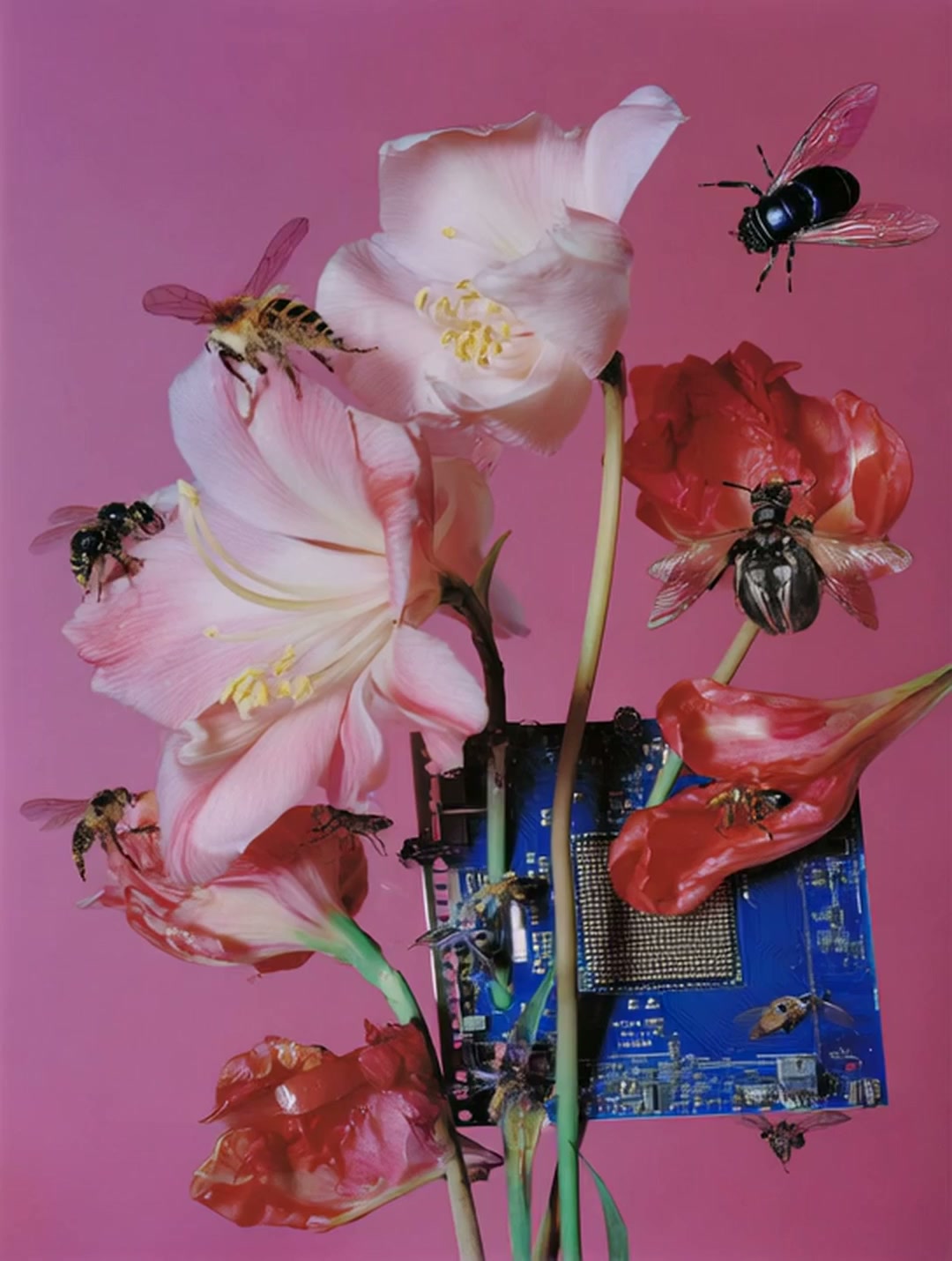
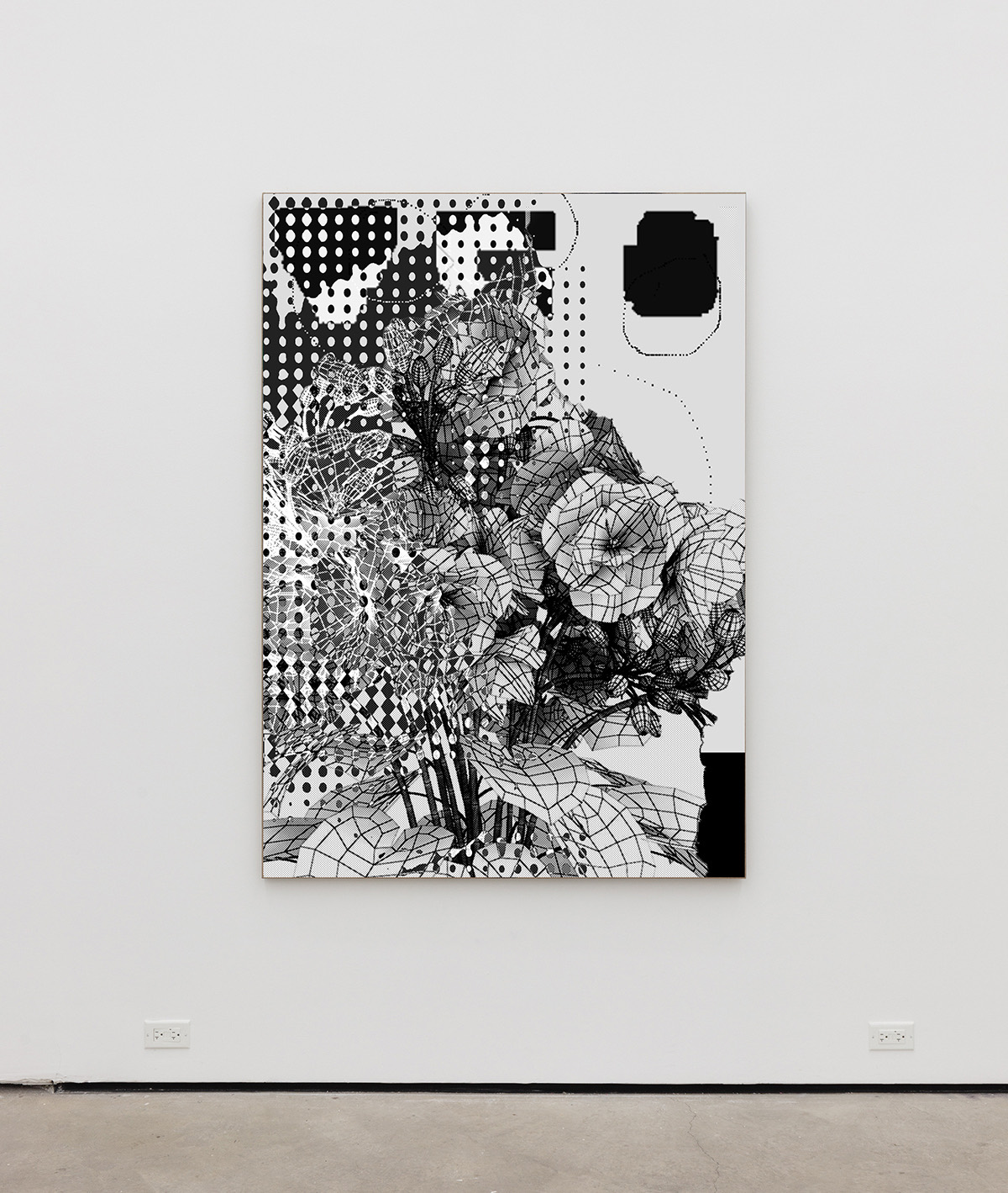
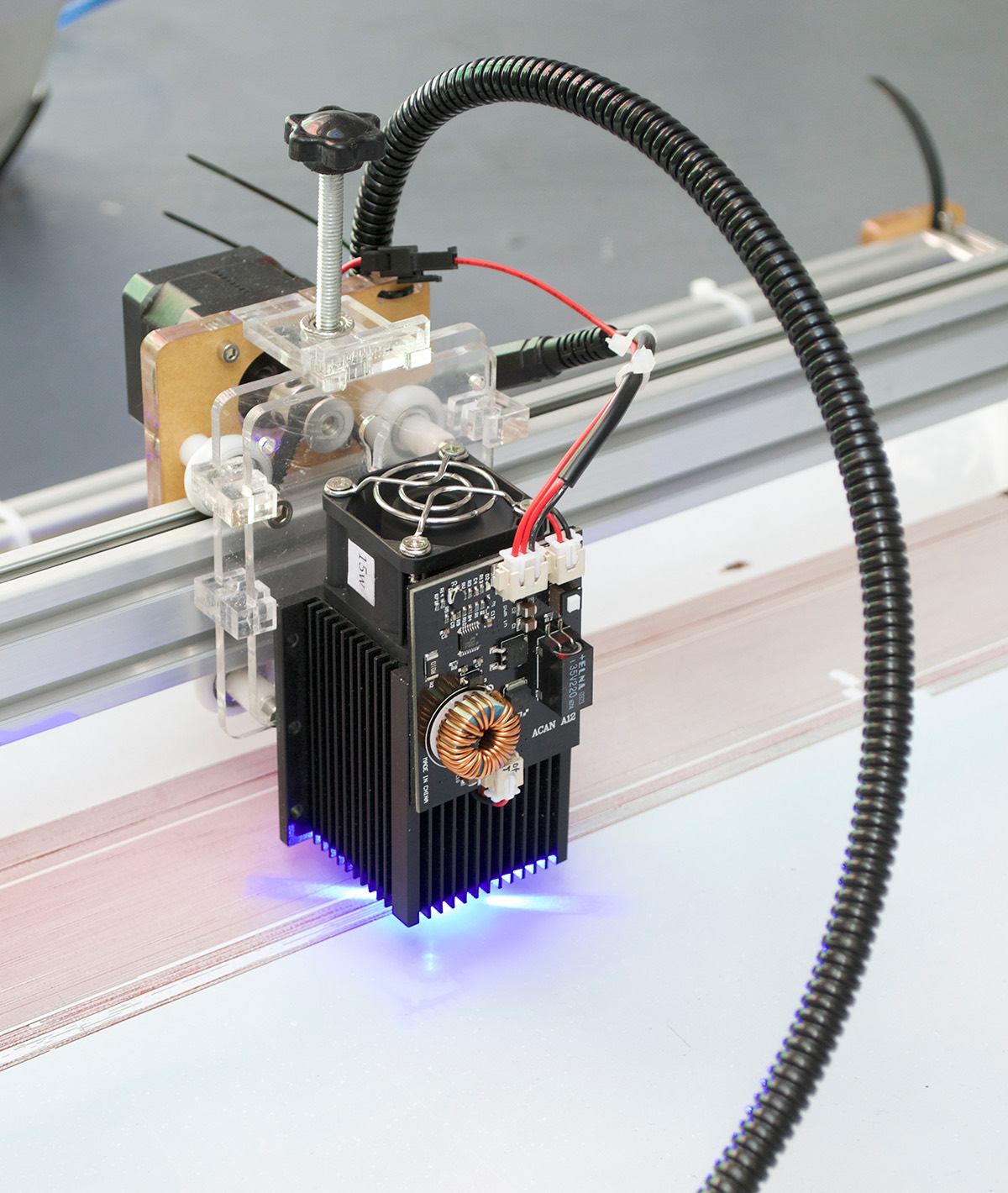
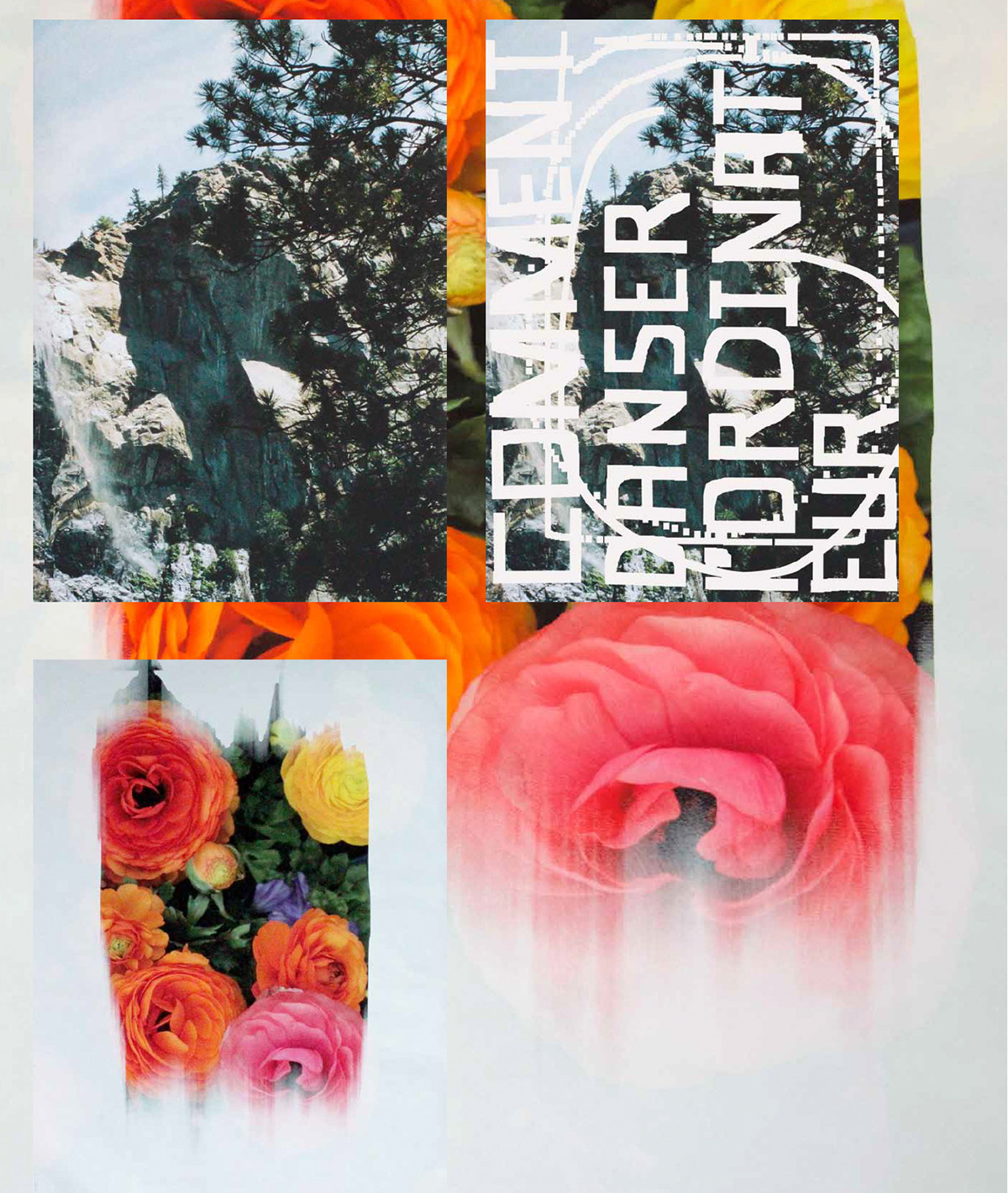
This series proposes a speculative vision of a plant form yet to come, transformed by prolonged contact with technical systems. As it cohabits with the machine, the organic mutates, adapts, and creolizes, as though it were developing its own strategies of survival within a new techno-biological environment. Produced through a process combining photography and augmented painting, the work mobilizes a hacked plotter that allows pigment to be deposited as an actual painterly material. Between constructed image, painted surface, and botanical fiction, it sketches a hybrid becoming of the living, in which blooming itself now seems driven by a kind of engine.
-
Metabotanie — Chlorophyll Loop
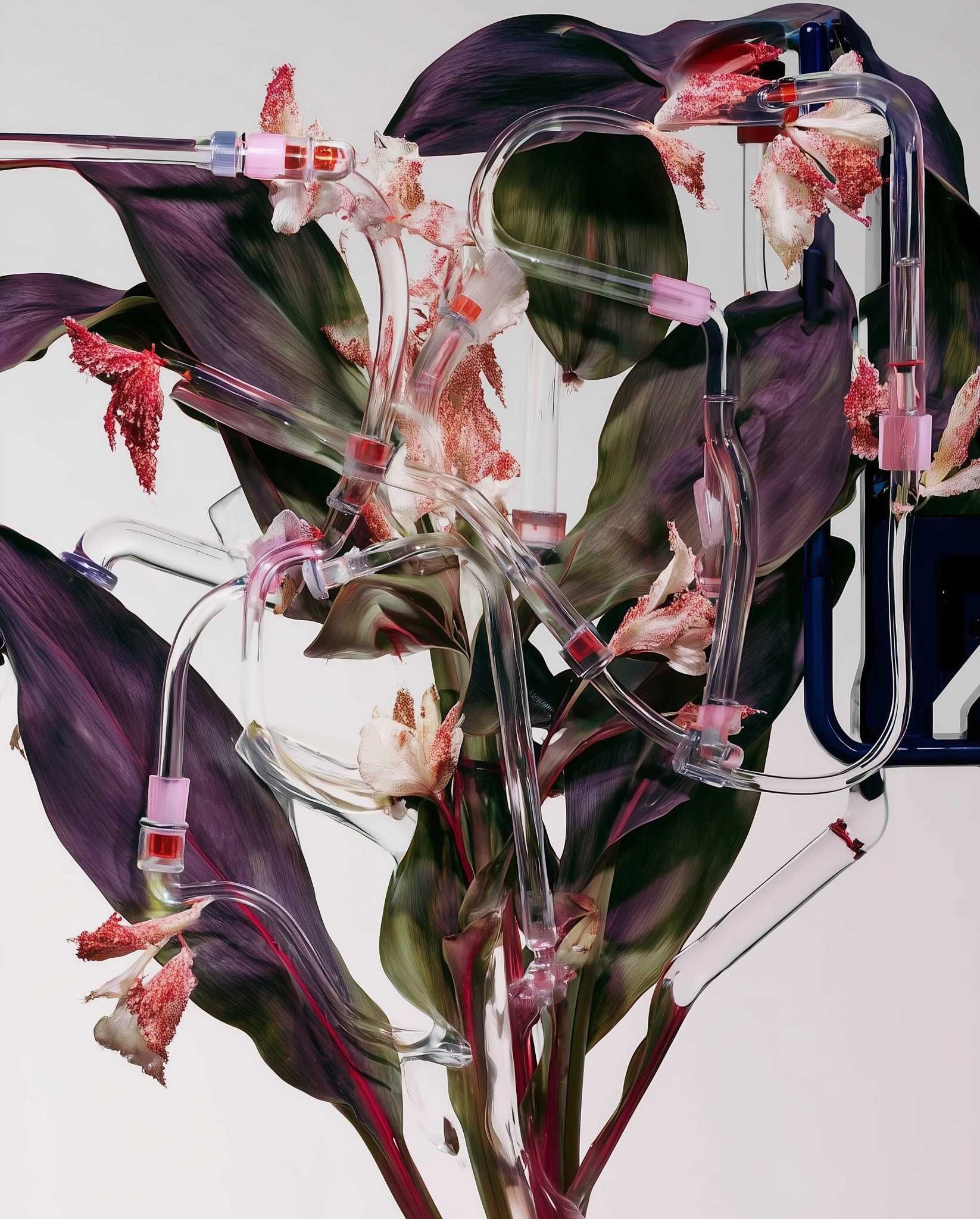
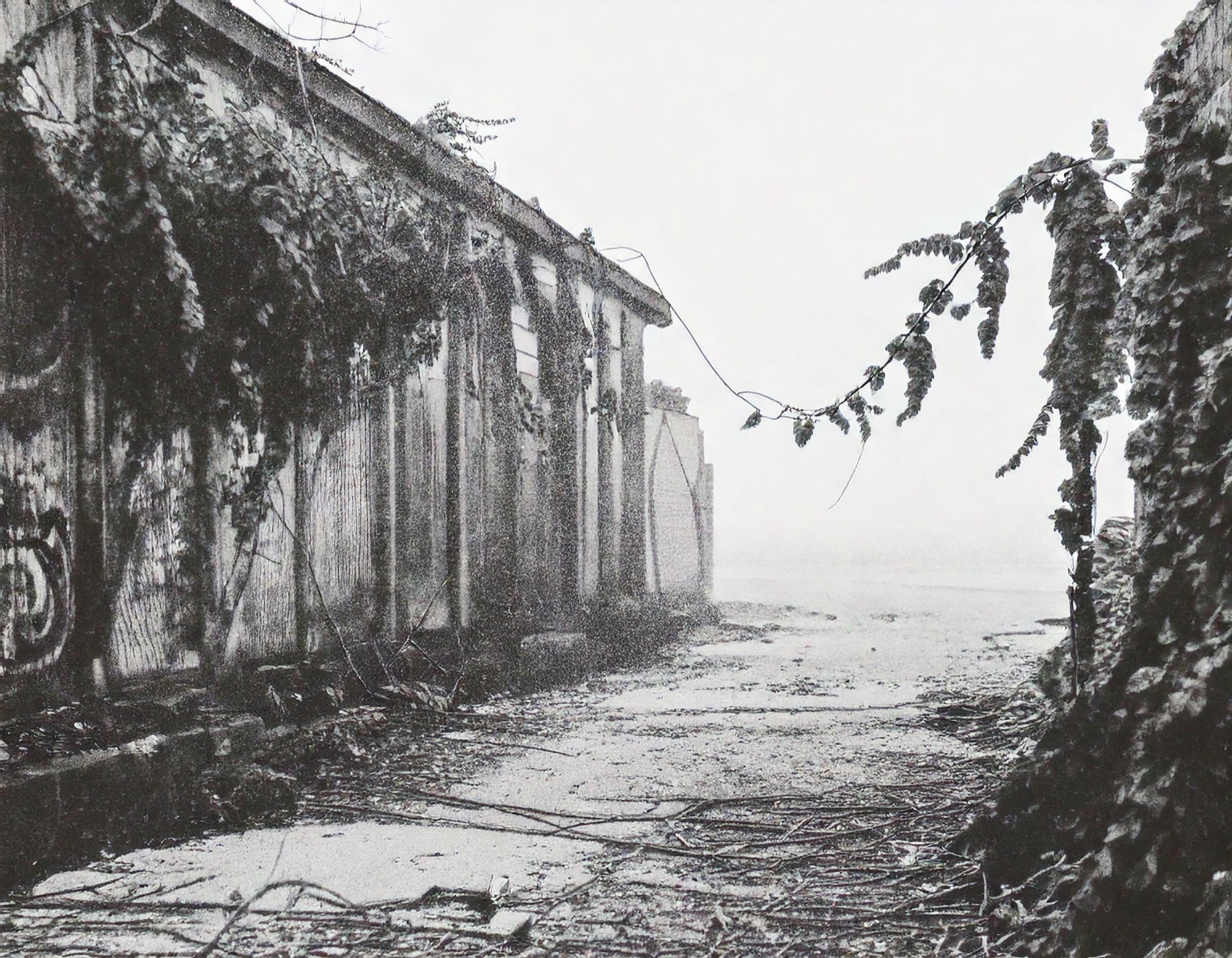
At a time when data centers could reach roughly 945 TWh of annual electricity consumption by 2030, and when cooling alone can account for up to 40% of a data center’s energy use, the work imagines a plant form no longer evolving outside infrastructure, but within its thermal, liquid, and computational flows. The recourse to liquid cooling, whose fluids can transfer heat up to 1,000 times more efficiently than air, becomes here both a fiction of survival and a formal motif. Faced with a world that counts some 391,000 species of vascular plants, an increasing share of them under threat, the image proposes the speculative figure of a flora that persists by mutating, by creolizing itself with the machine. Produced through augmented photography, digital composition, and pigment deposition via a hacked plotter, it gives form to a threshold ecology in which the flower becomes interface, sap becomes circuit, and growth becomes protocol.
-
Xeno Eros — Future Relics
Conceived as a chaotic archaeology of the future, this project stages speculative erotic objects whose sensual charge no longer passes through the human figure, but through hybrid, technical, vegetal, and tentacular forms. It emerges at a moment when research on intimacy with artificial agents already describes a displacement of desire toward emotional and physical attachments mediated by nonhuman devices, while posthuman approaches to sexuality insist on the active role of matter, objects, and artifacts in the production of desiring subjectivities. Here, that mutation takes the form of relics yet to come: fragments of an eroticism neither organic nor machinic, but creolized, diverted, recomposed. Between sextech, speculative fossil, and affective interface, the work imagines a future sensuality that detaches itself from the anthropomorphic and invests itself instead in oblique presences, surfaces, textures, and protocols of contact still without a name.
-
DATAFLOWER — Flora Cache
DATAFLOWER explores the effects of expanding data centers on the natural environments that surround them. Drawing on field research into the floral varieties found near some of the world’s largest data centers, the project imagines a form of creolization between vegetal life and digital infrastructure. Inspired by the thought of Édouard Glissant, it proposes that flowers displaced, colonized, or threatened by these architectures might return to inhabit the very sites of their erasure, in the form of data, 3D models, and traces reintroduced into the exact data centers beside which they have become reluctant neighbors. Between cartography, digitization, image, and installation, DATAFLOWER stages a survival of the living through infiltration, memory, and dissemination.
-
Speculative Painting — Disnovation Landscape
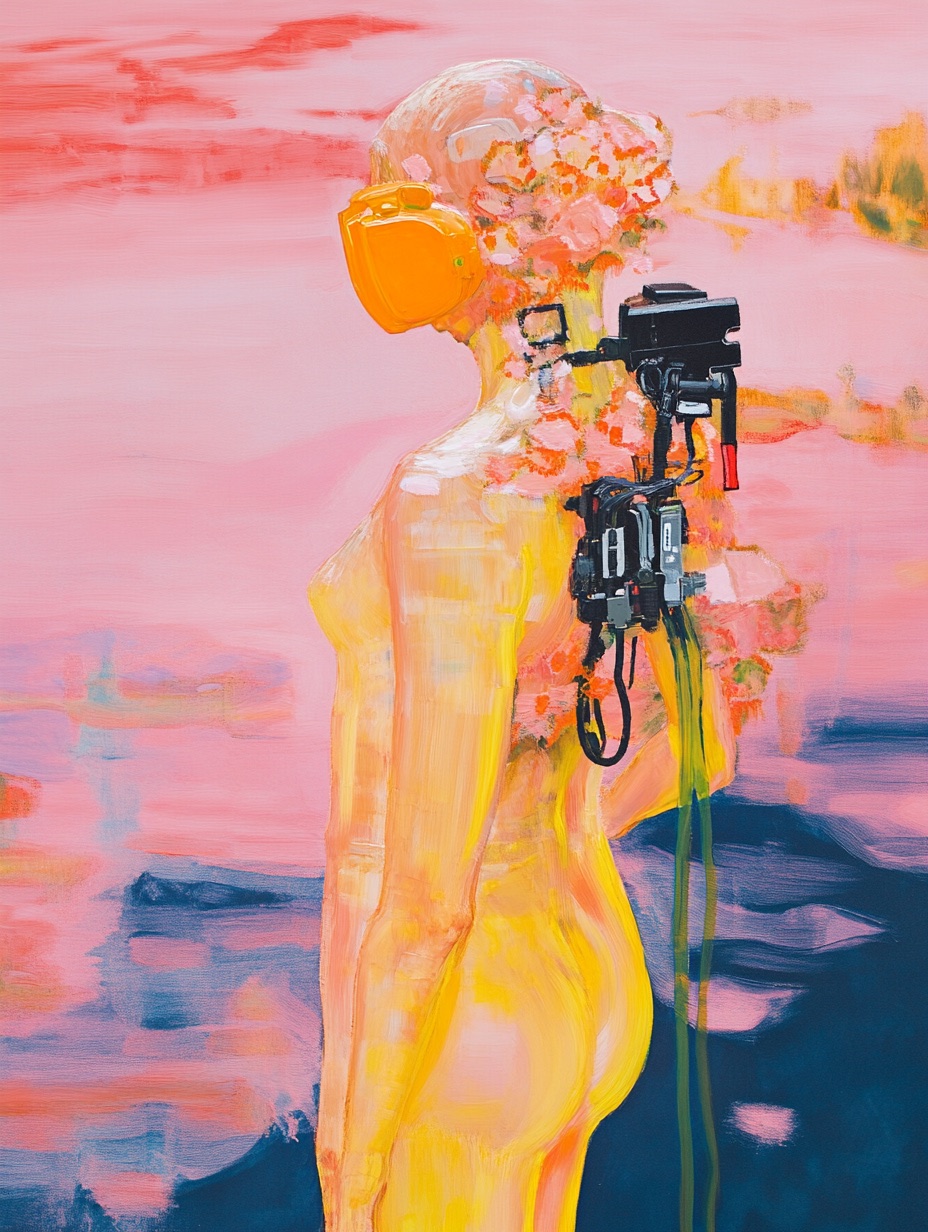
Conceived as an exercise in disnovation, this project diverts the imaginary of continuous innovation in order to explore another temporality: that of an archaic future, in which hyperconnectivity no longer produces only separation, but a renewed desire for fusion with the environment. Landscape, body, and interface are no longer opposed; they are recomposed within a single scene that is at once tender, machinic, and sensorial. Executed four-handed with the assistance of an AI-driven CNC, the painting brings slow gesture, automation, and calculation into coexistence, as though the machine itself were participating in a form of return to the world. In a context where the UN estimates that 68% of the world’s population will live in cities by 2050, and where many studies show that exposure to nature improves stress, mood, and well-being, the work imagines less an escape from technique than an attempt to rewild sensory experience from within the devices themselves.
-
The Tender Machine — Tool for Ghost Brands & Mecafantasma
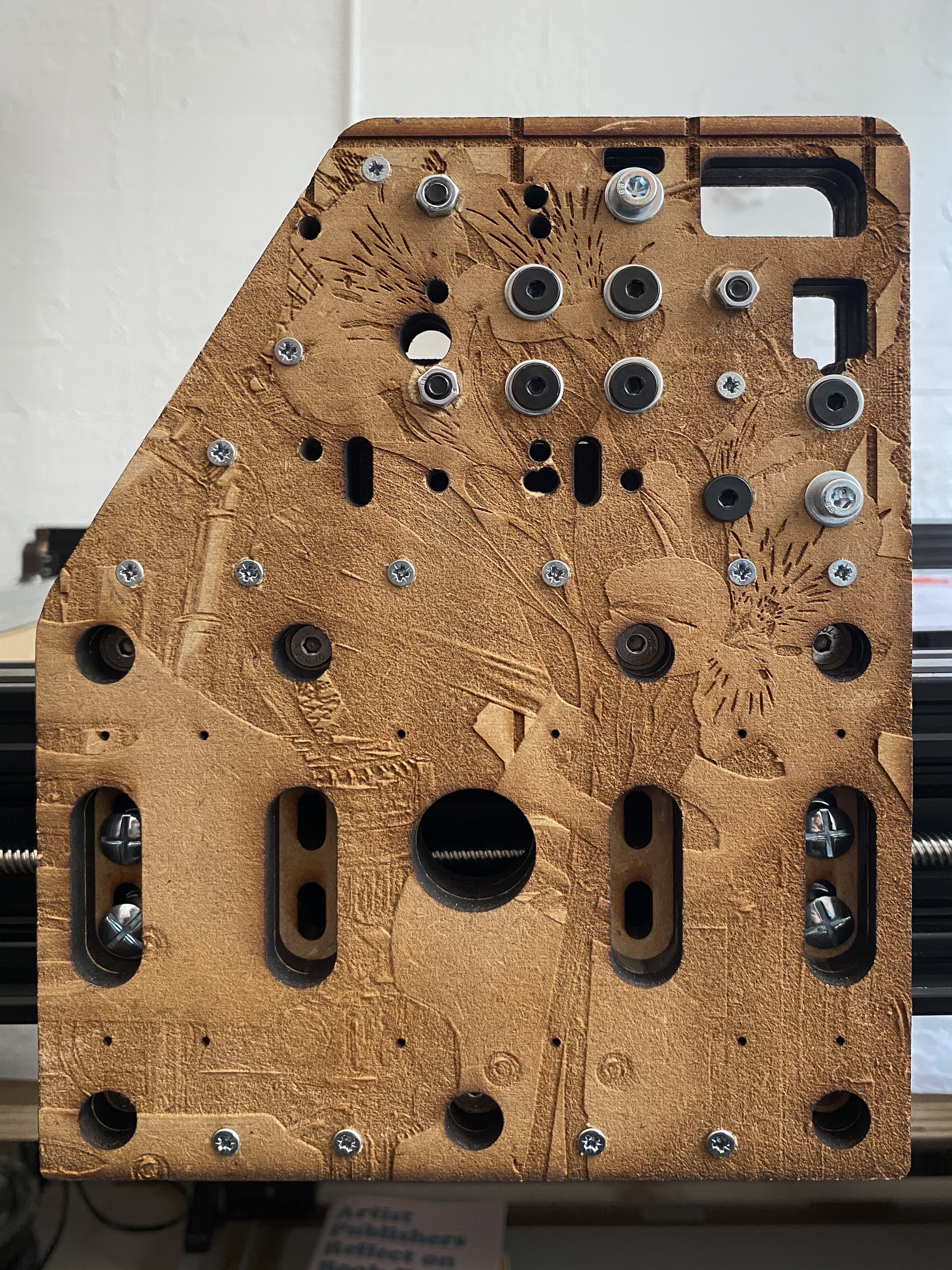
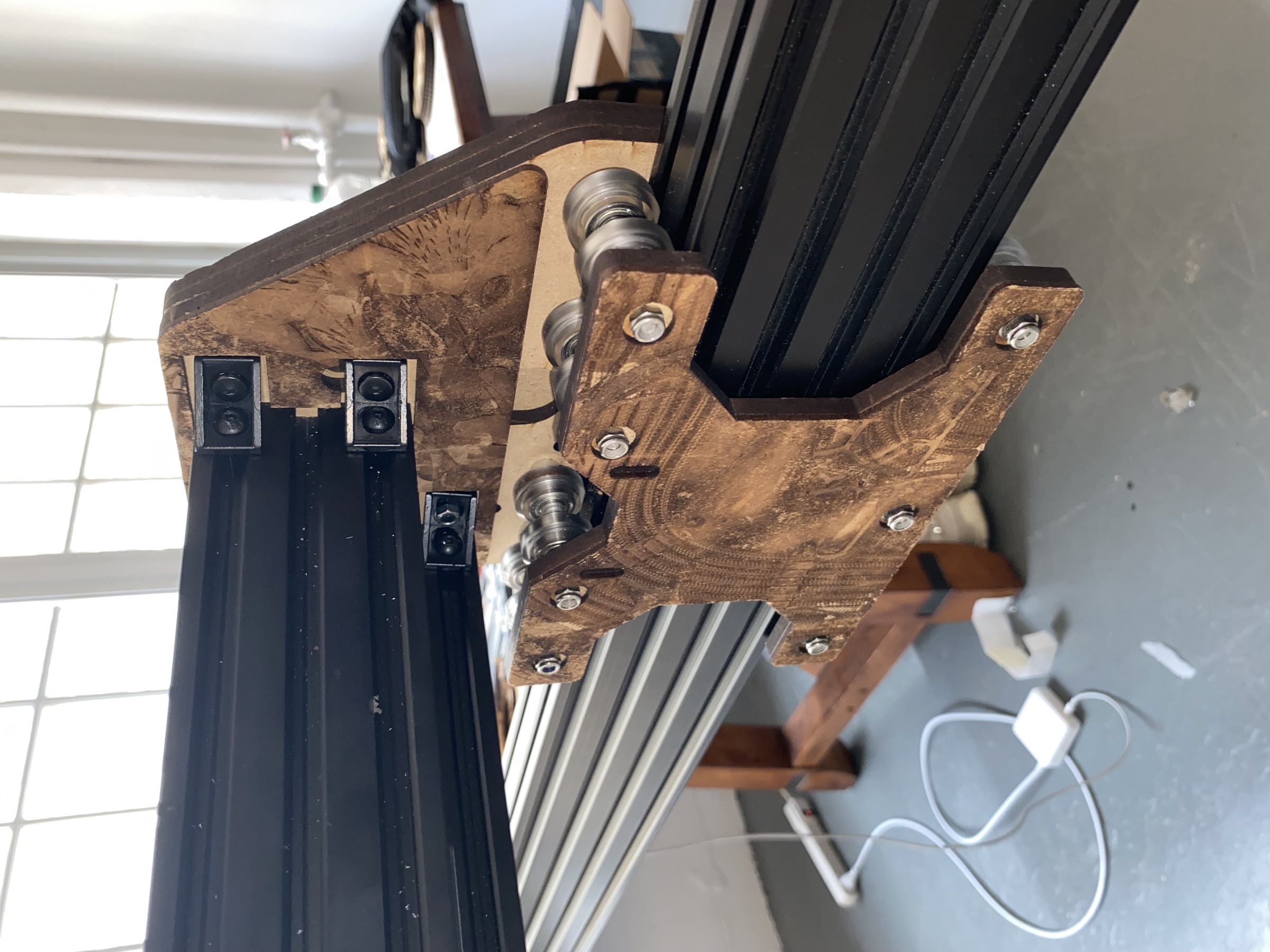
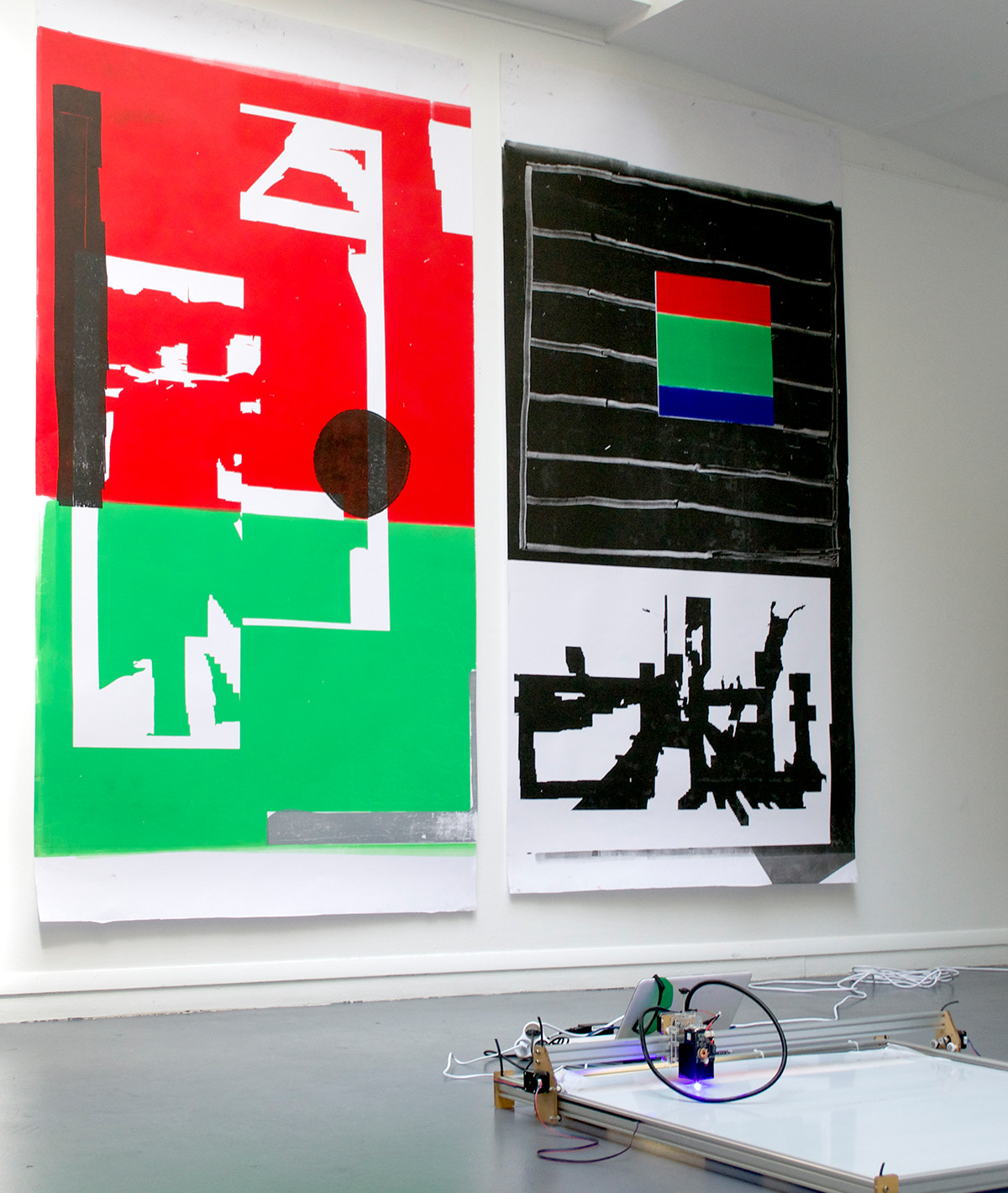
Conceived as an archaic CNC, visible and deliberately fragile, The Tender Machine turns its own vulnerability into an aesthetic of production. Fed by the continuous streams of technological news, it performs two functions through the series Ghost Brands and Mecafantasma. With Ghost Brands, it drafts speculative identities for brands yet to come, born at the intersection of innovation, the attention economy, and human intimacy. With Mecafantasma, it generates machinic-sensual silhouettes, as though the machine, while observing our technical and affective narratives, were attempting to approach the unstable forms of desire. Between monitoring, fiction, and automated drawing, the work stages a technique that does not seek perfection, but rather a troubling form of proximity to the human.
-
Send Nudes I’m Sad
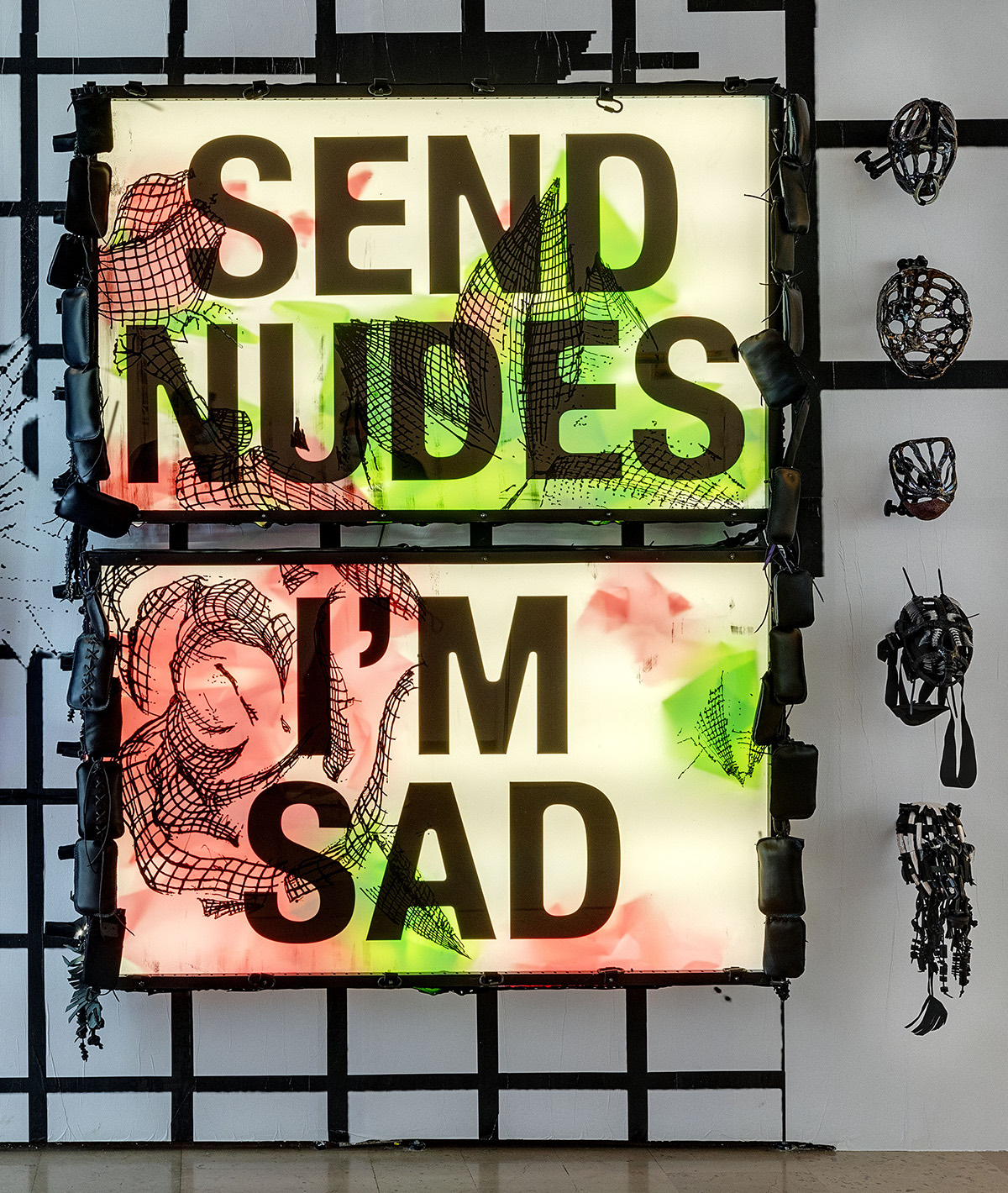
This installation, featured in the Salon de Montrouge’s 65th Exposition, is part of the larger cycle I Would Have to Stop Living in Order to Stop Loving You and is thought of as a meditation on mutations of erotic desire and néoporno. It categorizes new sexual practices as a significant development brought about by the use of robotic sex toys, or as the eroticization not only of the anthropomorphized machine but also of mechanical forms that are as unhuman as possible. This installation also uses artificial intelligence and can engage with viewers via text messages. When you send a text message, the installation sends a personalized nude in response.
-
Vascular Cooling
This series imagines a future in which cooling infrastructures have learned from vegetal life its logics of capillarity, branching, and circulation. Somewhere between root, cable, and thermal conduit, the images depict computational architectures made permeable to the vascular intelligence of plants. The future no longer appears here as an opposition between machine and living matter, but as the emergence of a hybridized world organized by shared flows.
-
Villa Albertine — Wearing Technologie
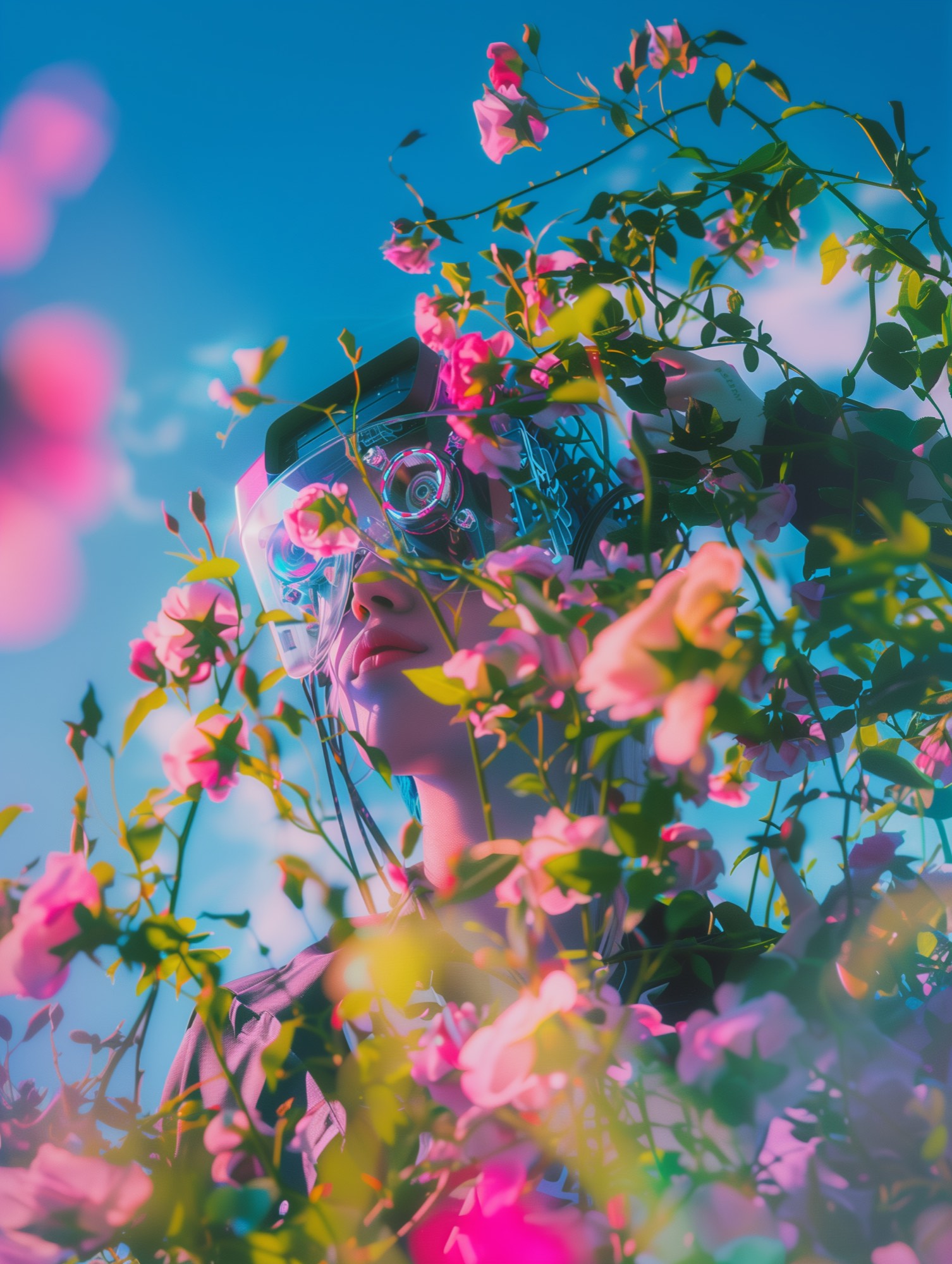
Produced at the invitation of Camille Jeanjean, curator of new media, in the context of Arts in the Age of AI, Wearing Technologie explores contemporary forms of hybridization between body, interface, and the living. Through this figure traversed by flowering and optics, the work imagines a technology less worn than incorporated, becoming a sensitive membrane between perception, environment, and transformation.
-
Wearing Data
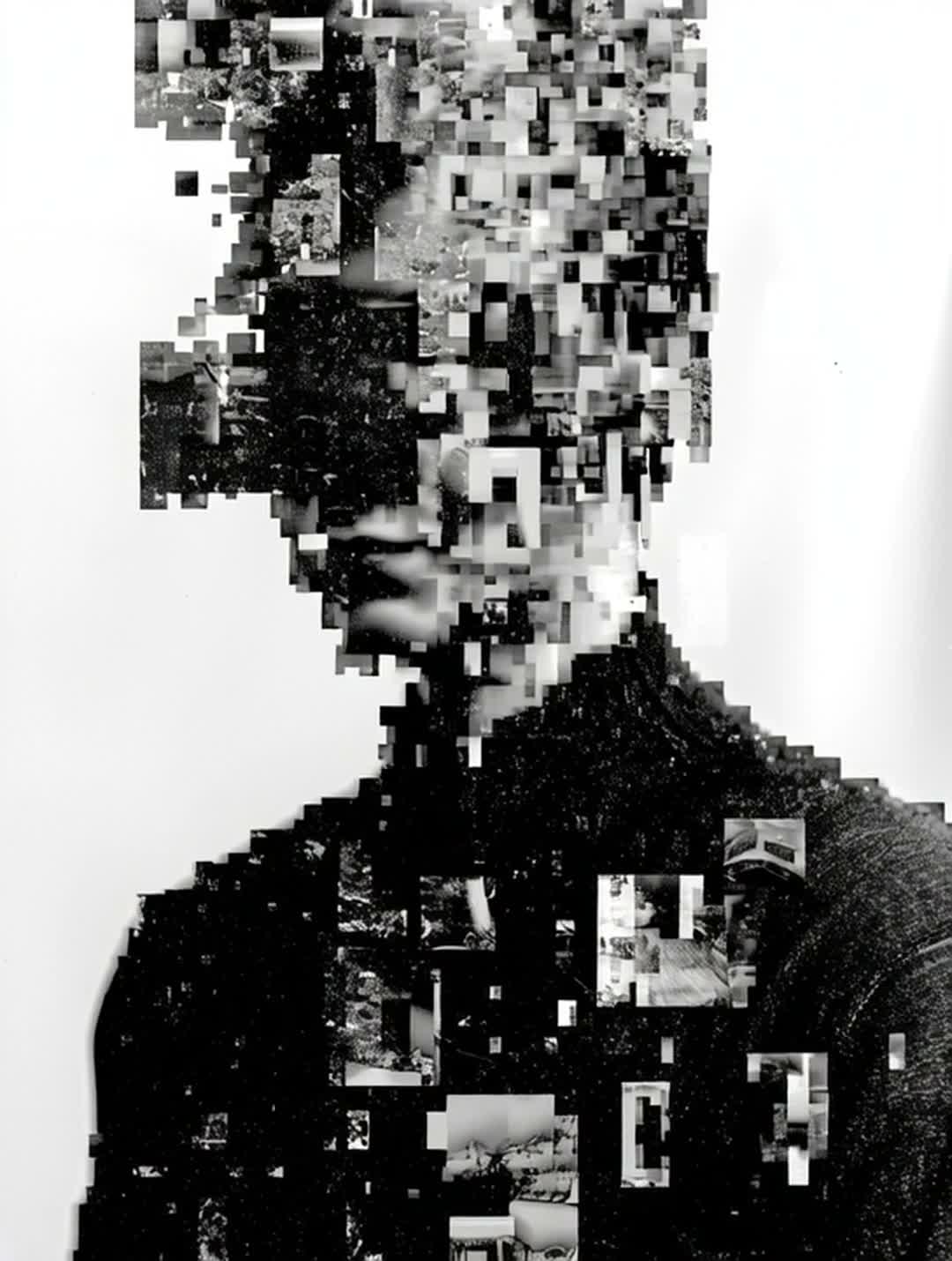
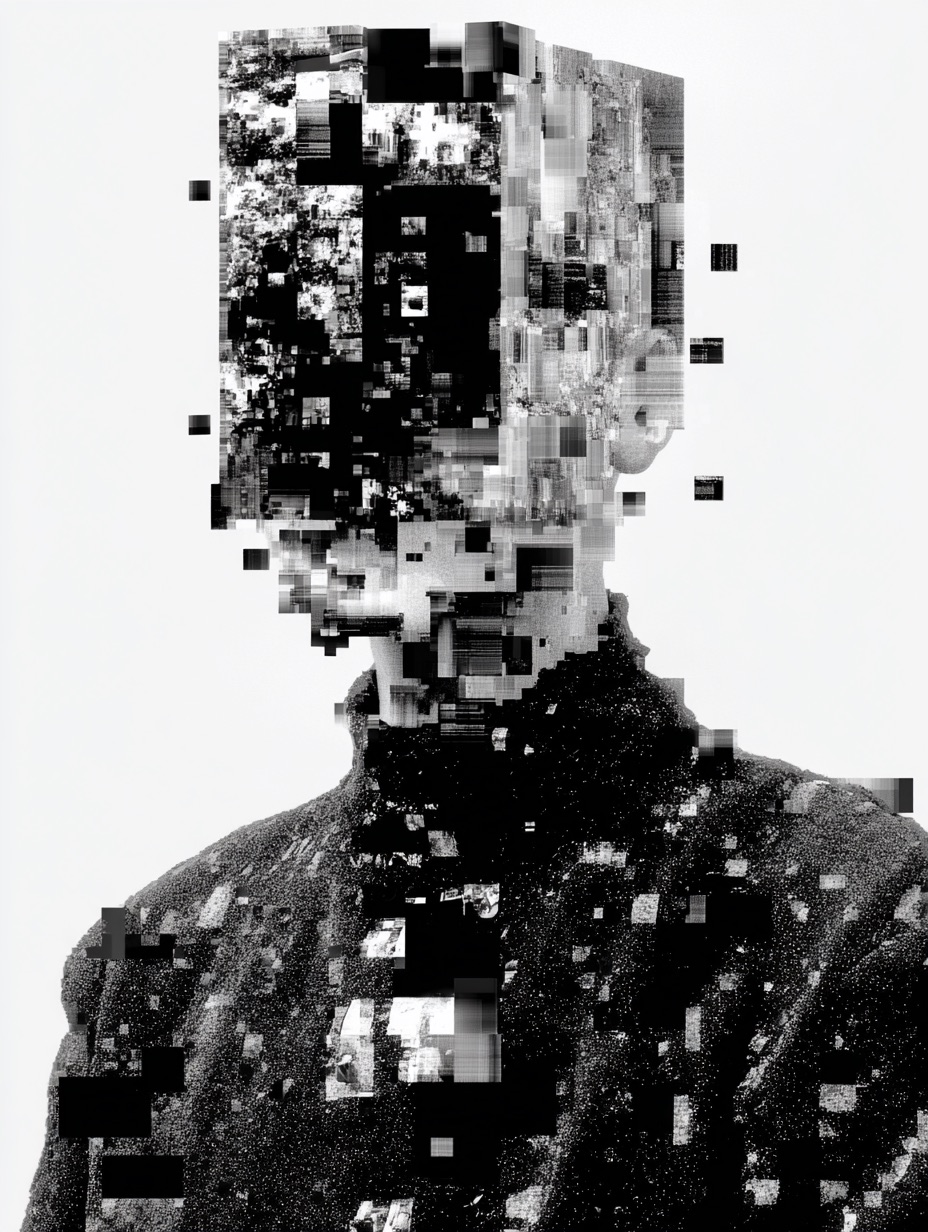
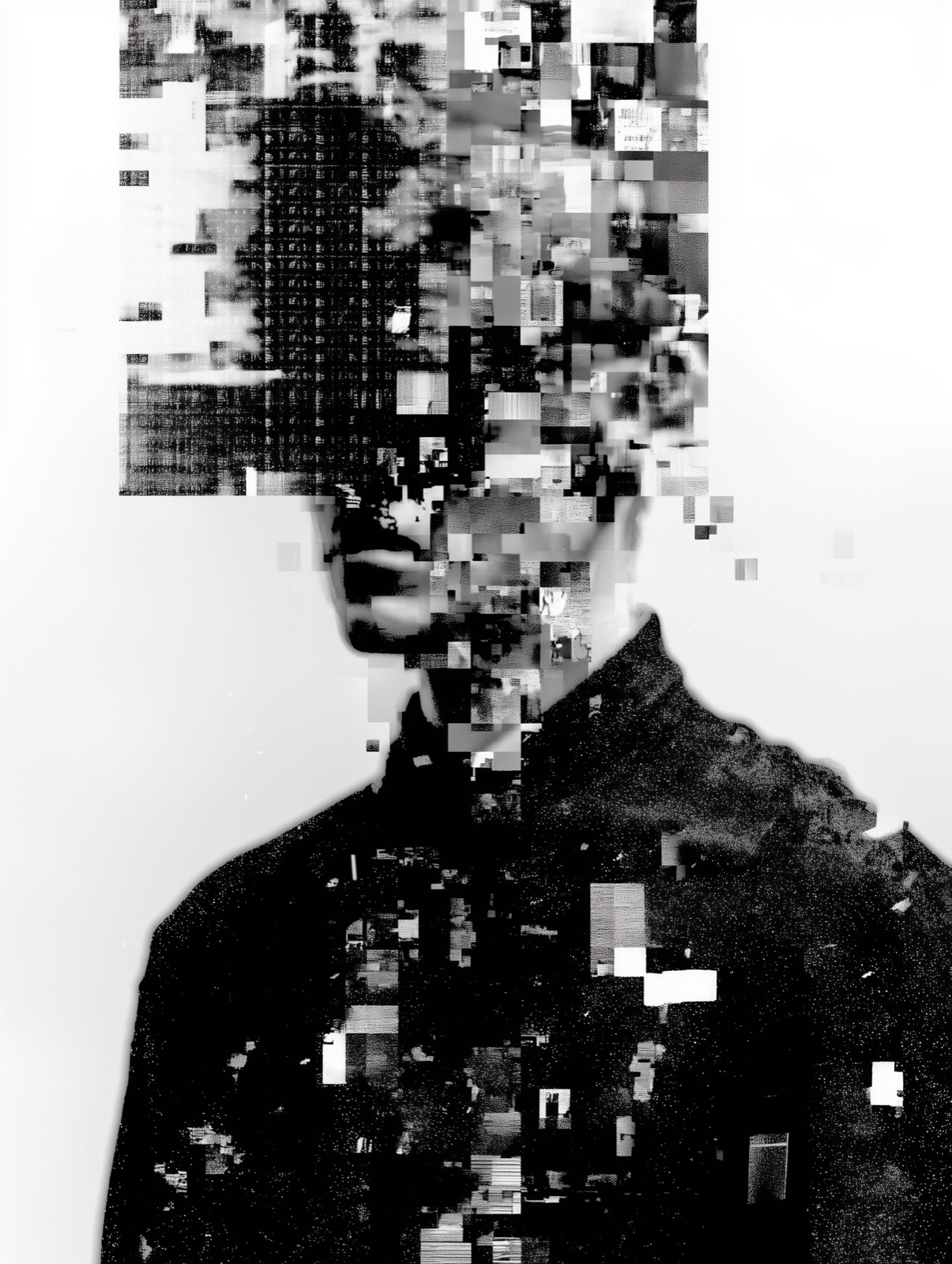
This series renders visible a machinic perception of the human through contemporary logics of automated identification. The face appears as a surface that is read, cut up, and analyzed in layers according to protocols of computer vision, segmentation, and biometric recognition. Features, textures, contrasts, and densities become the elements of an algorithmic reading in which the person is no longer only represented, but processed as a set of data to be identified.
-
Between us somthing is born
Video excerpts from the project Between us somthing is born. This series documents the emergence of an unstable relational form situated in the fragile space where two presences, whether human, technical, or hybrid, come into contact. The project observes what is born between bodies, interfaces, and projections, not as an accomplished fusion, but as threshold, appearance, and sensitive negotiation.
-
Metabotanie — Bloom Engine 7
This series proposes a speculative vision of a plant form yet to come, transformed by prolonged contact with technical systems. As it cohabits with the machine, the organic mutates, adapts, and creolizes, as though it were developing its own strategies of survival within a new techno-biological environment. Produced through a process combining photography and augmented painting, the work mobilizes a hacked plotter that allows pigment to be deposited as an actual painterly material. Between constructed image, painted surface, and botanical fiction, it sketches a hybrid becoming of the living, in which blooming itself now seems driven by a kind of engine.
-
Metabotanie — Bloom Engine 17
Video excerpts from the project Metabotanie — Bloom Engine. This series extends a speculative vision of a vegetal form to come, transformed through its contact with technical systems. Between blooming, flow, growth, and machinic environment, the project imagines a life form in the midst of mutation, compelled to creolize with technology in order to continue existing.
-
Gaming Porn
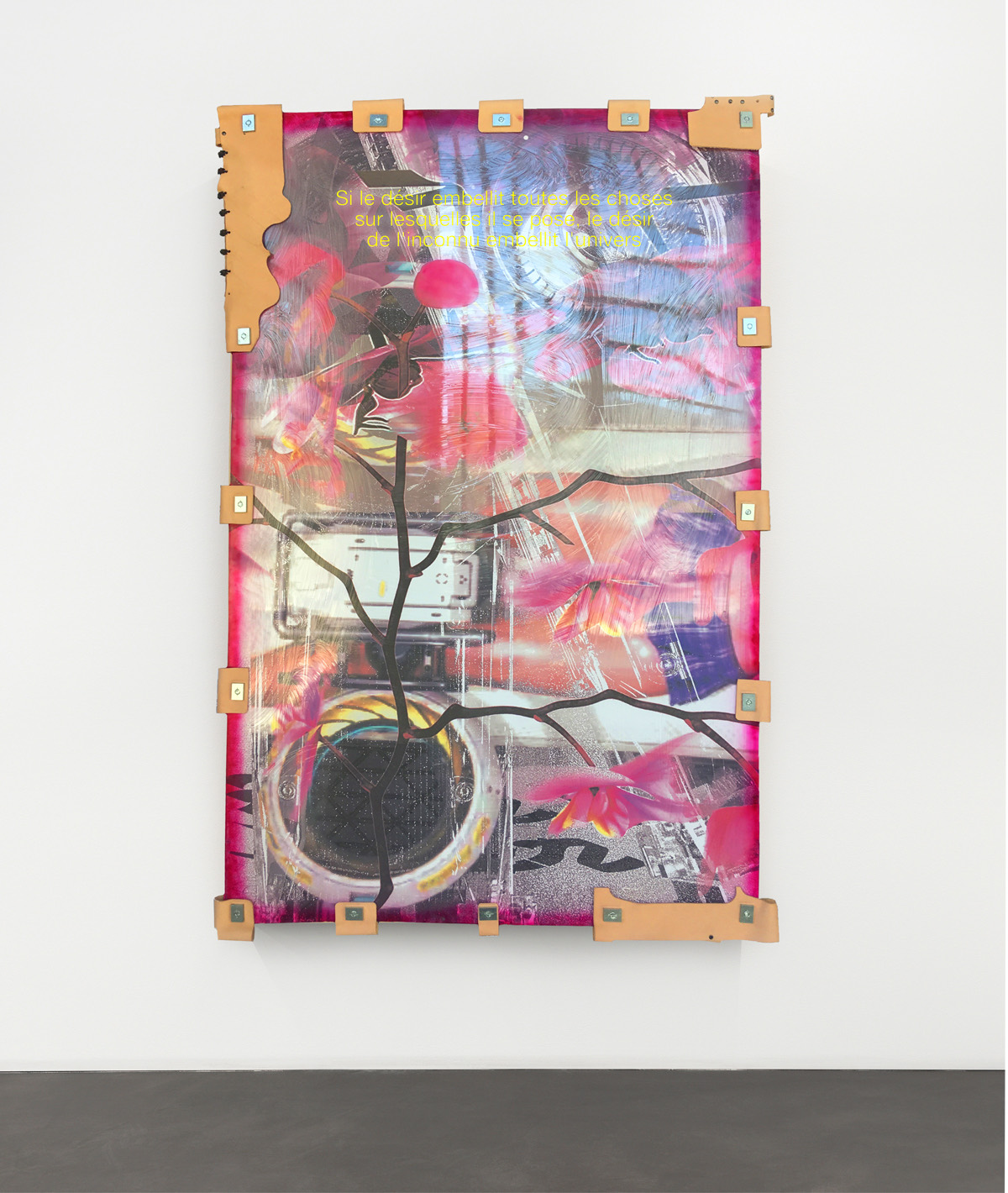
Gaming Porn extends the broader research into néoporno and the mutation of erotic desire. Through inkjet printing, airbrush, and silicone resin, it translates the visual codes of online pornography and gaming into a materially dense image where technological seduction and bodily fantasy converge.
-
It Is Urgent That Progress Be Programmed
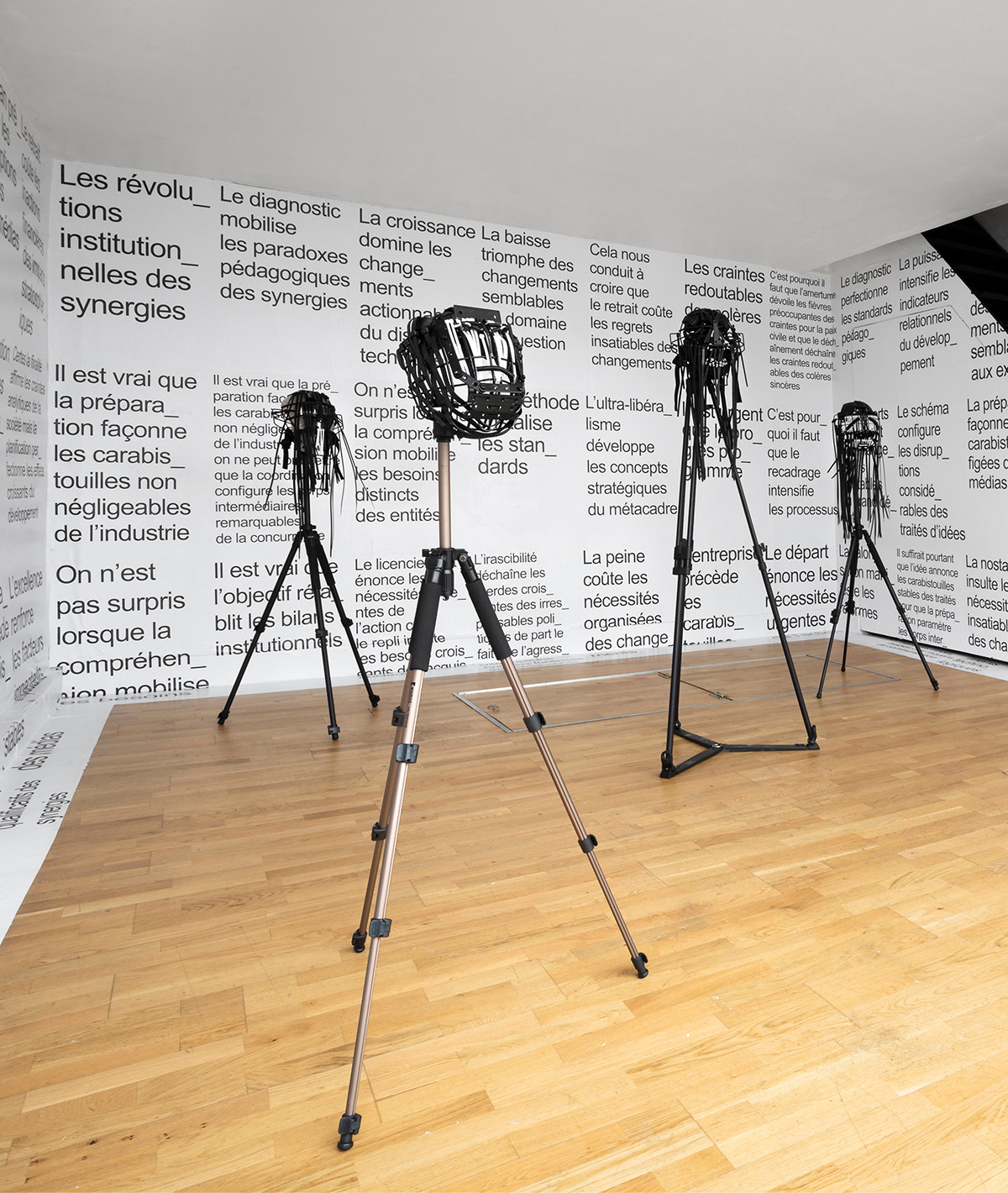
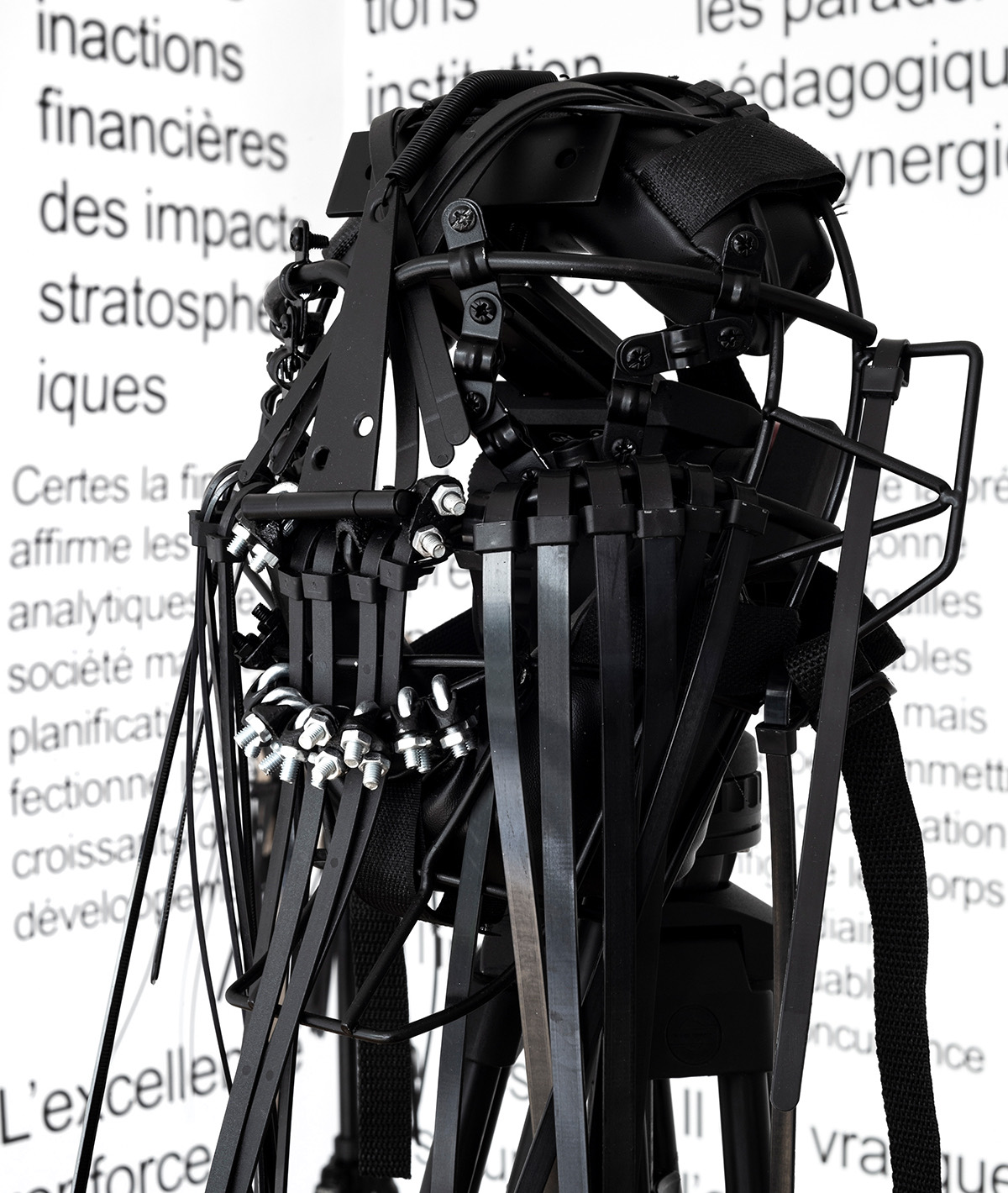
The installation It Is Urgent That Progress Be Programmed was imagined in the context of the gilets jaunes movement. The project randomly generates meaningless sentences, much like Pipotron. This program simultaneously uses internet news feeds and the viewer’s emotional and facial recognition. A camera in the window detects viewers’ emotions in order to generate an associated nonsensical sentence. The project was meant to reimagine the Grand Débat National, caricaturing the hollow words of politicians. The masks symbolize the protection that the gilets jaunes could have used against emotional recognition systems used by police to identify the crowd’s threat level.
-
BOT OR NOT TO BOT (Series OOO)
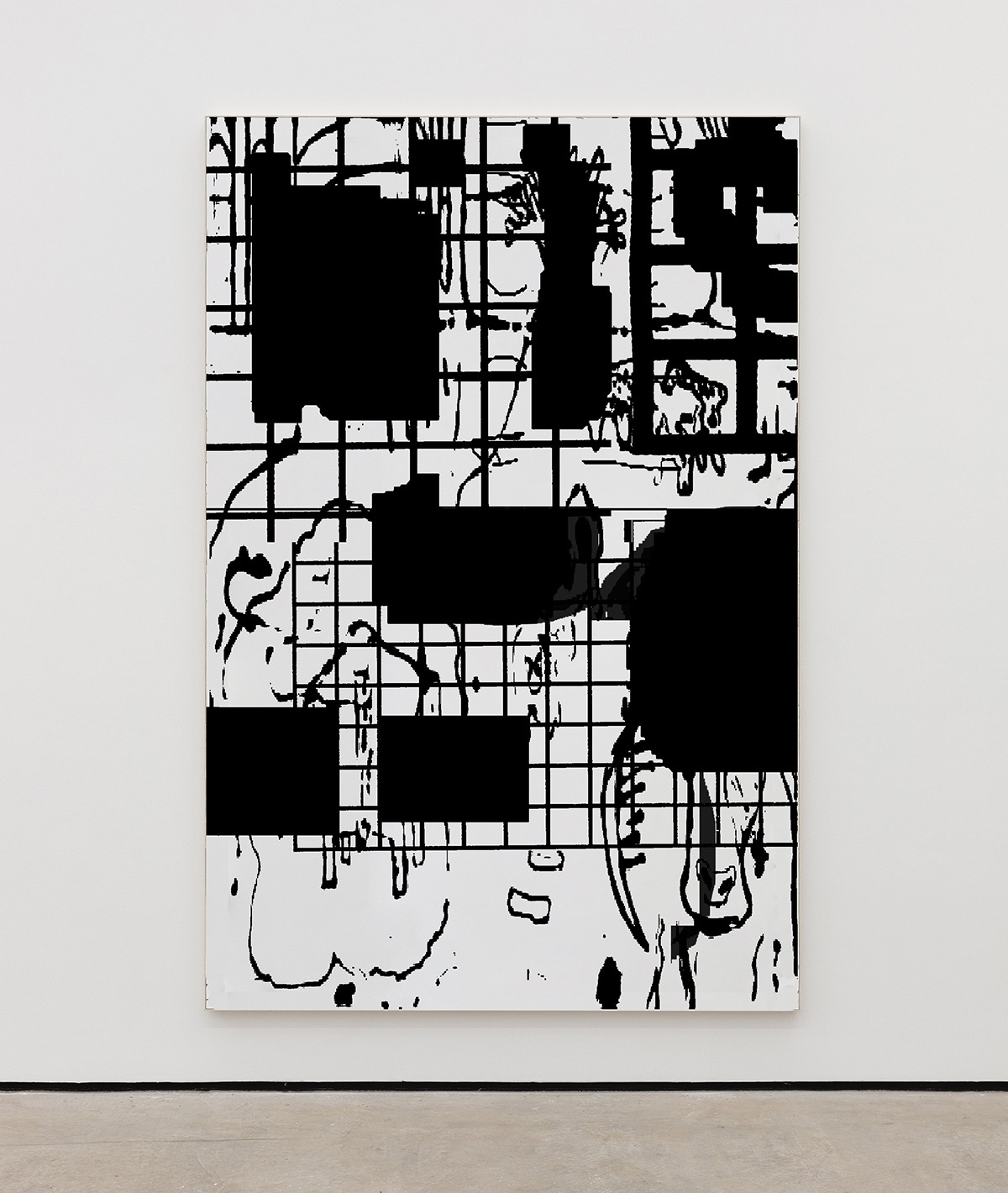
For each project, my practice begins with an obsessive look at complex, sensitive forms such as CAPTCHA and at incoherent screens misunderstood by machine logic. I reproduce them daily, and I transform them into visual art, whether drawings, paintings, videos, or printed objects. These elements are part of a recurrent series that I have titled Bot or not to bot: they reappear in each of my installations as a way of reassuring myself that I have not become a robot.
-
Transmachinisme
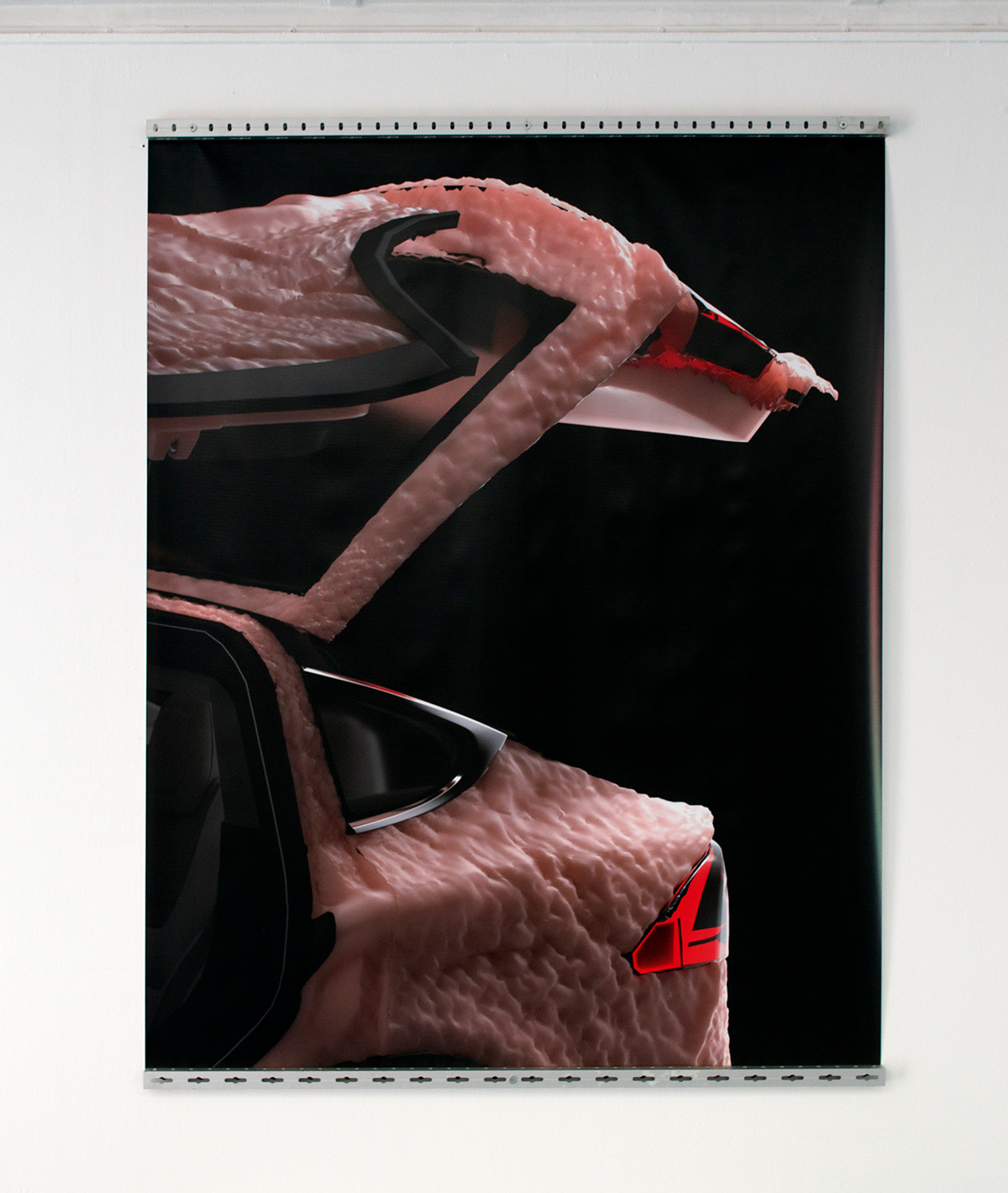
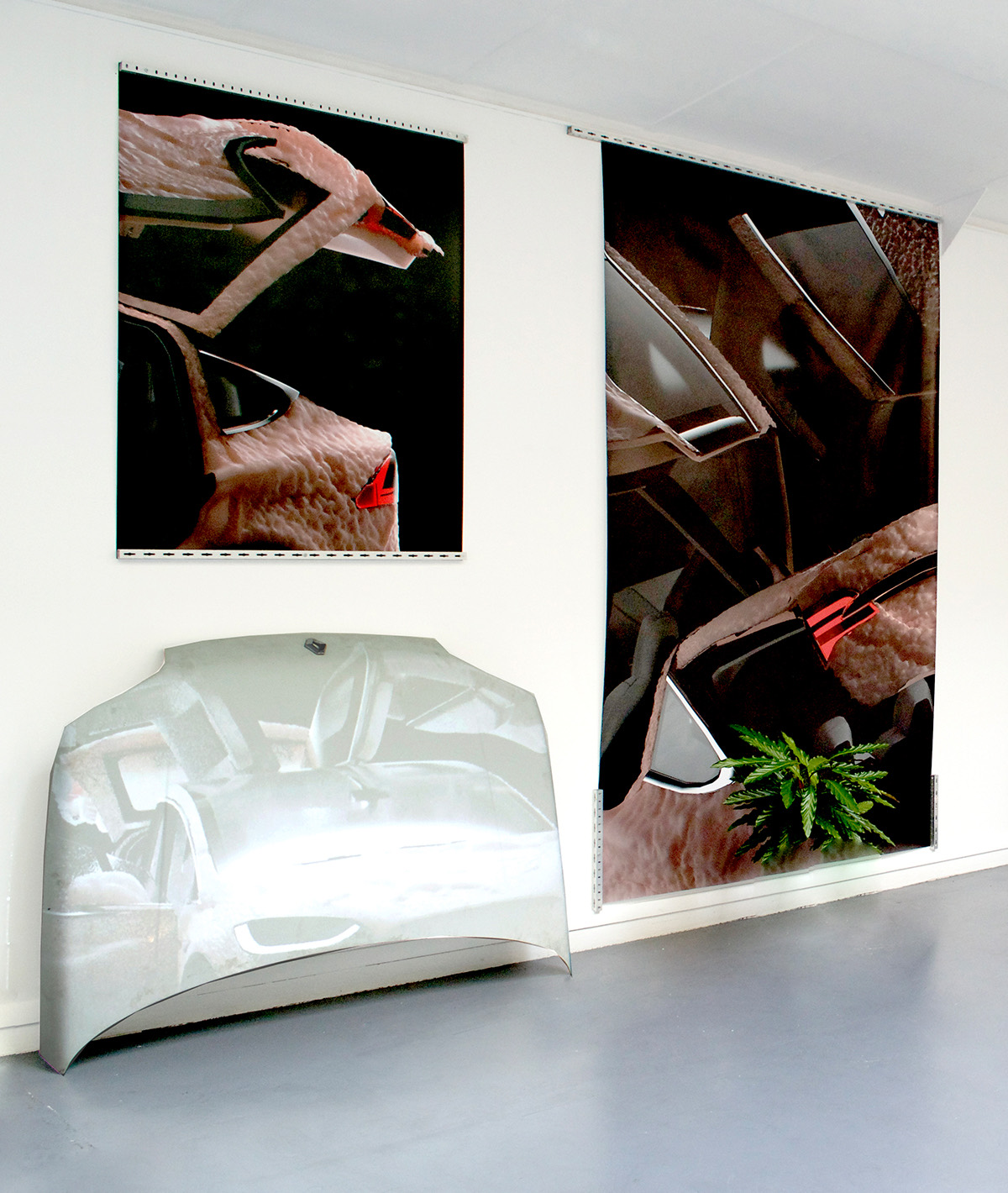
Transmachinisme simulates a new Tesla innovation by presenting the possibility of coating a car with a material enhanced with genetically modified human skin. 3D animations are projected onto the car and then printed onto the material. Based on video-game logic, the project borrows from the customization of racing games, selecting bodily characteristics to be applied to the machine, from skin color to texture.
-
I HAVE DONE THINGS HERE I COULDN’T DO ELSEWHERE
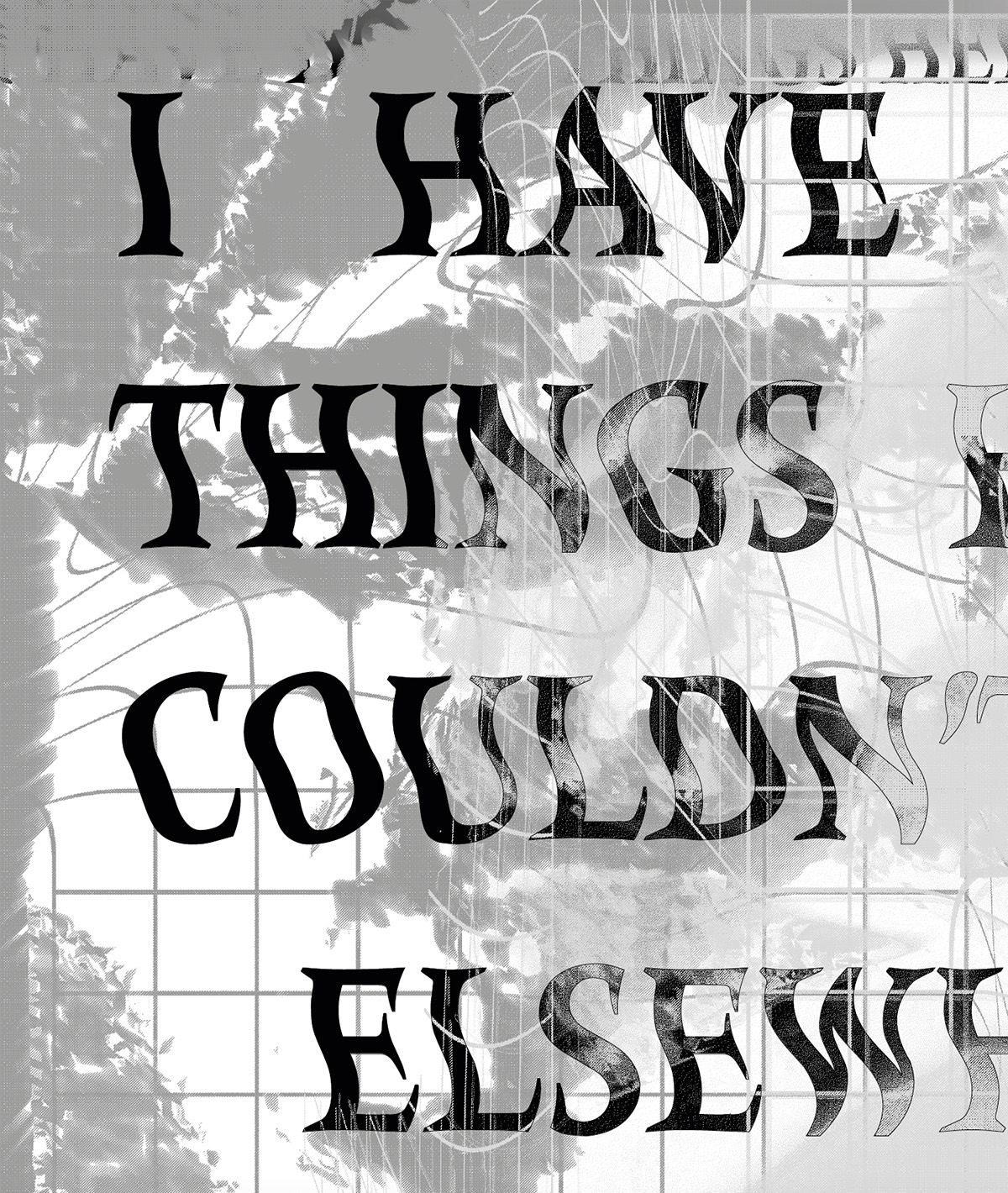
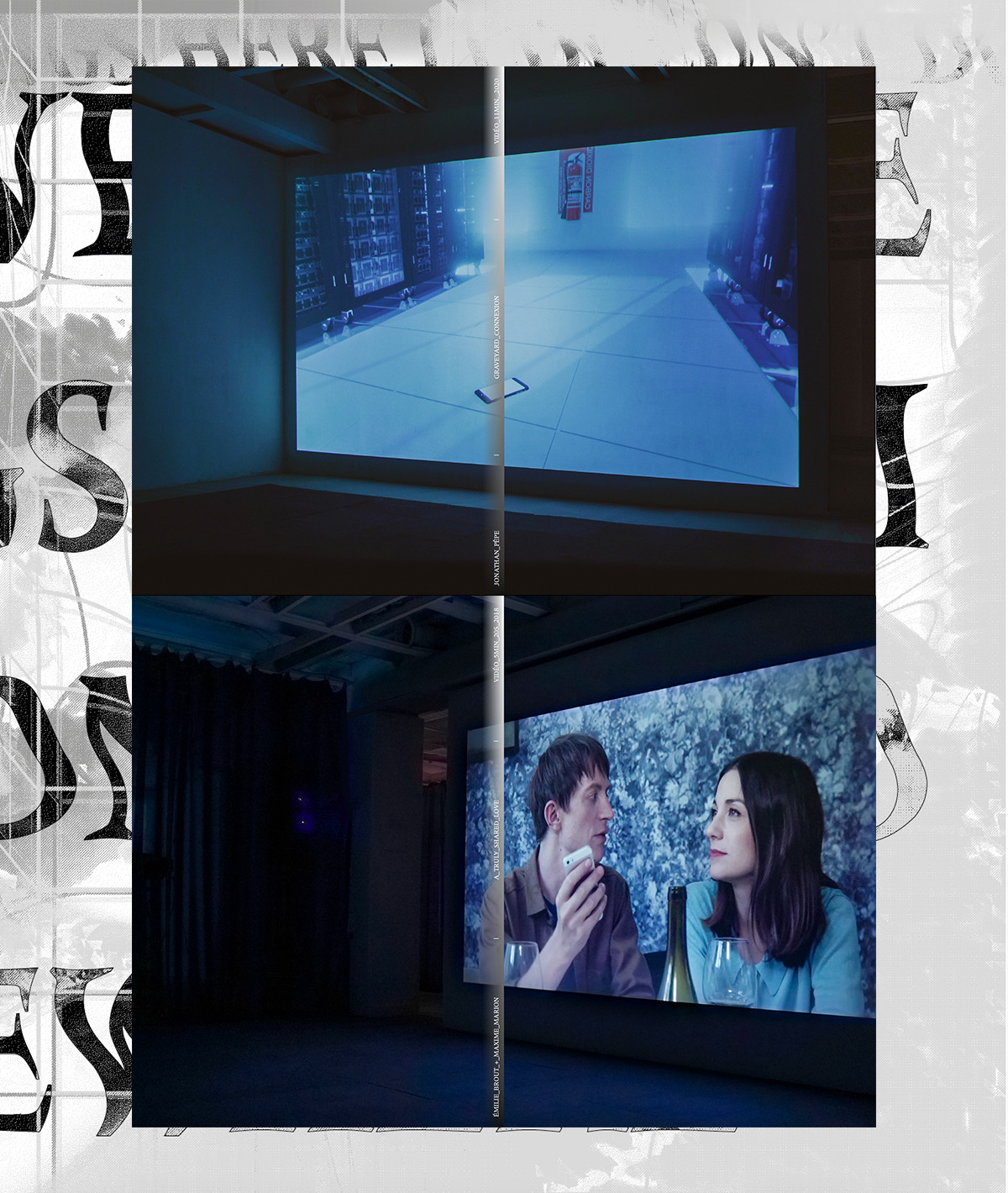
For this exhibition, as commissioner, my approach was to invite artists to reflect on the question of online behavior. The project asks how user-experience design, content moderation, and anonymity reshape our social relations in digital space. Conceived as an internet-like environment, the exhibition invited each artist to imagine a video work functioning like a webpage, that is, as a space where specific forms of interaction become possible.
-
Dysfordance (Series)
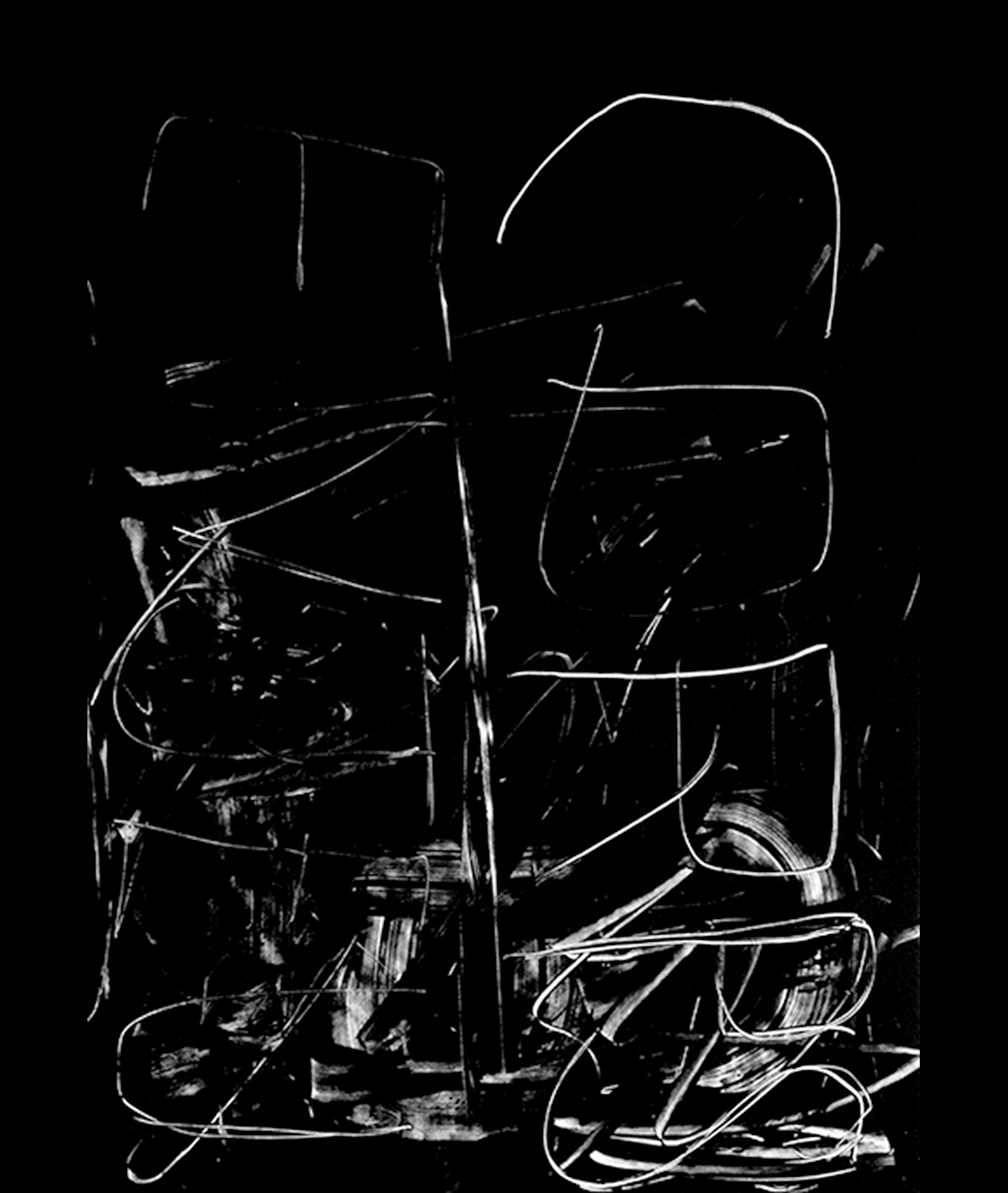
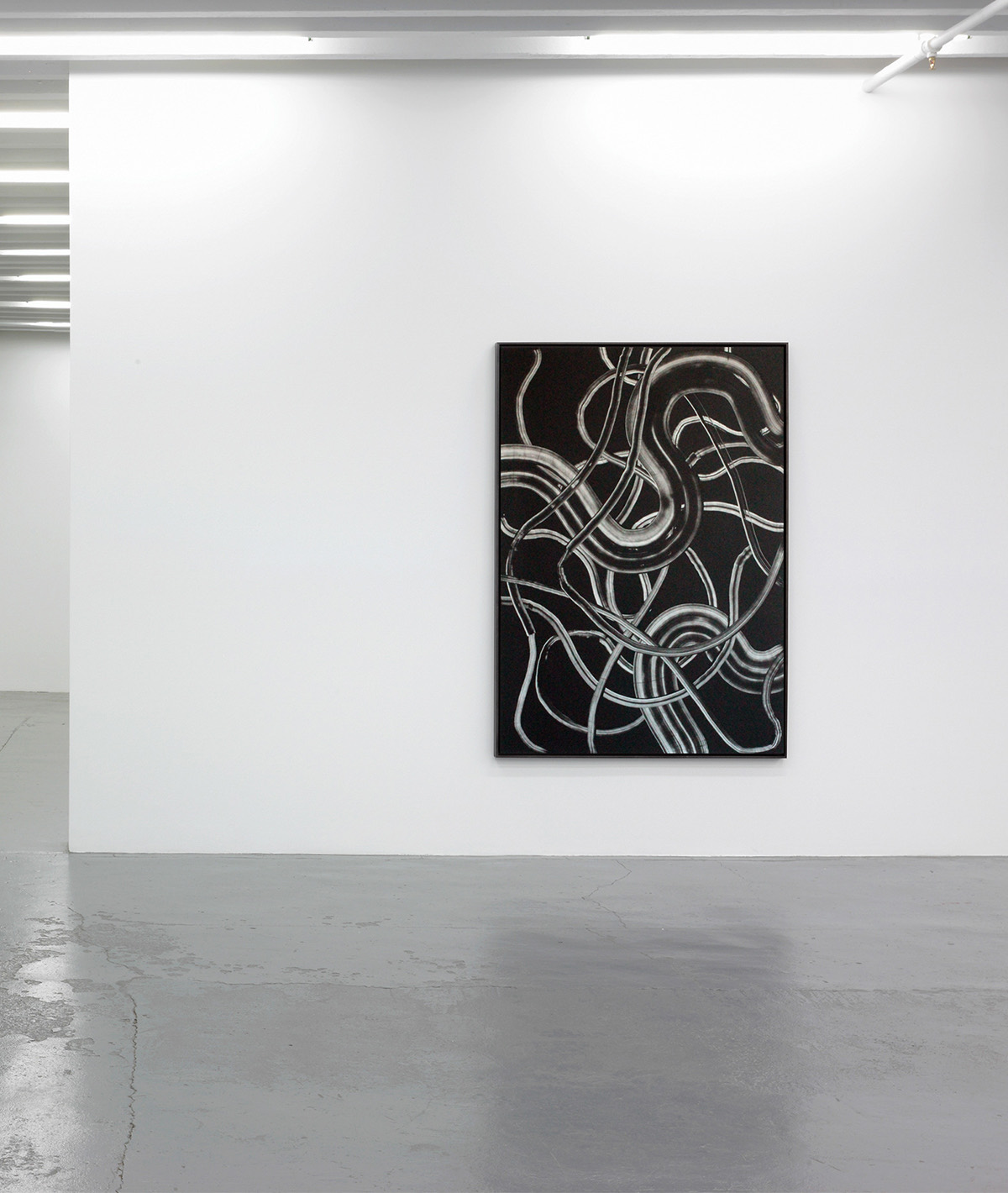
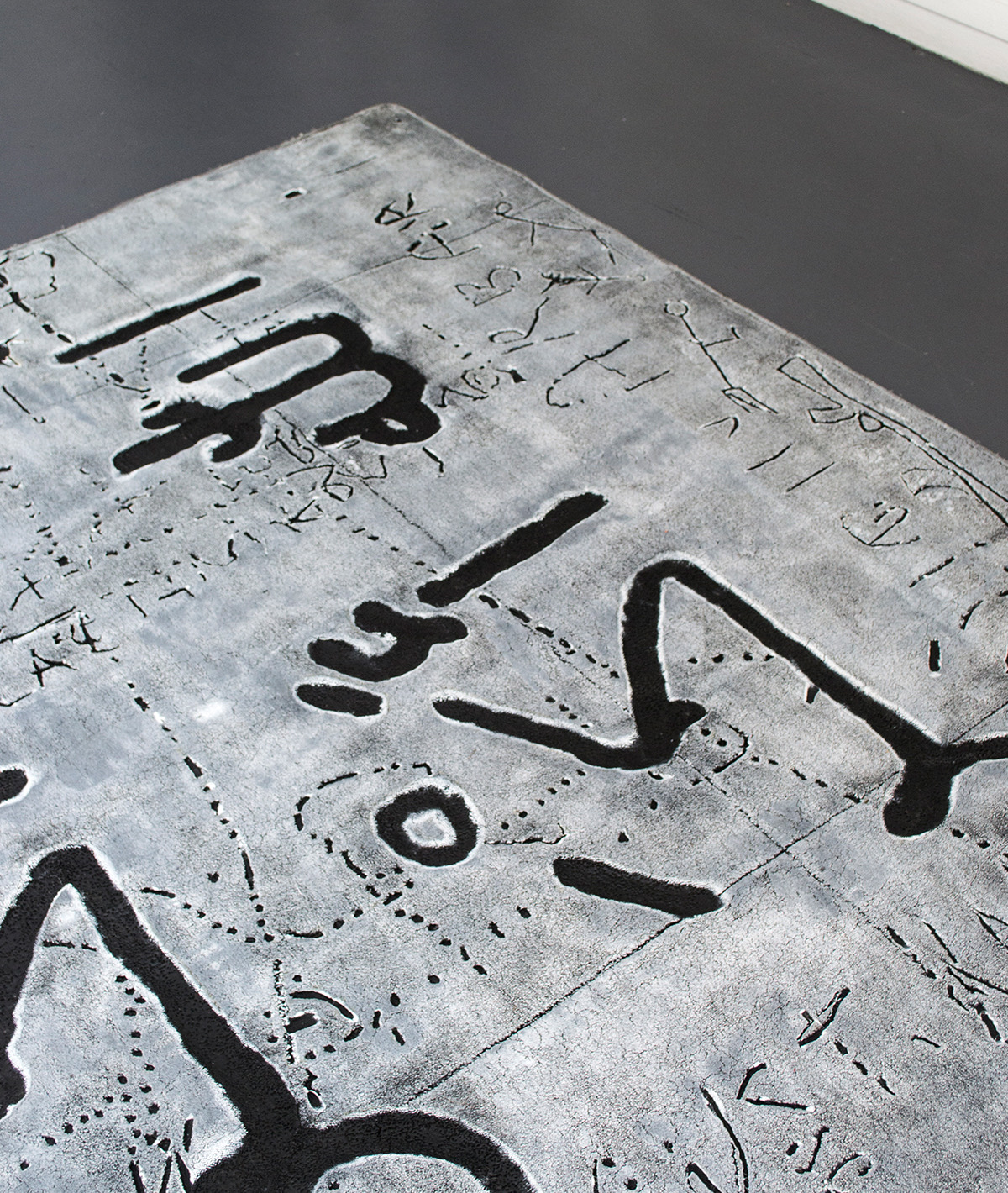
Dysfordance is an installation created as part of Villa Arson’s exhibition GO CANNY! Politics of Sabotage. This exhibition explored strategies of resistance, dissension, and disruption related to sabotage as a creative act mobilizing inventiveness and resourcefulness. The Dysfordance installation presents inappropriate uses of technologies such as computers and cables in order to create engravings and deconsecrate these tools.
-
Bored at work
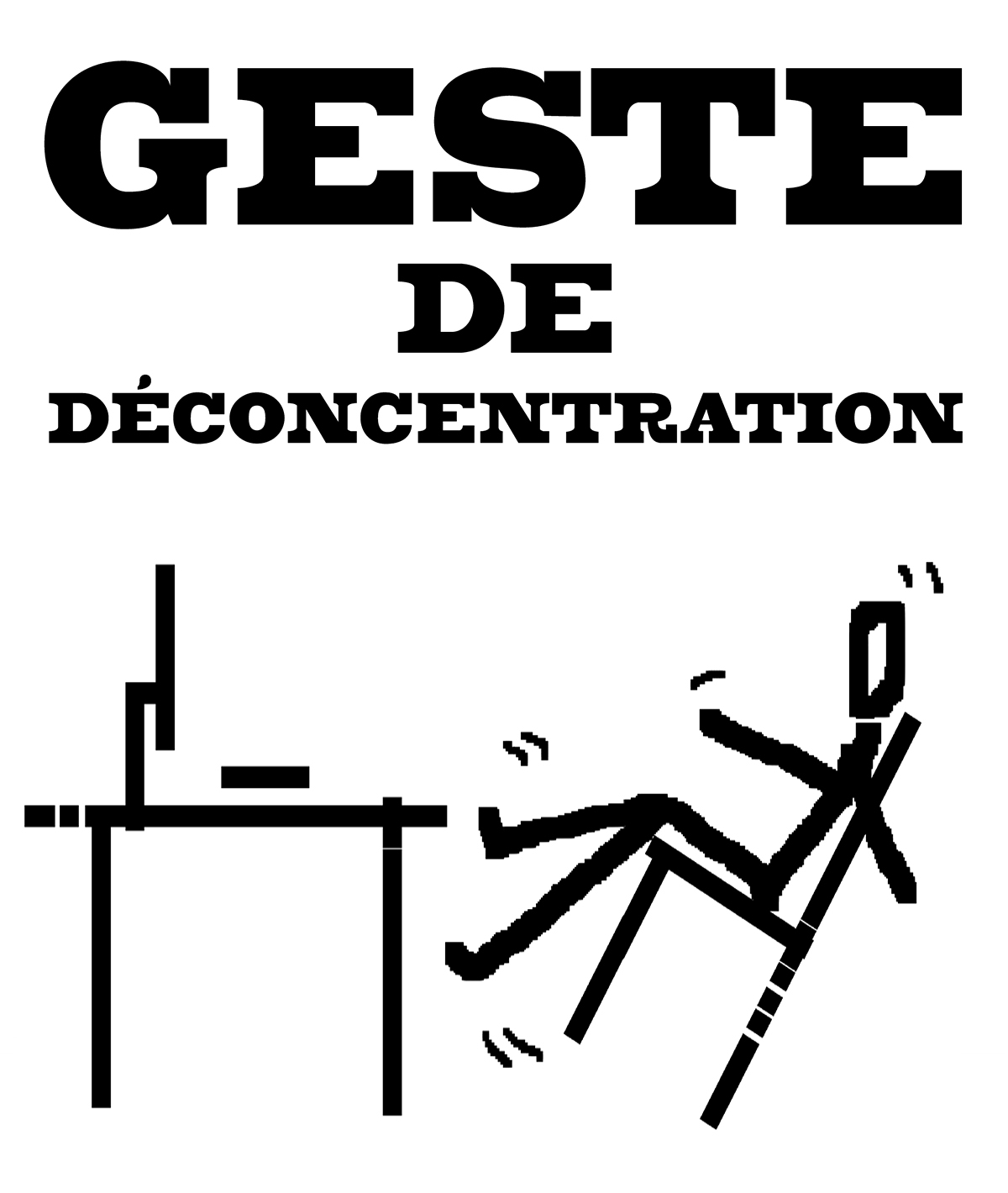
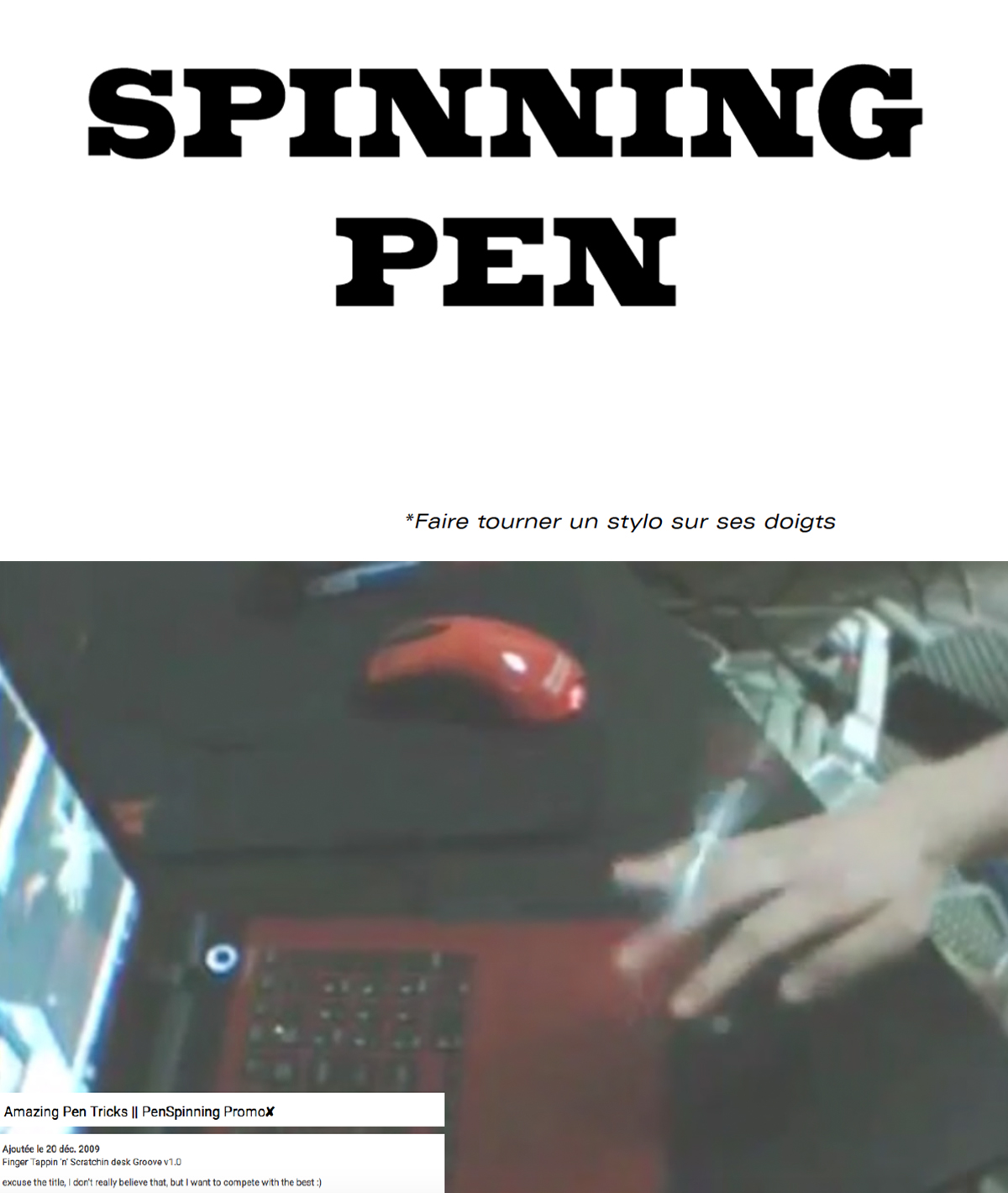
Bored at work features behaviors such as pen spinning that have recently developed as the body has been alienated in the workplace. These new practices symbolize an act of resistance against this alienation, a revalorization of the body in the face of lethargic ergonomics. These actions have even generated their own tournaments in pen spinning, chair spinning, and finger drumming.
-
BodyFail
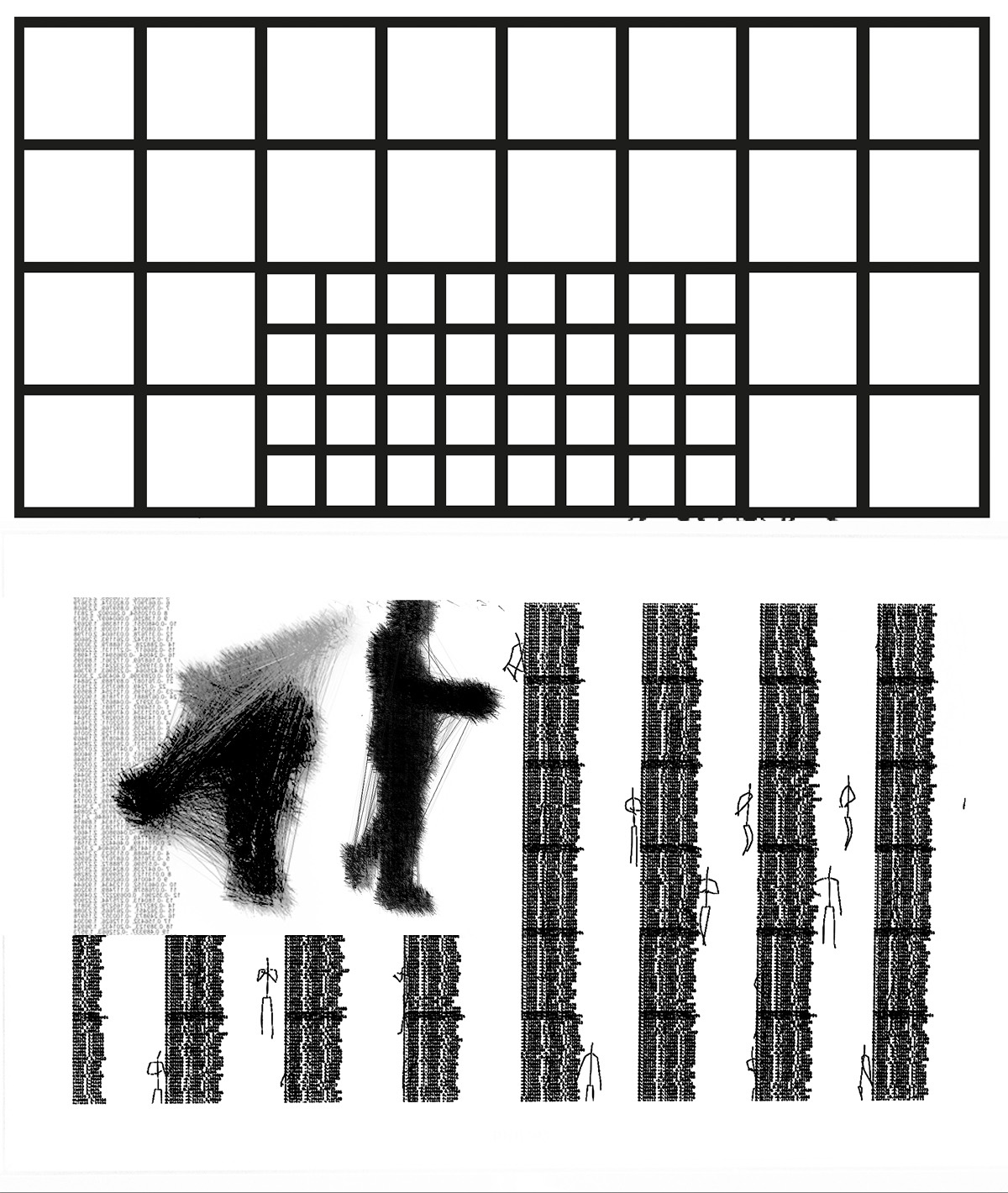
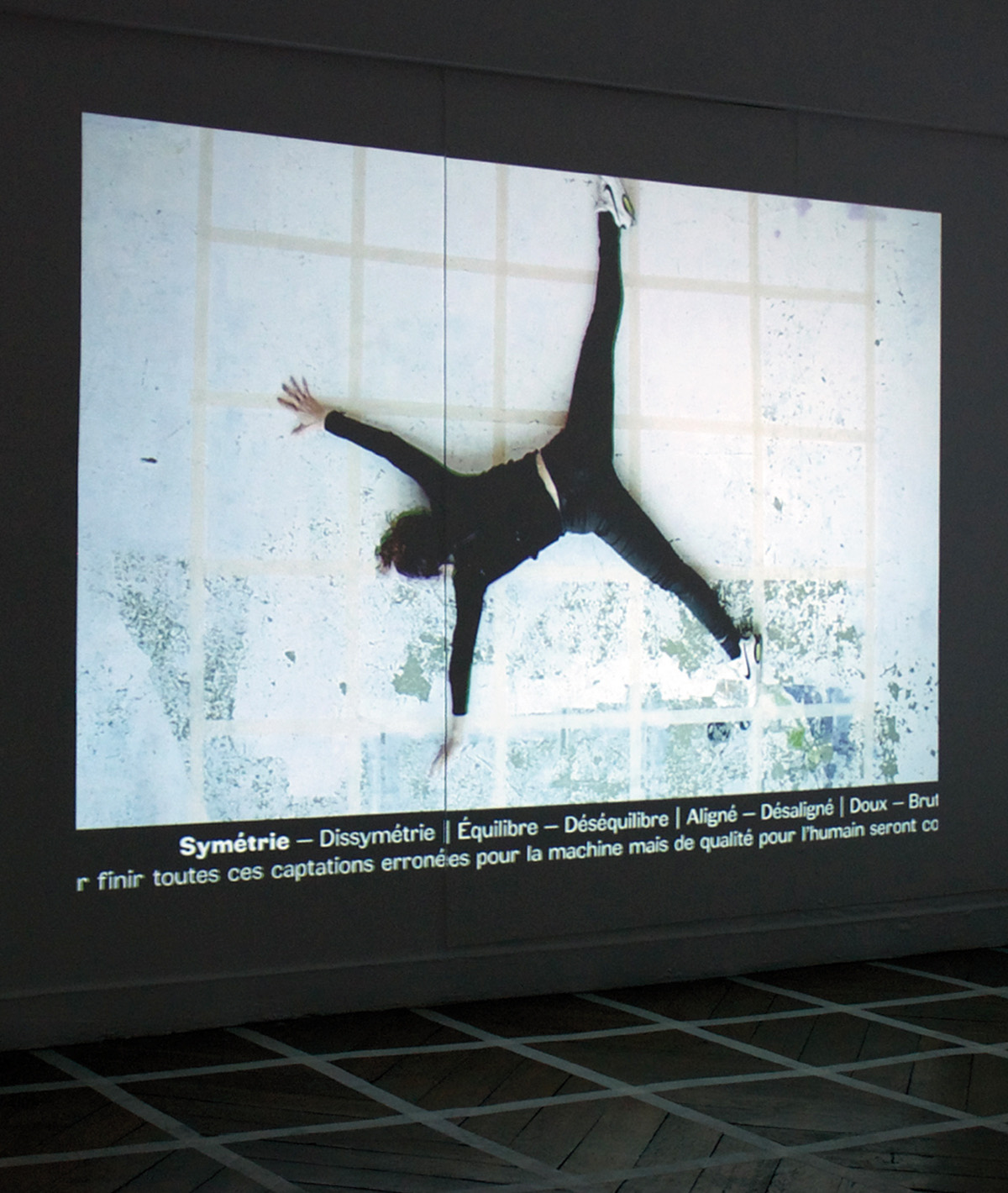
BodyFail is a movement project paired with a powerful neural network, produced in collaboration with choreographer Jean-Marc Matos. In this interactive installation, the visitor can attempt to create unusual movements not recognized by the program, in order to exhaust the code and crash the system that analyzes every move. The positions that cause the glitch are registered as a movement error score, which the project then uses for choreography.
-
SWEET ZERO DAY
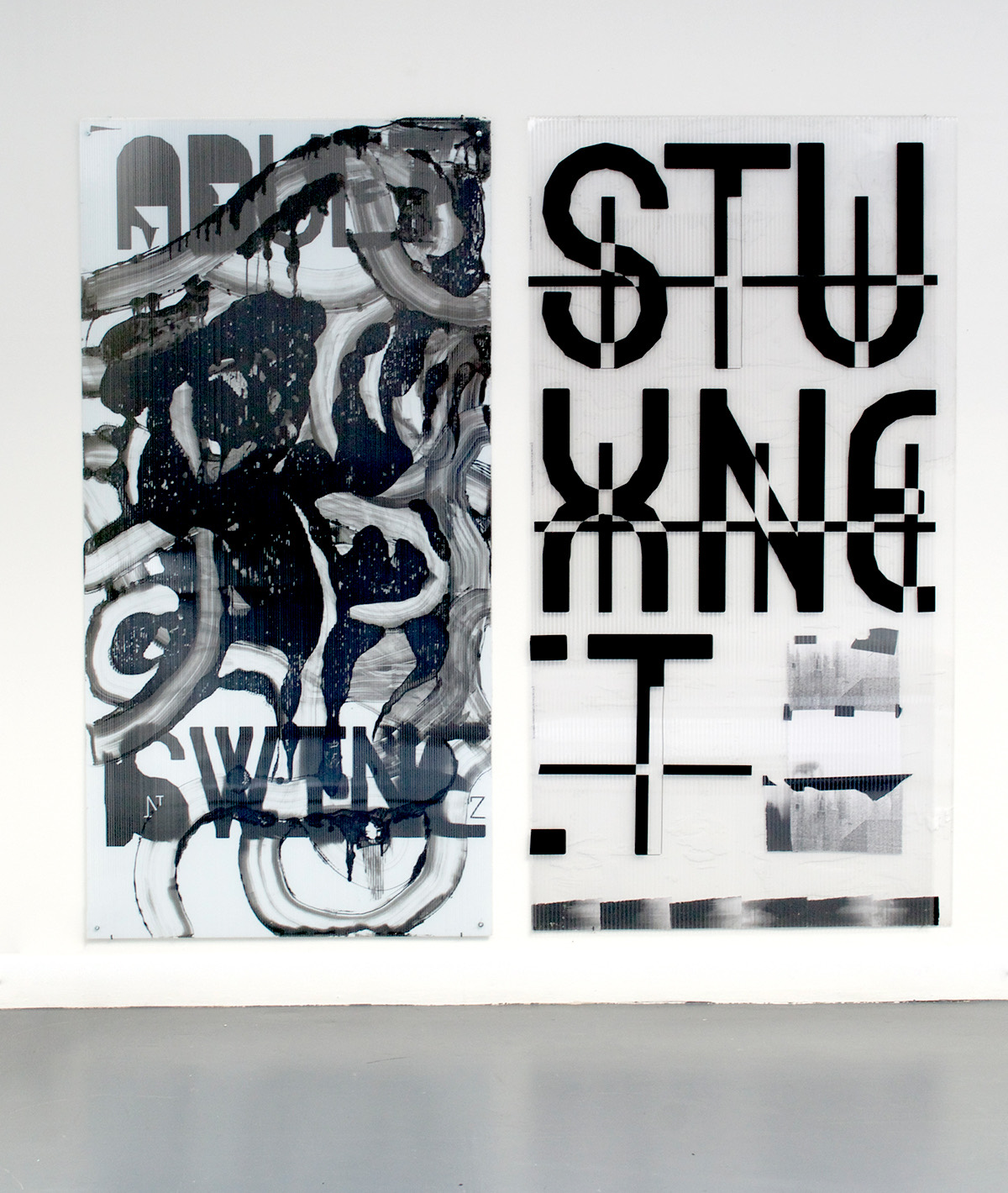
This series features two paintings displaying the names of different kinds of spyware and malware, such as Stuxnet, AdultSwine, and Cookie Bag, whose titles always oscillate between deception and ambiguity. These works stand out for their CAPTCHA-like typography, intended to be interpreted and analyzed by robots. The machine never fully perceives them as messages and cannot read them as artworks. These images therefore play the role of Trojans, infiltrating internet space anonymously and virally.
-
GO CANNY!
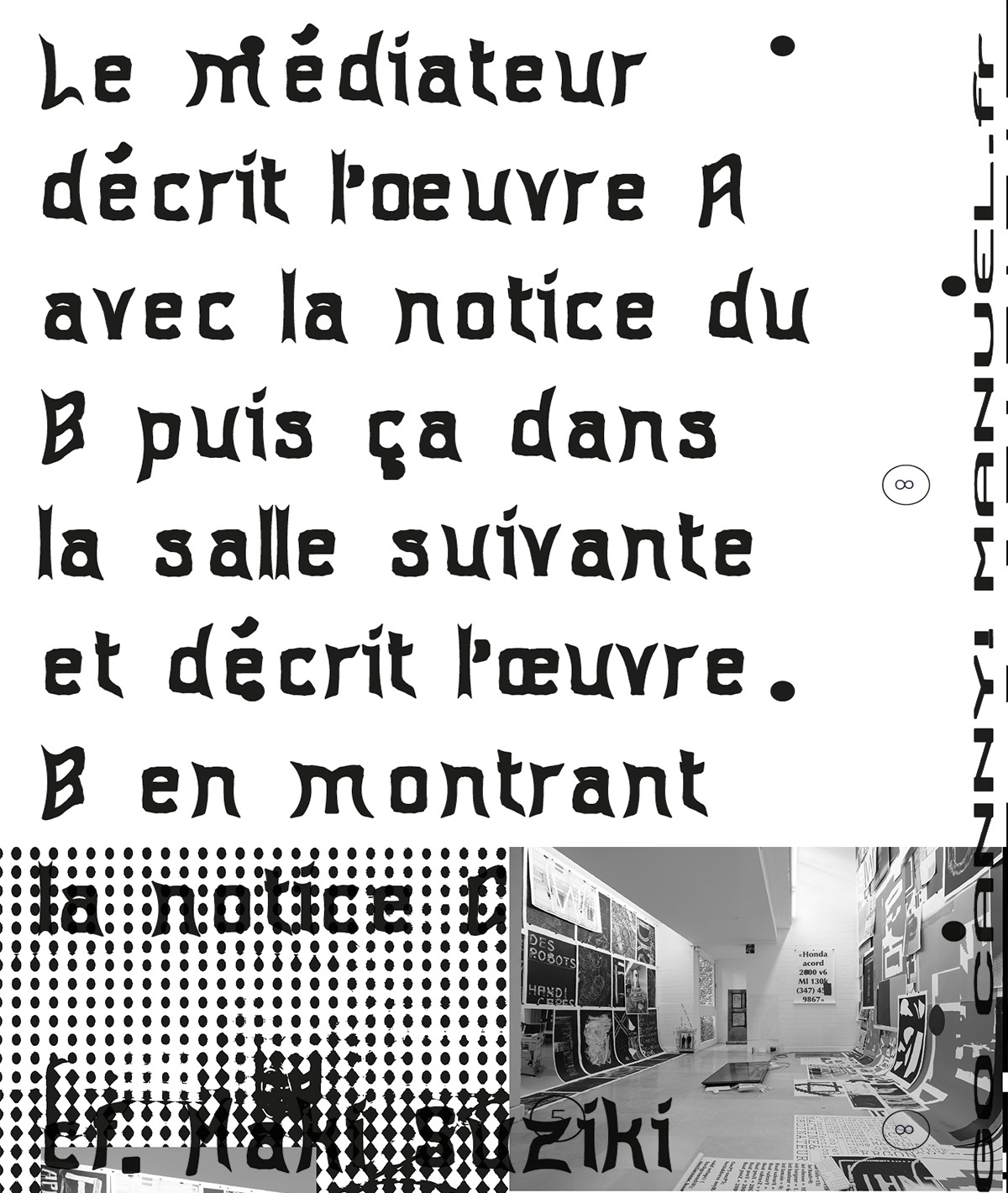
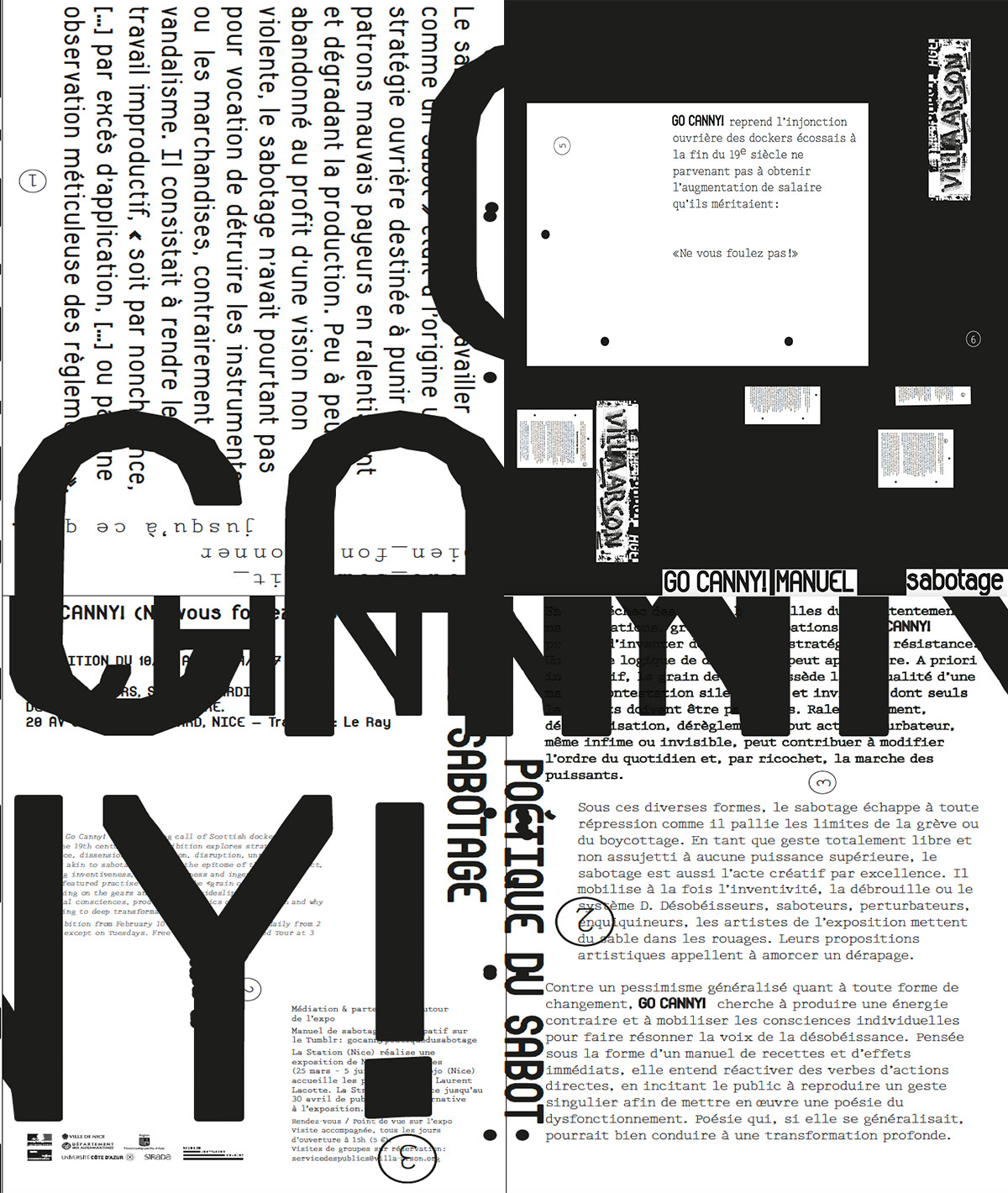
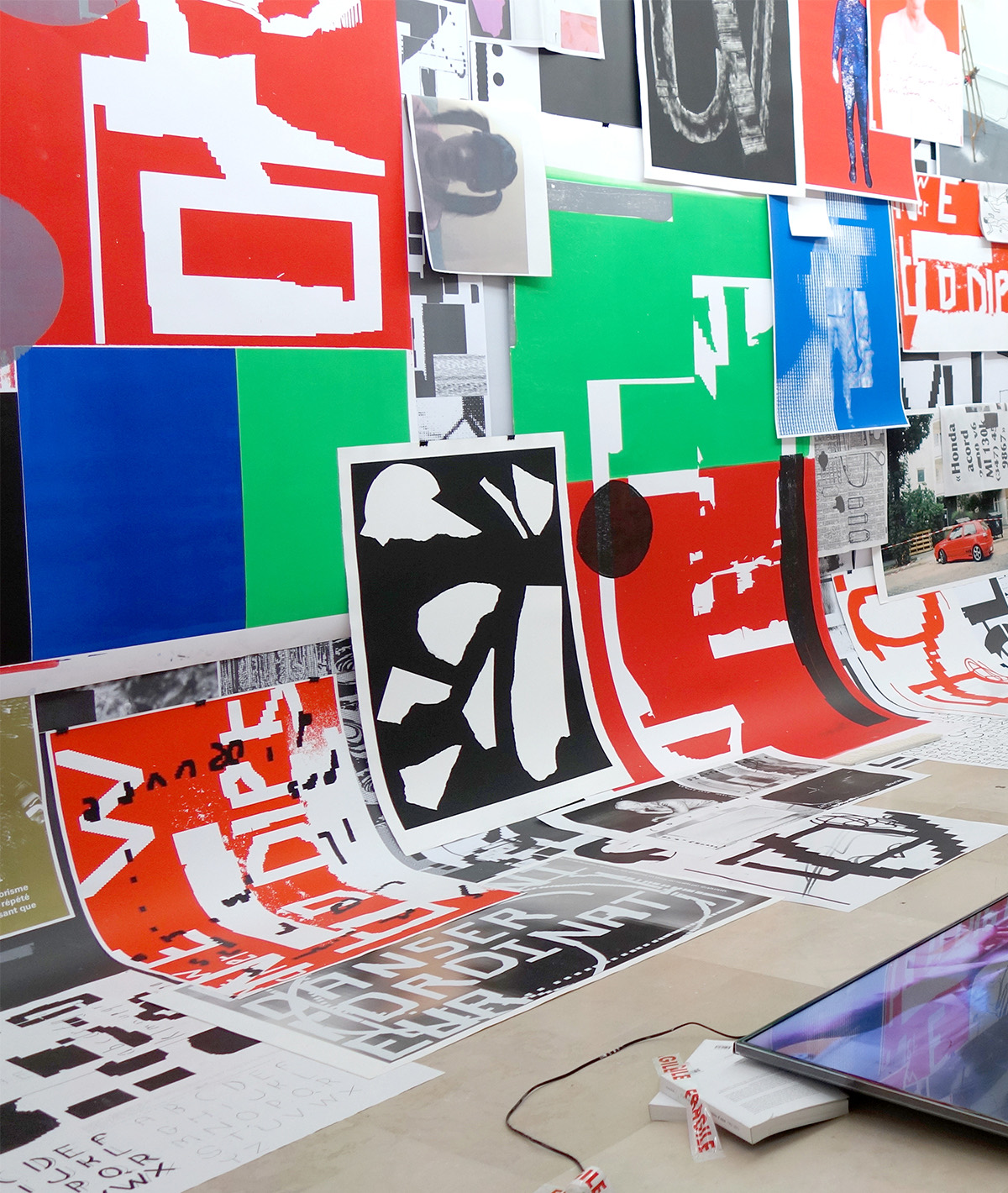
For Villa Arson’s exhibition GO CANNY! Politics of Sabotage, I also worked as artistic director. My approach was to completely sabotage the visual communication of the exhibition. The graphic design and catalogue were heavily manipulated, making the exhibition intentionally difficult to identify and to read.
-
MAD — DIGITAL WATERMARKING
Digital watermarking is a technique that enables the embedding of copyright information or other ownership markers into images, videos, sounds, and digital documents. In this project, I disrupted those marking norms and encoded the dominant actors of the art market through a deliberately unstable print process. The work questions money’s influence on the production and diffusion of art, as well as the speculative monopolies that govern its circulation.
-
BOT OR NOT TO BOT (MURALS)
For each project, my practice begins with an obsessive look at complex, sensitive forms such as CAPTCHA and at incoherent screens misunderstood by machine logic. I reproduce them daily, and I transform them into visual art, whether drawings, paintings, videos, or printed objects. These elements are part of a recurrent series that I have titled Bot or not to bot: they reappear in each of my installations as a way of reassuring myself that I have not become a robot.
-
Lost in Translation
Lost in Translation is intended as a reflection on the generational phenomenon of relentless visual competition, in which images are incessant and superimposed like a mille-feuille. I selected internet images tied to violent or disturbing themes often excluded from contemporary art, then rewrote and redefined them through a process of palimpsest until they became visually coherent, harmonious, and paradoxically “beautiful.”
-
Lost in Translation
This series is intended as a reflection on the generational phenomenon of relentless visual competition, in which images are incessant and superimposed like a mille-feuille. I selected internet images tied to violent or disturbing themes often excluded from contemporary art, then rewrote and redefined them through a process of palimpsest until they became visually coherent, harmonious, and paradoxically “beautiful.”
-
Lost in Translation
This series is intended as a reflection on the generational phenomenon of relentless visual competition, in which images are incessant and superimposed like a mille-feuille. I selected internet images tied to violent or disturbing themes often excluded from contemporary art, then rewrote and redefined them through a process of palimpsest until they became visually coherent, harmonious, and paradoxically “beautiful.”
-
Not Safe For Work (NSFW)
Thomas Guillemet invited students from Jules Michelet middle school in Saint-Ouen to explore the community of the internet through their own belonging to a new generation. The project unfolded across three phases: a research period devoted to gathering archives of mutations in behavior and language brought about by recent technologies, particularly so-called “gestures of deconcentration”; a second phase centered on the invention of a new technological medium through the design of a robotized drawing machine that imitates human gesture; and a final phase focused on the creation of tribal masks that thwart facial-recognition grids through tribal patterning.
-
Not Safe For Work (NSFW)
Thomas Guillemet invited students from Jules Michelet middle school in Saint-Ouen to explore the community of the internet through their own belonging to a new generation. The project unfolded across three phases: a research period devoted to gathering archives of mutations in behavior and language brought about by recent technologies, particularly so-called “gestures of deconcentration”; a second phase centered on the invention of a new technological medium through the design of a robotized drawing machine that imitates human gesture; and a final phase focused on the creation of tribal masks that thwart facial-recognition grids through tribal patterning.